American Football Positions Explained: Offense, Defense and Special Teams
RedZoneHQ Staff · Aug 17, 2026
American Football Positions Explained: Offense, Defense and Special Teams American football becomes much easier to understand when you stop seeing 22 players as one large crowd and start seeing a set of specialized jobs.…
American Football Positions Explained: Offense, Defense and Special Teams
American football becomes much easier to understand when you stop seeing 22 players as one large crowd and start seeing a set of specialized jobs. Every position has a purpose. Some players handle the ball, some create space, some protect the quarterback, some rush the passer, some cover receivers and others enter mainly for kicking situations.
The quarterback directs much of the offensive action.
This guide explains the major football positions on offense, defense and special teams in simple language. It is written for beginners, but it also includes enough detail to help you recognize formations and understand why certain players are matched against one another. For official alignment and eligibility rules, see the 2026 NFL Rulebook.
Why Football Uses So Many Specialized Positions
American football is a stop-start sport. Teams can substitute players between many plays, which allows coaches to use highly specialized personnel packages. An offense may bring in extra tight ends for a short-yardage play, then replace them with additional receivers on the next snap. A defense might respond with bigger linemen against the run or extra defensive backs against the pass.
The result is a game built around matchups. A team's success often depends on whether its players can perform their individual assignments while supporting the larger design of the play.
Offensive Football Positions
Offensive positions combine ball handling, receiving and blocking roles.
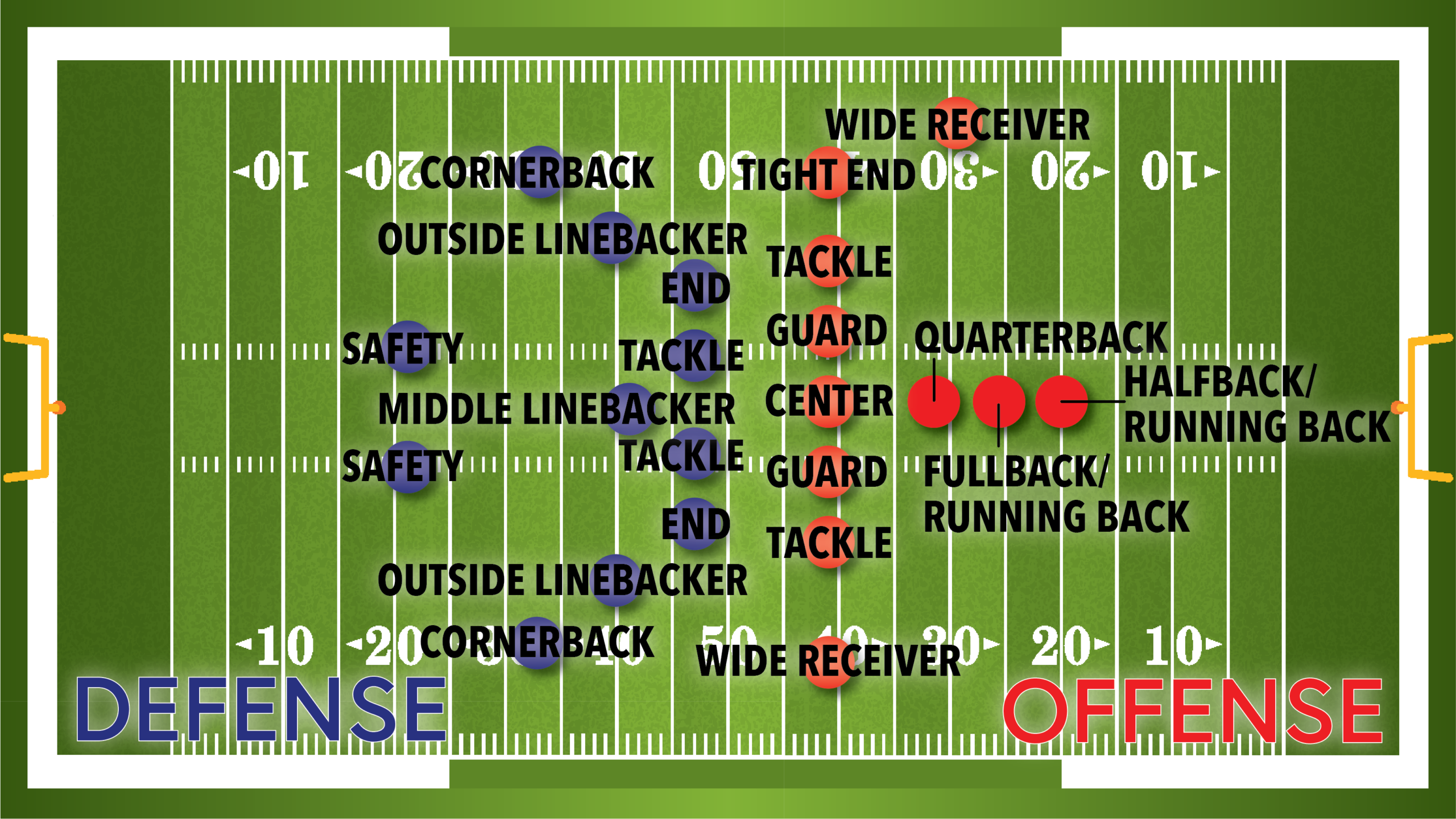
The offense has possession of the ball and tries to advance down the field. Eleven offensive players are on the field at a time, but their exact arrangement changes by formation and personnel group.
Quarterback (QB)
The quarterback is usually the most visible offensive player. The quarterback receives the snap and then decides, according to the play design and defensive reaction, whether to hand the ball off, throw a pass, keep the ball, change the play or make another permitted decision.
Quarterbacks need accuracy, timing, pocket awareness, decision-making and leadership. Modern quarterbacks may also be significant running threats. Their job is not simply to throw; they must understand protection, coverage, down and distance, field position and clock management.
Running Back (RB)
Running backs are primary ball carriers on many rushing plays. They take handoffs or pitches and run through designed lanes. They may also catch passes, block blitzing defenders and serve as decoys.
Different backs have different styles. Some rely on power, some on speed and change of direction, and others are especially valuable as receivers. The term “halfback” is often associated with the primary running back role.
Fullback (FB)
The fullback is less common in many modern offenses than in previous eras, but the role still appears. Fullbacks are often used as lead blockers, short-yardage runners or pass protectors. They may also catch short passes.
Because offenses increasingly use three or more receivers, some teams replace the traditional fullback with a tight end, hybrid player or another specialist depending on the system.
Wide Receiver (WR)
Wide receivers usually line up near the outside of the formation or in the slot. Their main job is to run routes and create separation from defenders so the quarterback can complete passes.
Receivers need speed, route precision, hands, body control and awareness of coverage. Some are deep threats, others specialize in quick routes, and some excel at contested catches. Receivers also block on running plays and can carry the ball on designed motions or sweeps.
Tight End (TE)
Tight ends combine responsibilities associated with receivers and offensive linemen. They may line up next to a tackle, in the slot, in the backfield or detached from the formation. On one play a tight end may block a defensive end; on the next, that same player may run a route down the middle of the field.
This versatility makes tight ends important in both run and pass strategy.
Center (C)
The center begins most offensive plays by snapping the ball. The center also blocks defensive players and often helps communicate protection assignments across the offensive line.
Because the center must handle the ball accurately while immediately engaging defenders, the position requires coordination, strength and awareness.
Guard (G)
Two guards usually line up on either side of the center. Guards block in both the running and passing game. On certain run concepts, a guard may “pull,” moving laterally after the snap to become a lead blocker at another point of attack.
Guards often work in confined spaces against powerful defensive tackles, so balance and leverage are critical.
Offensive Tackle (OT)
Tackles line up on the outside of the offensive line. They protect the edges of the pocket and block on running plays. In passing situations, tackles frequently face fast edge rushers who are trying to reach the quarterback.
Left tackle has traditionally received special attention because many right-handed quarterbacks are less likely to see pressure coming from that side. Modern protection schemes, however, require strong play from both tackle spots.
How the Offensive Line Works as a Unit
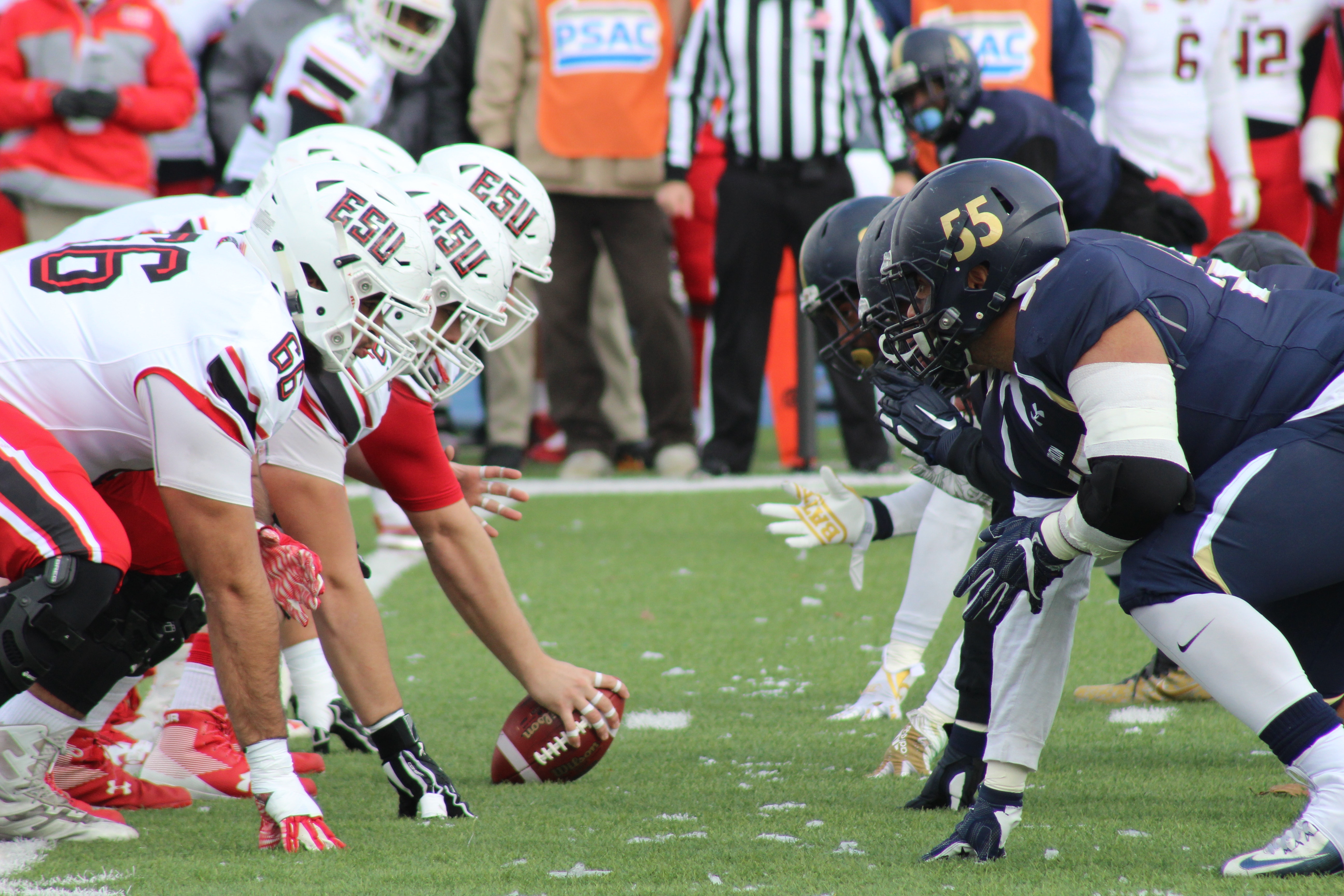
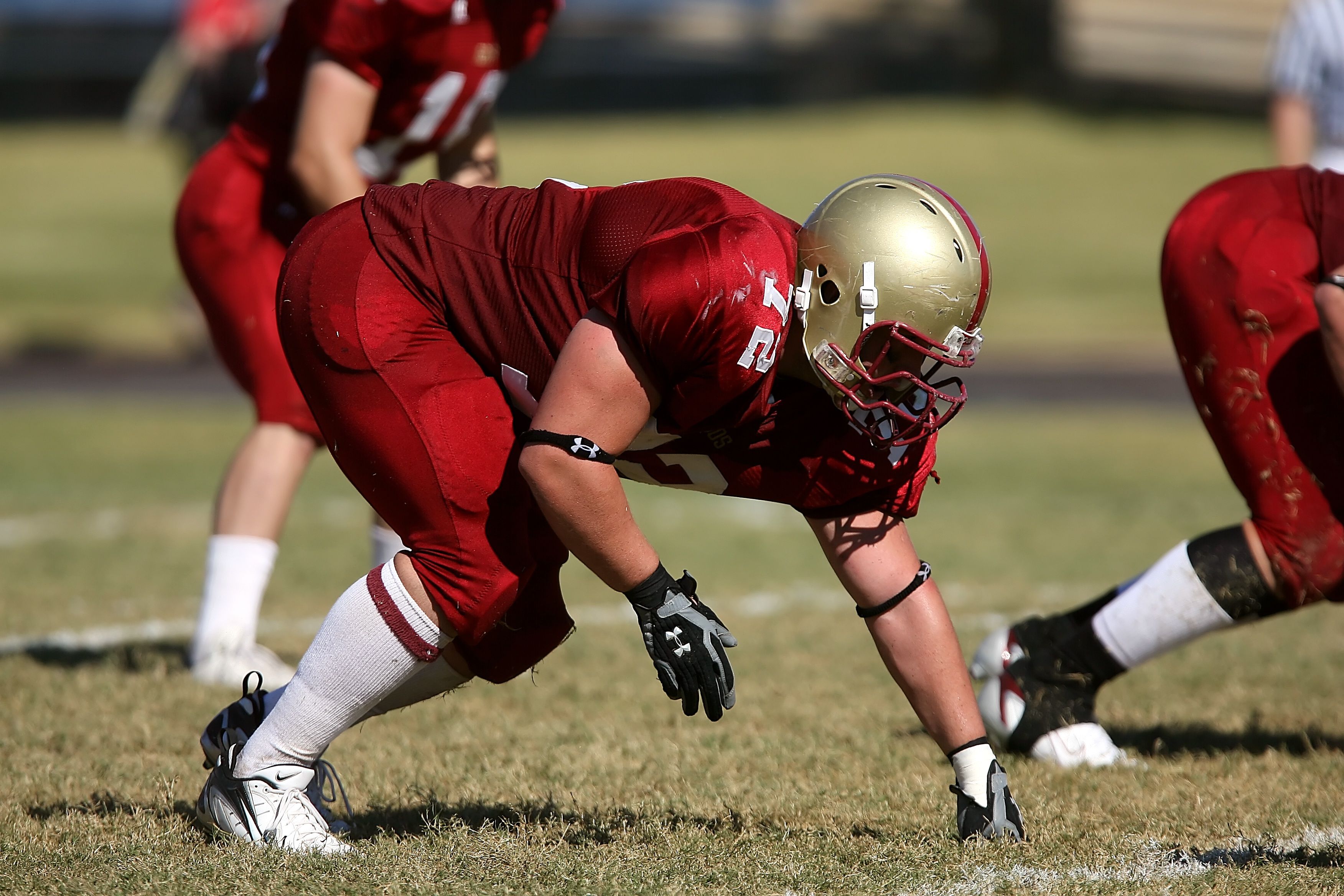
The five primary offensive linemen are the center, two guards and two tackles. Their job is coordinated. One blocker may be responsible for a defender directly in front of him while another helps before moving to a linebacker. Pass protection may be based on individual matchups, zones or combinations.
The offensive line is a good example of why football statistics can be misleading. A running back may receive credit for a 20-yard gain, but the play may have been created by several precise blocks.
Defensive Football Positions
Defensive positions work together to stop runs and passes.
The defense tries to stop the offense from gaining yards and scoring. Defensive systems vary widely, so a player's exact responsibilities depend on the scheme, formation and play call.
Defensive Tackle (DT)
Defensive tackles line up on the interior of the defensive line. They battle offensive guards and centers, defend rushing lanes and push the pocket on passing plays.
Some tackles are primarily run defenders, while others are disruptive interior pass rushers. Their ability to control space can free linebackers to make tackles.
Defensive End (DE)
Defensive ends generally line up near the edges of the defensive front. They defend outside runs and often rush the quarterback. Depending on the scheme, a defensive end may be a large power player or a quicker edge specialist.
The goal is not always to record a sack. Pressure that forces the quarterback to move or throw early can be just as valuable.
Linebacker (LB)
Linebackers usually align behind or around the defensive line. They are among the most versatile defenders because they may defend the run, rush the passer or drop into pass coverage.
Inside linebackers often communicate calls and read the offense from the middle of the formation. Outside linebackers may have more edge-rushing or coverage responsibility depending on the system.
Cornerback (CB)
Cornerbacks primarily defend wide receivers. They can play close to the line in press coverage, give receivers more space in off coverage, or operate within a zone system.
Cornerbacks need speed, quickness, recovery ability and excellent ball awareness. Their technique changes based on route, leverage, safety help and defensive call.
Safety (S)
Safeties usually align deeper than cornerbacks, though modern defenses move them around frequently. They provide help against deep passes, support the run and may cover tight ends, running backs or slot receivers.
The traditional terms “free safety” and “strong safety” still exist, but many teams now value interchangeable safeties who can handle multiple roles.
Nickel and Dime Defensive Backs
A nickel package adds a fifth defensive back, while a dime package generally uses six. These personnel groups are common when the offense puts more receivers on the field or when the defense expects a pass.
The extra defensive back may be called a nickelback and can cover the slot, blitz, defend screens or help against the run.
Special Teams Positions
Special teams handle kicks, punts and returns.
Special teams appear on kickoffs, punts, field goals and extra-point attempts. These plays use some specialists who rarely appear on normal offensive or defensive snaps.
Kicker (K)
The kicker handles field goals, extra points and usually kickoffs, depending on team structure. Accuracy, consistency and the ability to perform under pressure are essential.
Punter (P)
The punter kicks the ball on many fourth-down plays when the offense decides to give up possession in exchange for field position. Good punters control distance, hang time and placement.
Long Snapper (LS)
The long snapper delivers specialized snaps on punts, field goals and extra points. The role receives little attention until something goes wrong, but accuracy is vital.
Holder
The holder receives the long snap and positions the ball for the kicker. Punters commonly perform this role, although teams may use another player.
Kick Returner and Punt Returner
Return specialists catch kicks and try to gain field position. They need speed, vision, secure hands and decision-making because mistakes in the return game can immediately create scoring opportunities for the opponent.
Position Groups at a Glance
Group
Main responsibility
Examples
Backfield
Handle the ball, run, pass, block
QB, RB, FB
Receivers
Run routes, catch, block
WR, TE
Offensive line
Protect and create running lanes
C, G, OT
Defensive front
Stop run and pressure quarterback
DT, DE
Linebackers
Run defense, coverage, pressure
ILB, OLB
Secondary
Pass coverage and deep support
CB, S, nickel
Special teams
Kicks, punts, returns
K, P, LS, returner
How Formations Change Position Responsibilities
A position name tells you a player's general role, not every assignment. A wide receiver can line up outside, in the slot or in motion. A linebacker can rush the passer on one snap and cover a running back on the next. A safety may begin deep and move near the line before the snap.
Not every offensive player is allowed to catch a forward pass on every play. Eligibility depends on alignment, numbering and rule conditions. Wide receivers, tight ends and backs are commonly eligible, while interior offensive linemen normally are not unless special eligibility procedures and alignments are used.
This is one reason formation details matter before the snap. The official rulebook defines the legal positions and restrictions precisely.
Which Positions Touch the Ball Most Often?
The quarterback handles the ball on nearly every normal offensive snap. Running backs and receivers may receive many touches, while offensive linemen almost never legally handle the ball during routine play.
On defense, the objective is not regular possession, so defenders typically touch the ball only when breaking up passes, intercepting, recovering fumbles or making certain special plays.
How to Identify Positions While Watching a Game
1. Find the ball and identify the center.
2. Look directly behind or near the center for the quarterback.
3. Notice the five offensive linemen forming the protection front.
4. Look outside for wide receivers and next to the line for tight ends.
5. On defense, identify the players closest to the line as the defensive front.
6. Find linebackers behind them and defensive backs farther outside or deeper.
7. Watch substitutions to see when extra receivers or defensive backs enter.
Frequently Asked Questions
What is the most important position in football?
Every role matters, but quarterback is often considered the most influential because the player handles the ball and makes many key decisions. Team success still depends on blocking, defense, special teams and coaching.
Why are offensive linemen so large?
They need strength and mass to handle powerful defenders, but modern linemen also require excellent footwork and agility.
What is a slot receiver?
A slot receiver lines up inside the widest receiver, usually between an outside receiver and the offensive line. Slot players often run routes through congested areas.
What is an edge rusher?
Edge rusher is a functional term for a defender whose primary job includes attacking from the outside of the offensive formation. The player may be listed as a defensive end or outside linebacker.
Do the same 11 players stay on the field?
No. Teams substitute frequently. Offensive, defensive and special-teams units use different players, and personnel can also change from one play to the next.
Conclusion
Learning football positions transforms the way you watch the sport. Instead of following only the ball, you begin to see the protection around the quarterback, the route combinations, the pass rush, the coverage structure and the special-teams responsibilities that shape field position.
Start by memorizing the major groups: quarterback and backs, receivers, offensive line, defensive line, linebackers, secondary and special teams. Then watch how those players move before and after the snap. Once you understand their basic jobs, formations and strategy become much easier to recognize, and the game starts to look less chaotic and far more organized.