American Football Rules Explained: A Complete Beginner’s Guide
RedZoneHQ Staff · Aug 19, 2026
American Football Rules Explained: A Complete Beginner's Guide American football can look complicated the first time you watch it. Players line up in different formations, the clock stops and starts for many reasons, off…
American Football Rules Explained: A Complete Beginner's Guide
American football can look complicated the first time you watch it. Players line up in different formations, the clock stops and starts for many reasons, officials throw yellow flags, and teams constantly switch between offense, defense and special teams. Once you understand a few core ideas, however, the game becomes much easier to follow. The entire sport is built around a simple challenge: one team tries to move the ball down the field and score while the other team tries to stop it.
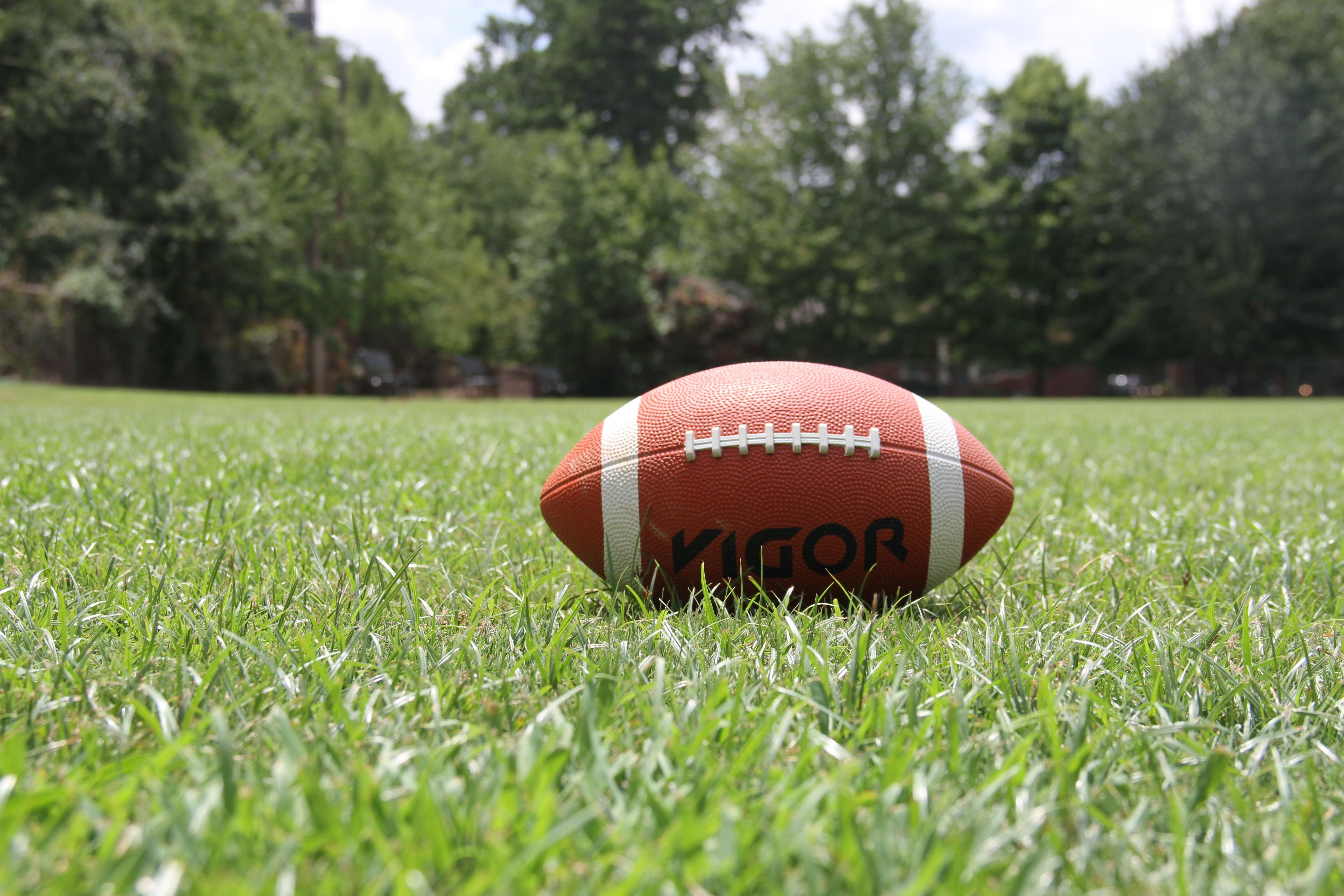
An American football on the playing field.
This beginner-friendly guide explains the most important American football rules without assuming you already know the sport. It covers the field, downs, scoring, possession, timing, common penalties and game flow. For official wording and rule updates, readers can also consult the 2026 NFL Rulebook from NFL Football Operations.
The Basic Goal of American Football
Two teams compete to score more points than the other. The team with the ball is called the offense. Its job is to advance the football toward the opponent's end zone. The team without the ball is the defense. Its job is to prevent progress, force mistakes and regain possession.
A team can advance the ball mainly by running with it or throwing a legal forward pass. The offense tries to reach the end zone for a touchdown, kick the ball through the goalposts for a field goal, or create other scoring situations. The defense tries to tackle the ball carrier, break up passes, stop short-yardage plays, force punts, recover fumbles or intercept passes.
Understanding the Football Field
An American football field is 120 yards long when the two 10-yard end zones are included. The main playing area between the goal lines is 100 yards long. Yard lines and hash marks help officials determine the exact spot of the ball.
Important field areas
• End zones: The scoring areas at both ends of the field.
• Goal lines: The lines separating the field of play from each end zone.
• Sidelines: The boundaries along each side of the field.
• Goalposts: Uprights used for field goals and extra-point kicks.
• Hash marks: Markings that help position the ball for the next play.
When the ball or a player carrying it goes out of bounds, the play usually ends. The next play begins from the appropriate spot determined by the rules.
What Are Downs in Football?
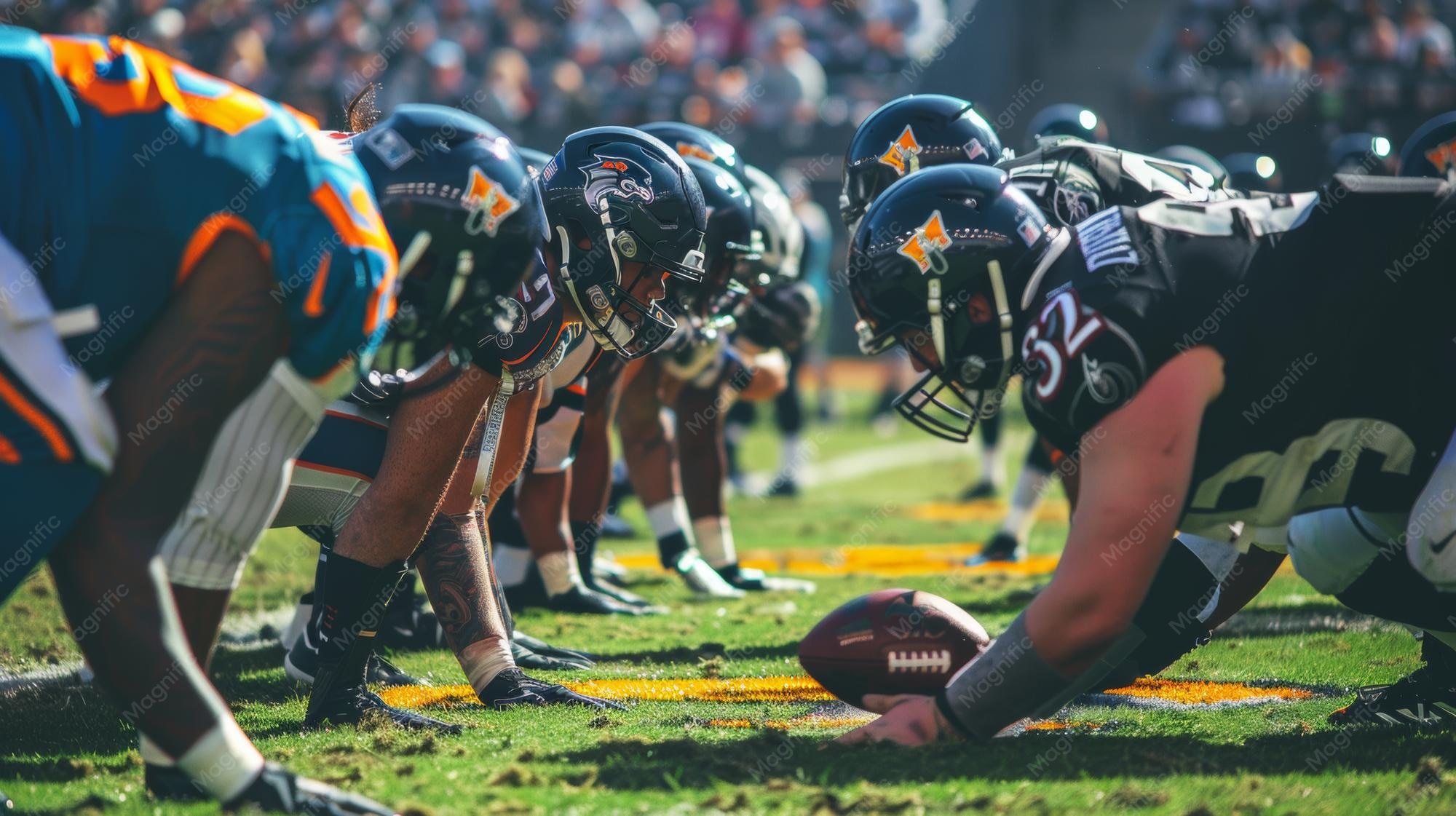
The line of scrimmage is central to understanding downs and distance.
The concept of downs is the most important rule for a new fan to understand. The offense normally receives four downs, or four attempts, to gain at least 10 yards. If it gains those 10 yards, it earns a new set of four downs. This is called a first down.
For example, imagine a team starts at its own 30-yard line. If it gains four yards on first down, the next situation is second down with six yards needed. If it then gains three more yards, the offense faces third down with three yards needed. If it gains at least those remaining three yards, it earns another first down.
How down-and-distance is shown
Situation
Meaning
1st & 10
First down with 10 yards needed for a new first down.
2nd & 6
Second down with six yards needed.
3rd & 2
Third down with two yards needed.
4th & 1
Final normal attempt with one yard needed.
Fourth down creates an important strategy decision. A team can try to gain the required yardage, kick a field goal if close enough, or punt the ball to make the opponent start farther from the end zone. If the offense goes for it on fourth down and fails, the other team usually receives possession near that spot.
How the Ball Moves
Running plays
On a running play, the quarterback often hands or pitches the football to a running back. The ball carrier follows blockers and tries to gain as many yards as possible before being tackled or forced out of bounds. Quarterbacks and other players can also run with the ball depending on the play design.
Passing plays
The offense may throw one legal forward pass on a play, provided the pass is thrown from behind the line of scrimmage. Eligible receivers attempt to catch it while defenders try to cover them. An incomplete forward pass ends the play and normally stops the game clock. A completed pass allows the receiver to keep advancing until the play ends.
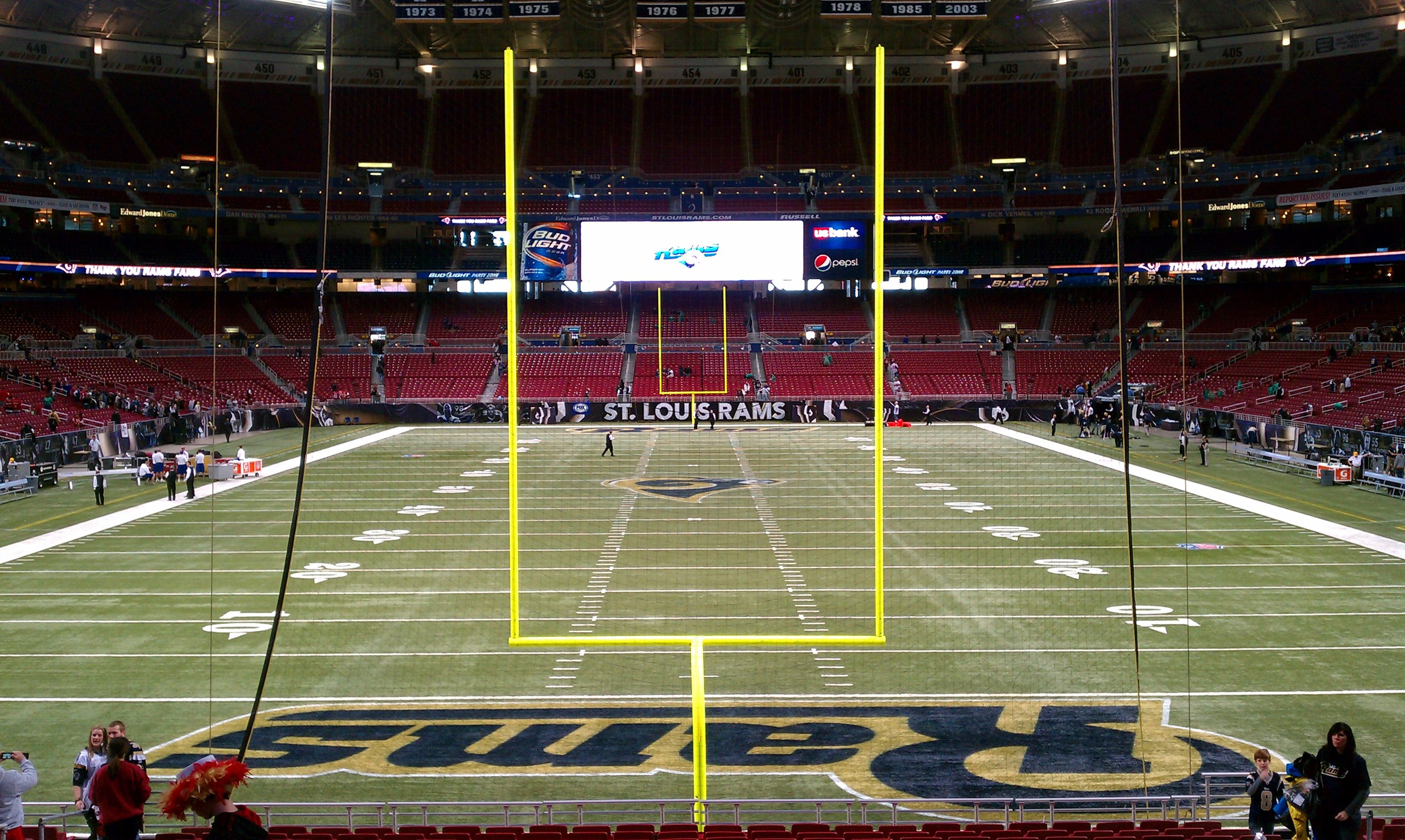
Goalposts are used for field goals and extra-point kicks.
Football uses several scoring methods. The official NFL rulebook lists the values and conditions for each type of score.
• Touchdown — 6 points: The ball is carried into or caught in the opponent's end zone, or otherwise becomes a touchdown under the rules.
• Extra-point kick — 1 point: After a touchdown, the scoring team may attempt a kick for one additional point.
• Two-point conversion — 2 points: Instead of kicking, the offense can run a normal play from the designated try spot.
• Field goal — 3 points: A legal kick passes above the crossbar and between the uprights.
• Safety — 2 points: This commonly occurs when the offense is responsible for the ball becoming dead in its own end zone under circumstances defined by the rules.
Possession changes several times during a typical football game. Sometimes it changes by choice, such as a punt. Other times it changes because the defense creates a turnover.
Interceptions
An interception occurs when a defensive player catches an opponent's forward pass before it touches the ground. The defender can usually return the ball until tackled, forced out of bounds or otherwise ruled down.
Fumbles
A fumble occurs when a player loses possession before the play is over. Either team may be able to recover a live fumble depending on the situation. Ball security is therefore one of the most important fundamentals in the sport.
Turnover on downs
If the offense fails to gain the required yardage on fourth down, possession changes to the opponent at the appropriate dead-ball spot.
The Line of Scrimmage and the Snap
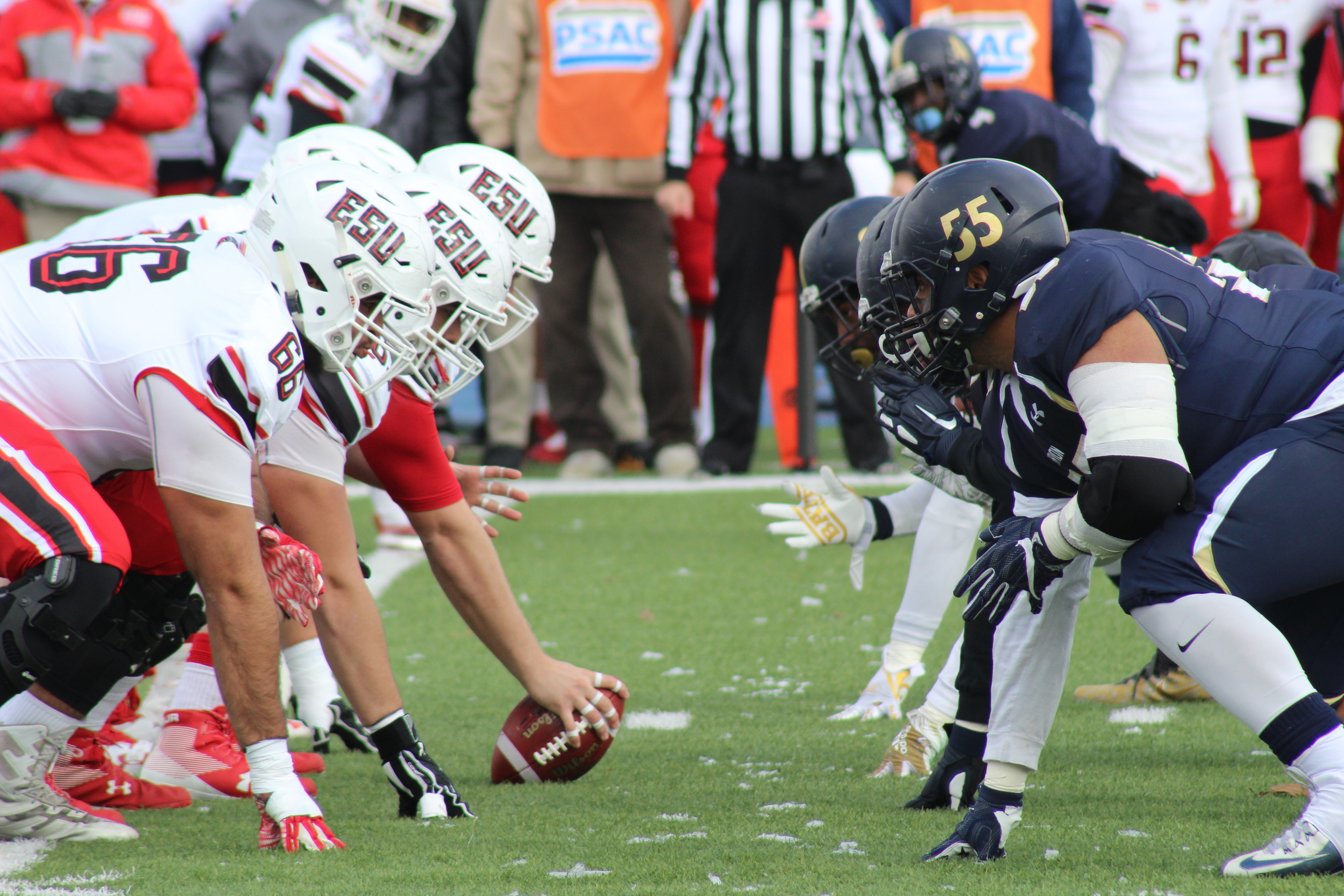
Most plays begin at the line of scrimmage, an imaginary line through the ball that separates the two teams before the snap. The center starts the play by snapping the ball to the quarterback or another eligible back. Players must follow alignment and motion rules before the snap, and certain violations can cause a penalty before the play develops.
Knowing the line of scrimmage helps you understand concepts such as offsides, false starts, sacks, rushing lanes, pass protection and legal forward passes.
How Tackles End a Play
A play ends when an official rules the ball dead. Common examples include a ball carrier being down by contact, stepping out of bounds, an incomplete pass, a score, or certain other situations defined by the rules. After the play ends, officials spot the ball and determine the next down and distance.
Not every collision automatically ends a play. The key question is whether the runner is down according to the rules. That is why you sometimes see a player regain balance and continue after contact if no condition has made the ball dead.
Game Timing: Quarters, Clock Stops and Timeouts
An NFL game is divided into four 15-minute quarters, with halftime between the second and third quarters. The game clock does not run continuously. It can stop for incomplete passes, players going out of bounds in certain situations, scores, penalties, timeouts, changes of possession, replay administration and other rule-based reasons.
Each team has timeouts that can be used strategically. Coaches may stop the clock, avoid a delay penalty, discuss a critical play or manage the final minutes of a half. Clock management is one reason football games can become especially tactical near the end.
The play clock
Separate from the game clock, the play clock controls how long the offense has to start the next play. If the offense fails to snap the ball in time, it can be penalized for delay of game.
Common Football Penalties
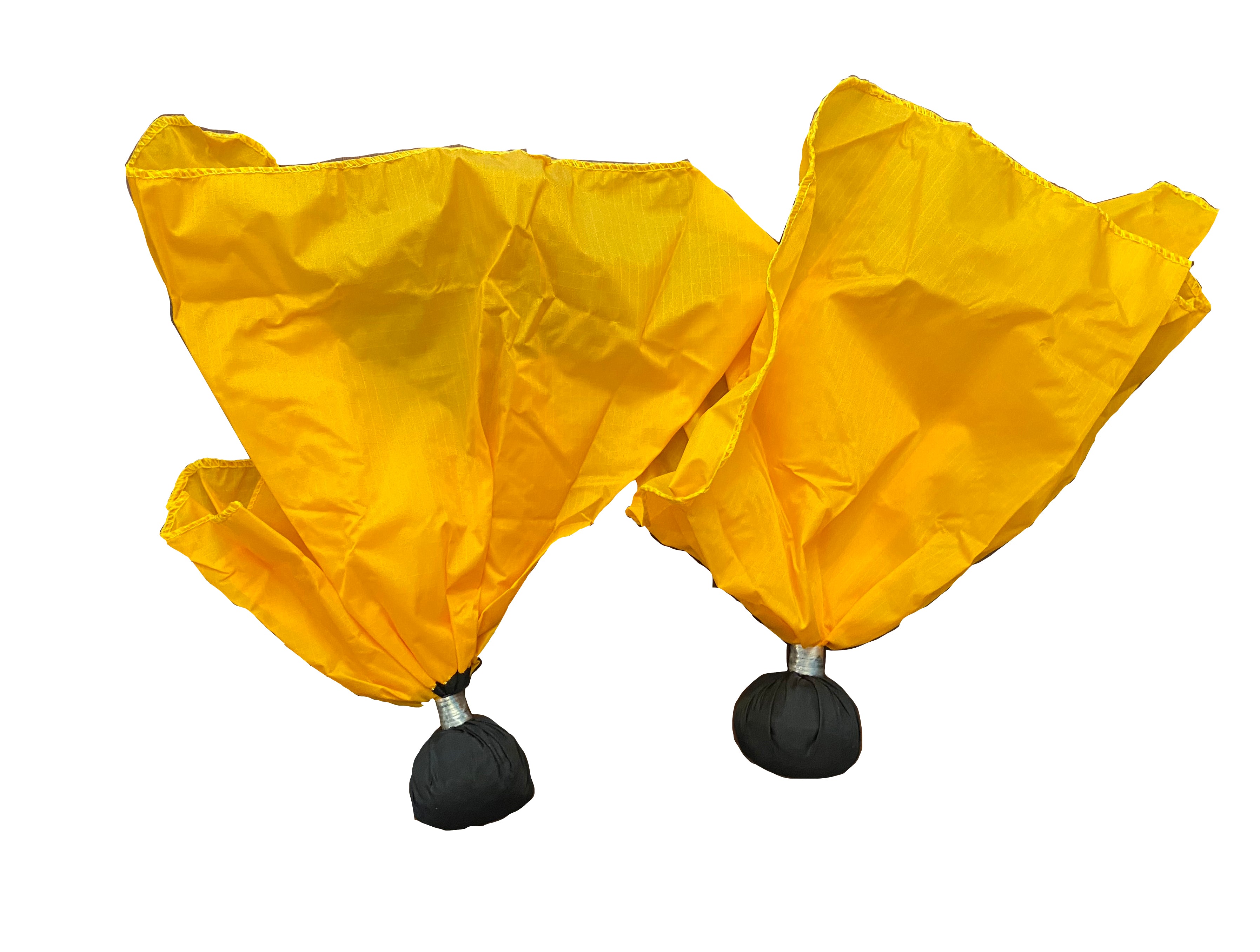
Officials use penalty flags to identify many rule violations.
A penalty is a consequence for breaking a rule. Officials usually signal many live-ball fouls by throwing a yellow flag. Penalty enforcement can include lost yardage, an automatic first down, loss of down, replaying a down, disqualification or other consequences depending on the foul.
Penalties beginners hear often
• False start: An offensive player makes an illegal movement before the snap.
• Offside: A defender is illegally beyond the line at the snap or commits another offside violation.
• Holding: A player illegally restricts an opponent in a manner covered by the holding rules.
• Pass interference: Illegal contact significantly restricts an eligible receiver's opportunity to catch a pass.
• Delay of game: The offense fails to start the play before the play clock expires.
• Roughing or unnecessary roughness: Certain illegal or excessive contact can draw major penalties.
Because enforcement details vary by foul and situation, our dedicated football penalties guide explains the most common flags in greater detail.
What Special Teams Do
Special teams are used for kicking situations. These units handle kickoffs, punts, field-goal attempts and extra-point attempts. The players and tactics can change dramatically from standard offensive and defensive plays.
A punt is often used on fourth down when an offense is too far away for a realistic field-goal attempt and does not want to risk giving the opponent good field position. The punter kicks the ball downfield, and the receiving team may return it if the rules allow.
How a Football Game Flows from Start to Finish
1. The opening possession is established through the pregame and kickoff procedures.
2. The offense begins a drive and tries to gain first downs.
3. The drive ends with a score, punt, turnover, failed fourth-down attempt, end of a period or another possession-changing event.
4. The other team's offense takes the field.
5. This cycle continues while both teams manage field position, time, score and strategy.
6. After four quarters, the team with more points wins unless overtime is required under the applicable rules.
A Simple Checklist for New Viewers
When watching a game, do not try to understand every rule immediately. Focus on these questions:
• Which team has the ball?
• What down is it?
• How many yards are needed for a first down?
• Where is the ball on the field?
• How much time remains?
• What is the score?
• Did the offense run, pass, kick or turn the ball over?
If you can answer those seven questions, you can follow most of the game even before learning advanced strategy.
Frequently Asked Questions
Why does the offense get four downs?
The down system gives the offense a limited number of attempts to advance. Gaining the required distance earns a fresh set of downs, while failing creates a possession decision on fourth down.
Can every player catch a forward pass?
No. Eligibility depends on position, alignment, numbering and the specific rules of the play. This is why broadcasters frequently mention eligible and ineligible receivers.
Why do teams punt on fourth down?
Punting trades possession for field position. Rather than risk failing on fourth down and giving the opponent a short field, a team may kick the ball deep.
Why are there so many clock stoppages?
The rules stop the clock for several events, and teams also use timeouts strategically. Broadcast breaks can make the real-world duration longer than the game-clock time.
Are NFL rules the same as college football rules?
The sports are closely related, but important differences exist in timing, catches, overtime, replay, field markings and other areas. Always use the rulebook for the level of football you are watching.
Conclusion
American football becomes much less confusing when you reduce it to a few fundamentals: gain ground, protect possession, earn first downs, score points and manage time. The offense gets limited chances to move the chains, while the defense tries to end the drive or create a turnover. Special teams influence field position and scoring through kicks.
Once you are comfortable with downs, scoring and possession, the next step is learning player responsibilities and formations. That knowledge turns a series of collisions into a strategic contest where spacing, timing, matchups and decision-making matter on every snap. Keep this guide nearby during your next game, and use the official NFL rulebook whenever you want the precise language behind a call.