Defensive Football Formations Explained: 4-3, 3-4, Nickel, Dime and Goal Line
A good defense is not simply a group of players chasing the football. Before every snap, defenders are arranged to control running lanes, pressure the quarterback, cover receivers and protect specific areas of the field. The formation tells you something about what the defense expects, but modern football adds so many substitutions, motions and hybrid players that the picture can change quickly.
This guide explains the most common defensive football formations, including the 4-3, 3-4, nickel, dime and goal-line packages. It also explains fronts, coverage shells, personnel changes and how a defense responds to offensive formations. For precise legal alignment, substitution and player rules, consult the 2026 NFL Rulebook.
What Is a Defensive Formation?
A defensive formation is the way the defense's 11 players align before the snap. Unlike offense, defense does not have possession, so its structure is built around stopping possible plays rather than initiating the ball movement.
Defensive coaches think about the number of defensive linemen, linebackers and defensive backs, but they also think about exact gaps, leverage, blitz paths and coverage responsibilities.
Personnel vs Front vs Coverage
These terms are related but not identical:
• Personnel: Which types of defenders are on the field.
• Front: How the defensive line and nearby linebackers align against the offensive line.
• Coverage: How defenders are assigned to receivers and areas after the snap.
A team can show a 4-3 personnel structure but rotate a safety down, walk a linebacker to the edge or shift the front before the snap. That is why modern defenses are often described by function rather than only by traditional labels.
The 4-3 Defense
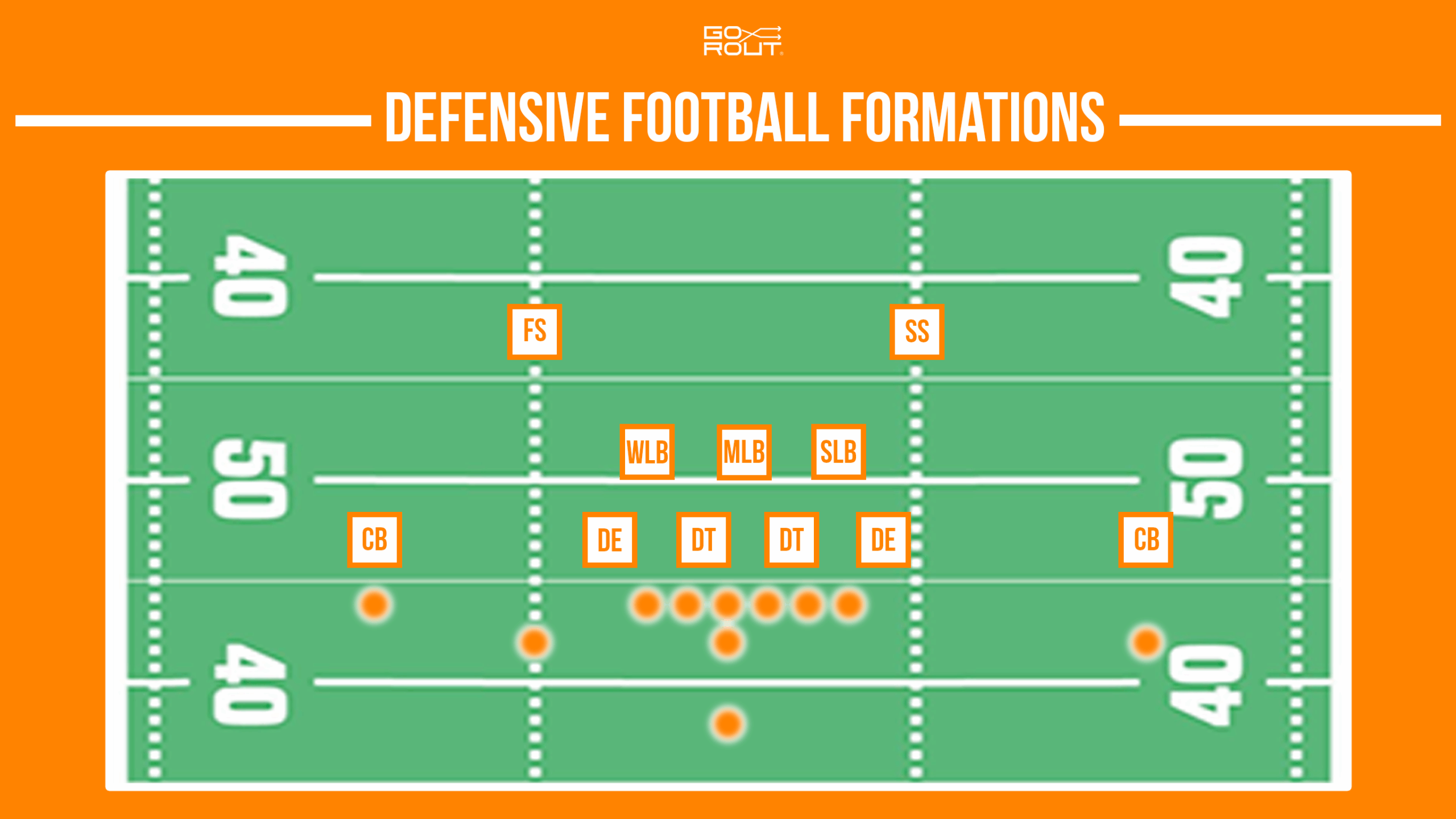
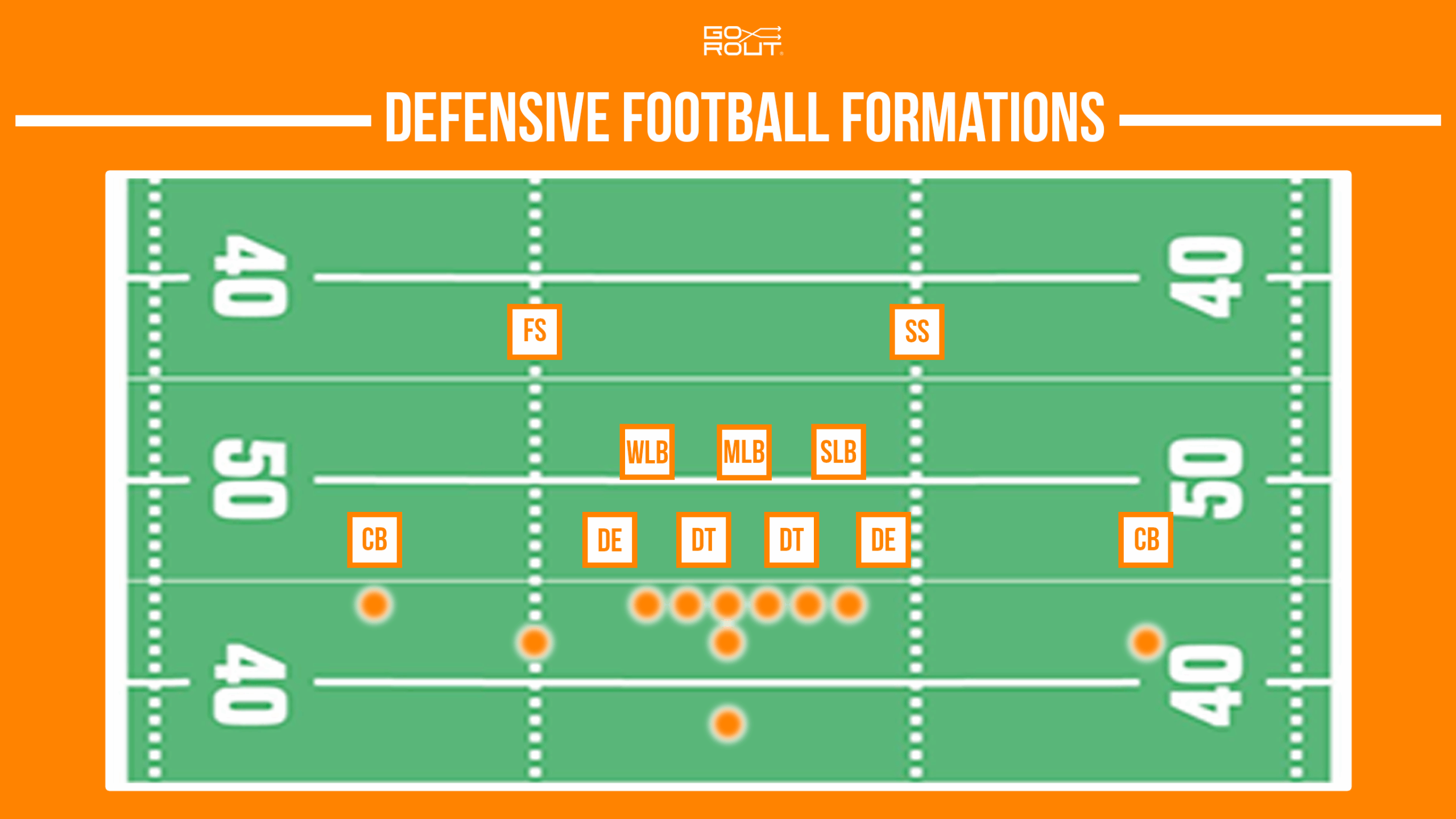
The classic 4-3 defense uses four defensive linemen and three linebackers, leaving four defensive backs in the secondary.
Typical structure
• Two defensive ends
• Two defensive tackles
• Three linebackers
• Two cornerbacks
• Two safeties
Strengths of the 4-3
The four-man defensive line can create natural pass rush pressure without requiring a blitz. It also places several defenders close to common rushing lanes. The three linebackers can flow to the ball, cover short zones or pressure depending on the play call.
Potential challenges
Against offenses that spread four or five receivers across the field, traditional 4-3 personnel may create difficult coverage matchups if linebackers are asked to cover faster receivers in space. That is one reason nickel packages have become so common.
The 3-4 Defense
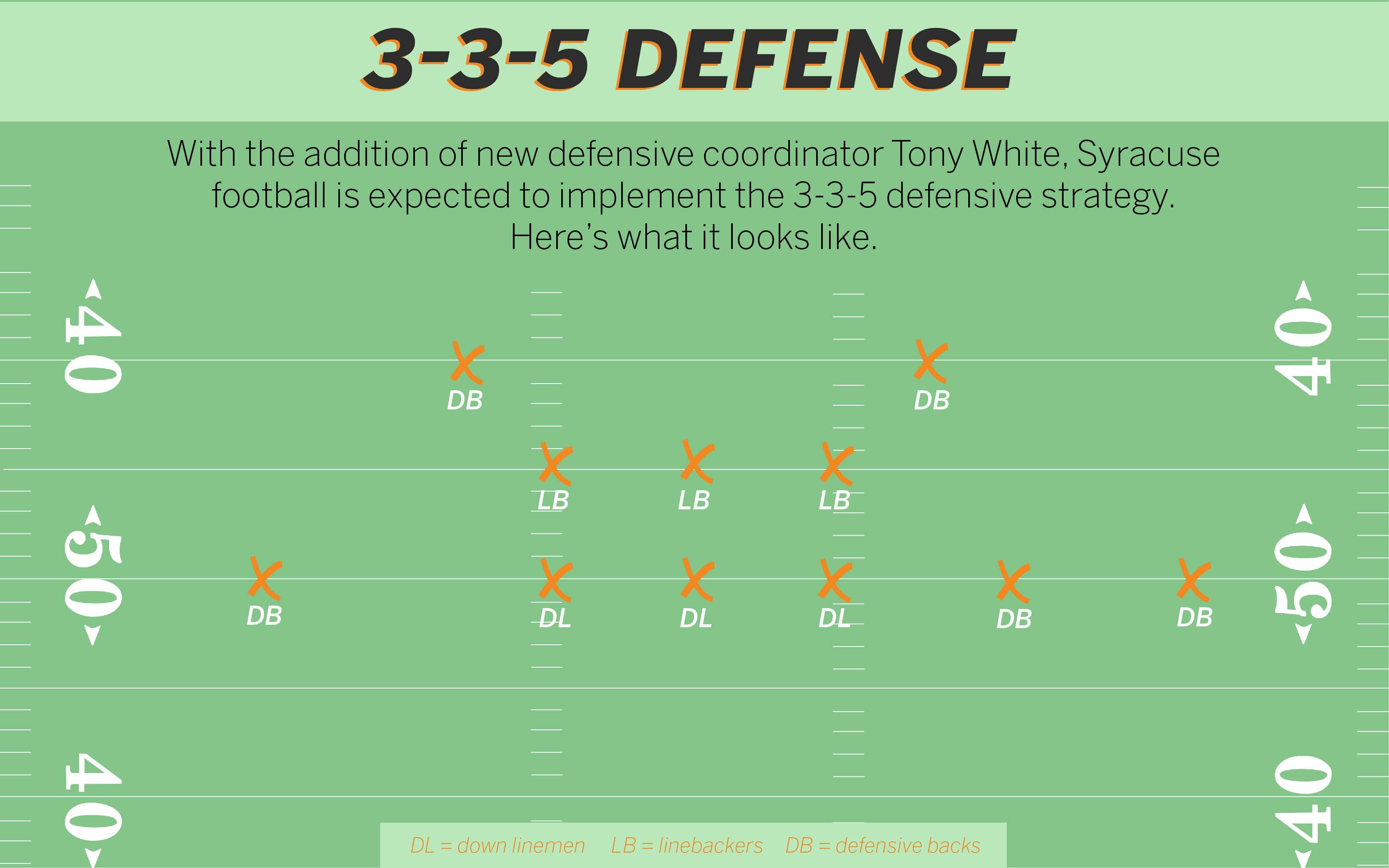
The traditional 3-4 defense uses three defensive linemen and four linebackers. The four remaining players are usually two cornerbacks and two safeties.
Typical structure
• Three defensive linemen
• Four linebackers
• Four defensive backs
One major advantage is flexibility. The offense may not know which linebacker will rush and which will drop into coverage. Edge linebackers can threaten the quarterback from either side, while interior linebackers handle run fits, short coverage or pressure packages.
The role of the nose tackle
Many 3-4 systems feature a nose tackle aligned near the center. That player may be asked to occupy blockers, control interior gaps and make it harder for the offense to run directly through the middle.
4-3 vs 3-4: The Important Difference
Feature | 4-3 | 3-4 |
|---|---|---|
Defensive linemen | 4 | 3 |
Linebackers | 3 | 4 |
Typical edge pressure | Often defensive ends | Often outside linebackers |
Pre-snap flexibility | High | High, especially with LB rush threats |
Modern variations | Many hybrid fronts | Many hybrid fronts |
The labels are useful for beginners, but professional defenses frequently blur the difference. A player listed as a linebacker may line up like a defensive end, while a safety may align like a linebacker.
Nickel Defense
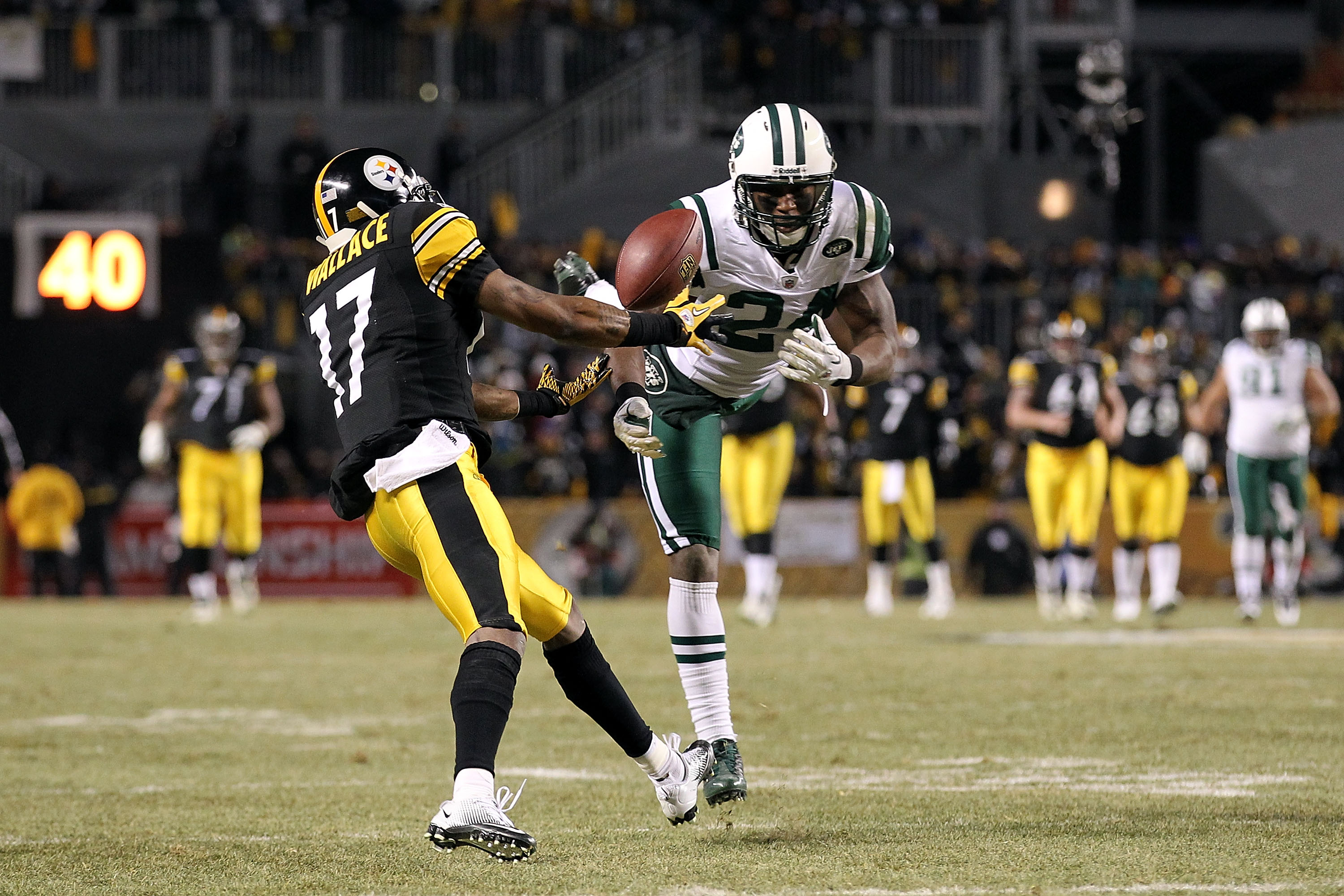
A nickel defense uses five defensive backs. The fifth defensive back is commonly called the nickelback. The defense usually removes a linebacker or defensive lineman to make room for the extra coverage player.
Nickel packages are extremely important in modern football because offenses frequently use three wide receivers. Adding a defensive back can improve the matchup against slot receivers, tight ends and pass-heavy formations.
What a nickelback does
The nickelback may cover the slot, blitz from the edge, defend screens, support the run or play zone coverage. Slot coverage can be especially difficult because the receiver has more room to release in either direction than an outside receiver near the sideline.
Dime Defense
A dime package generally uses six defensive backs. It is commonly used in obvious passing situations, such as third-and-long or late-game drives when the offense must throw.
Advantages
• More speed in pass coverage
• More defenders capable of covering receivers in space
• Flexible blitz options from the secondary
• Useful against four- and five-receiver sets
Tradeoffs
Replacing bigger defenders with smaller defensive backs can make the defense lighter against the run. Smart offenses sometimes respond by running the ball if they see a favorable box.
Goal-Line Defense
Near the goal line, the field becomes compressed. The offense has less space behind the defense, so defenders can focus more heavily on short runs and quick passes.
Goal-line packages usually include extra defensive linemen or other large defenders. The objective is to control gaps, prevent forward movement and make it difficult for the offense to create push at the line of scrimmage.
Why goal-line football is different
A two-yard gain that would be acceptable in the middle of the field can be disastrous at the goal line. Every small space matters, and the defense must react quickly to quarterback sneaks, power runs, play action and tight-end routes.
Bear and Heavy Fronts
Some defenses align several large defenders directly over or near the offensive interior to make inside runs difficult. “Bear front” is a common descriptive term for a structure that covers the center and guards with defensive linemen or creates a similarly crowded interior.
These fronts can force the offense to run outside, adjust blocking assignments or throw the ball.
Even and Odd Fronts
Coaches also describe fronts as even or odd. In simple terms, even fronts often place defenders more directly over guards or tackles, while odd fronts can feature a defender aligned over the center and other players shaded to specific sides.
These labels are not enough to understand the entire defense, but they help explain how gaps are controlled.
What Are Defensive Gaps?
The spaces between offensive linemen are called gaps. Defenses assign players to control or attack those spaces.
• A gaps: Between the center and guards.
• B gaps: Between guards and tackles.
• C gaps: Outside the tackles or between a tackle and tight end depending on the formation.
Run defense works only when players fit their assigned gaps correctly. If two defenders attack the same gap unnecessarily, another lane can open.
Man Coverage and Zone Coverage
Formation alone does not tell you the coverage. A defense can use man or zone principles from many different fronts.
Man coverage
Defenders are assigned to specific eligible receivers. The challenge is staying in position through routes, motion and traffic.
Zone coverage
Defenders are responsible for areas of the field and react to receivers entering those areas. Zone coverage allows defenders to keep more vision on the quarterback but requires strong communication.
Many defenses also use pattern-matching concepts that begin like zone but create man-like responsibilities based on route combinations.
Single-High and Two-High Safety Looks
Before the snap, fans often look at the number of deep safeties.
Single-high
One safety appears deep in the middle. This may suggest certain man or zone structures, but defenses can disguise their actual coverage and rotate after the snap.
Two-high
Two safeties appear deep. This can help defend both sides of the field and discourage deep passes, although it may leave fewer defenders near the line against the run.
Blitz Packages
A blitz sends additional defenders toward the quarterback beyond the normal pass rush. Linebackers, safeties and cornerbacks can all blitz.
The goal may be to create an unblocked rusher, force a quick throw, disrupt protection or make the quarterback change the play. The risk is that sending more rushers leaves fewer defenders in coverage.
How Defenses Match Offensive Personnel
Defense is constantly reacting to the players the offense sends onto the field. If the offense uses several tight ends, the defense may keep larger linebackers and linemen. If the offense uses four receivers, the defense may respond with nickel or dime personnel.
This personnel chess match often begins before the formation is even shown. To understand the offensive side, read our offensive formations guide.
How to Recognize Defensive Formations While Watching
1. Count the defensive linemen with a hand near or on the ground.
2. Count linebackers close behind the line.
3. Count defensive backs.
4. Look for a fifth defensive back to identify nickel.
5. Look for six defensive backs to identify dime.
6. Check whether one or two safeties are deep.
#7Watch defenders move immediately before the snap.
Do not worry if the alignment does not match a textbook diagram. Modern defenses deliberately disguise responsibilities.
Common Situation-Based Packages
Situation | Possible defensive response |
|---|---|
1st & 10 | Balanced base or nickel package |
3rd & long | Nickel or dime with pass rush |
Goal line | Heavy front with extra size |
Four receivers | Nickel or dime personnel |
Short yardage | Extra linemen or crowded box |
Two-minute offense | More defensive backs and sideline awareness |
Why Hybrid Defenders Matter
Modern football values players who can perform several jobs. A safety who can cover a slot receiver and still tackle like a linebacker gives the defense flexibility. An edge defender who can rush and drop into coverage can make protection calls difficult.
This is why traditional position labels do not always tell the whole story. For a complete review of player roles, see our football positions explained guide.
Frequently Asked Questions
What does 4-3 mean?
It traditionally means four defensive linemen and three linebackers, with four defensive backs behind them.
What does 3-4 mean?
It traditionally means three defensive linemen and four linebackers, plus four defensive backs.
What is nickel defense?
A nickel package uses five defensive backs, often to improve coverage against three-receiver offenses.
What is dime defense?
A dime package generally uses six defensive backs and is commonly used in clear passing situations.
Does a defensive formation tell you the coverage?
No. The same front can be paired with multiple man, zone and pressure concepts, and defenses often disguise the final call.
Conclusion
Defensive football formations are best understood as flexible tools rather than fixed diagrams. The 4-3 and 3-4 explain traditional front structures, while nickel and dime packages show how defenses add speed for passing situations. Goal-line and heavy fronts add size when every yard matters.
When watching a game, start by counting linemen, linebackers and defensive backs. Then look at the safeties and watch for late movement. With practice, you will begin to see the defense reacting to offensive personnel, down and distance, field position and game situation before the ball is even snapped.