Football Penalties Explained: Common Flags, Yardage and Automatic First Downs
RedZoneHQ Staff · Aug 25, 2026
Football Penalties Explained: Common Flags, Yardage and Automatic First Downs Yellow flags can make American football feel confusing, especially when a long play is suddenly erased or a team receives an automatic first d…
Football Penalties Explained: Common Flags, Yardage and Automatic First Downs
Yellow flags can make American football feel confusing, especially when a long play is suddenly erased or a team receives an automatic first down. Penalties are not random interruptions. They are the enforcement system that keeps players within the rules governing alignment, contact, timing, safety and fair competition.
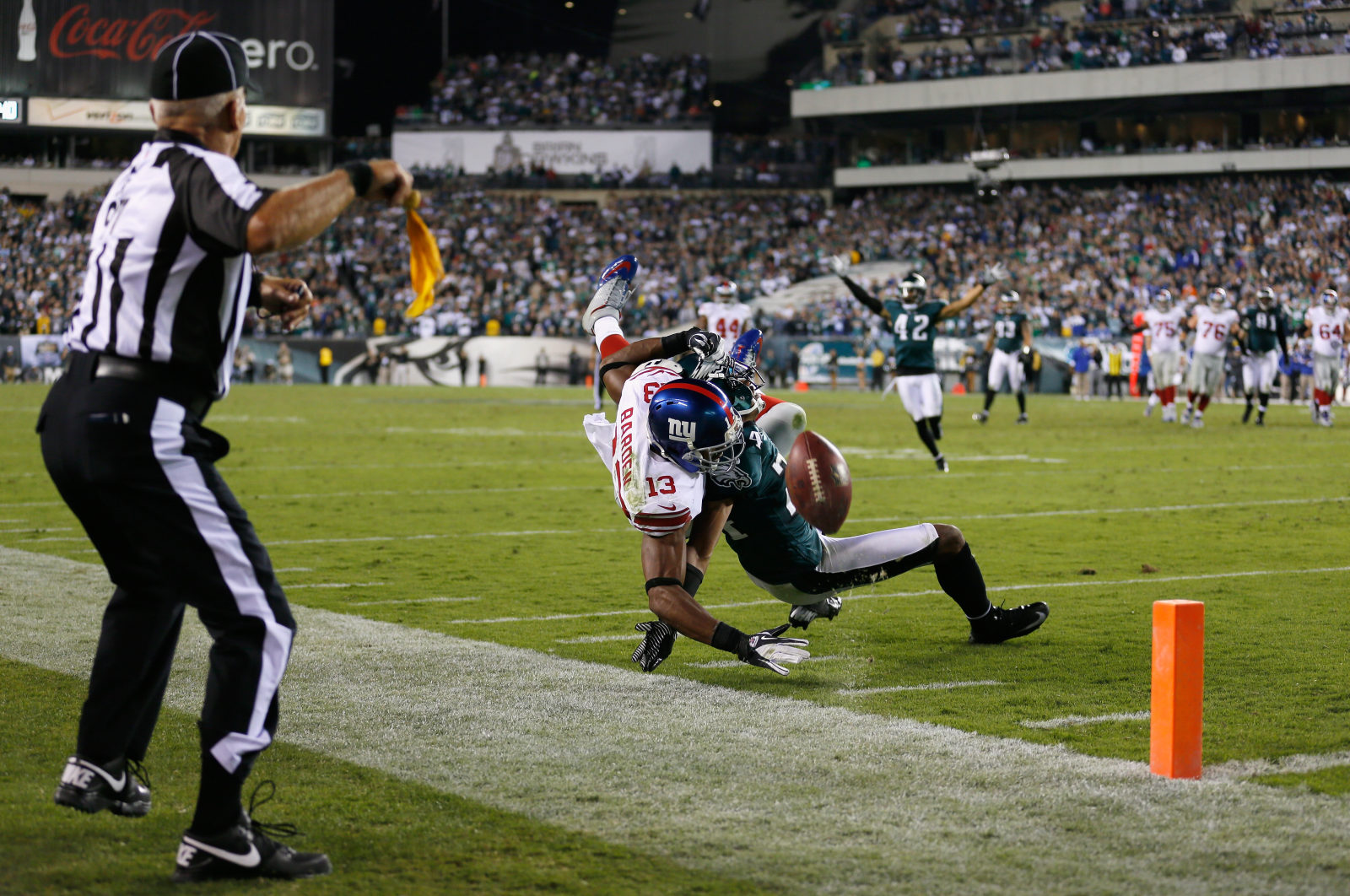
Officials communicate fouls and enforce the rules after a play.
This guide explains the most common football penalties in beginner-friendly language. It covers pre-snap fouls, holding, pass interference, roughing, delay of game and several other flags you will hear during NFL broadcasts. Penalty enforcement can be highly situation-specific, so the official 2026 NFL Rulebook should be used for exact wording. NFL Football Operations also explains how the league handles rules compliance and player conduct.
What Is a Penalty in American Football?
A penalty is the consequence for a foul, which is an action that violates a rule. Officials usually signal many live-ball fouls by throwing a yellow flag. After the play, the referee identifies the foul, the responsible team and the enforcement.
A penalty can produce several outcomes:
• Loss of yardage
• Automatic first down
• Loss of down
• Replay of the down
• Enforcement from a specific spot
• Disqualification for serious conduct
• Declined or offsetting penalties
The exact result depends on the rule and where the foul occurred.
Why Some Penalties Stop the Play Immediately
Some fouls occur before the snap or create a situation where officials stop the action quickly. A false start is a common example. Other fouls occur during a live play, so officials allow the play to finish before enforcing the penalty.
This distinction matters because a live-ball penalty may give the non-offending team a choice between the result of the play and the penalty, depending on the situation.
False Start
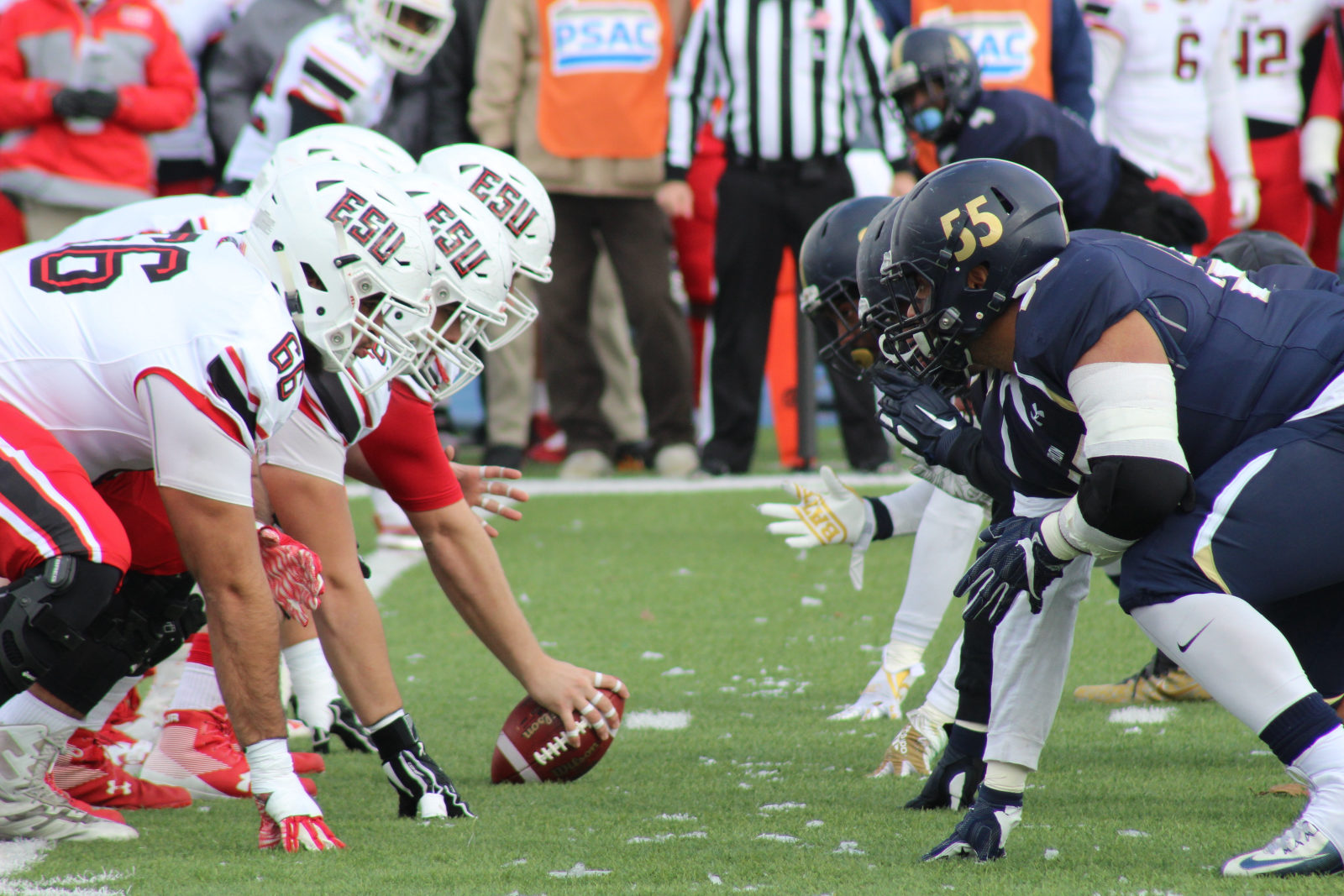
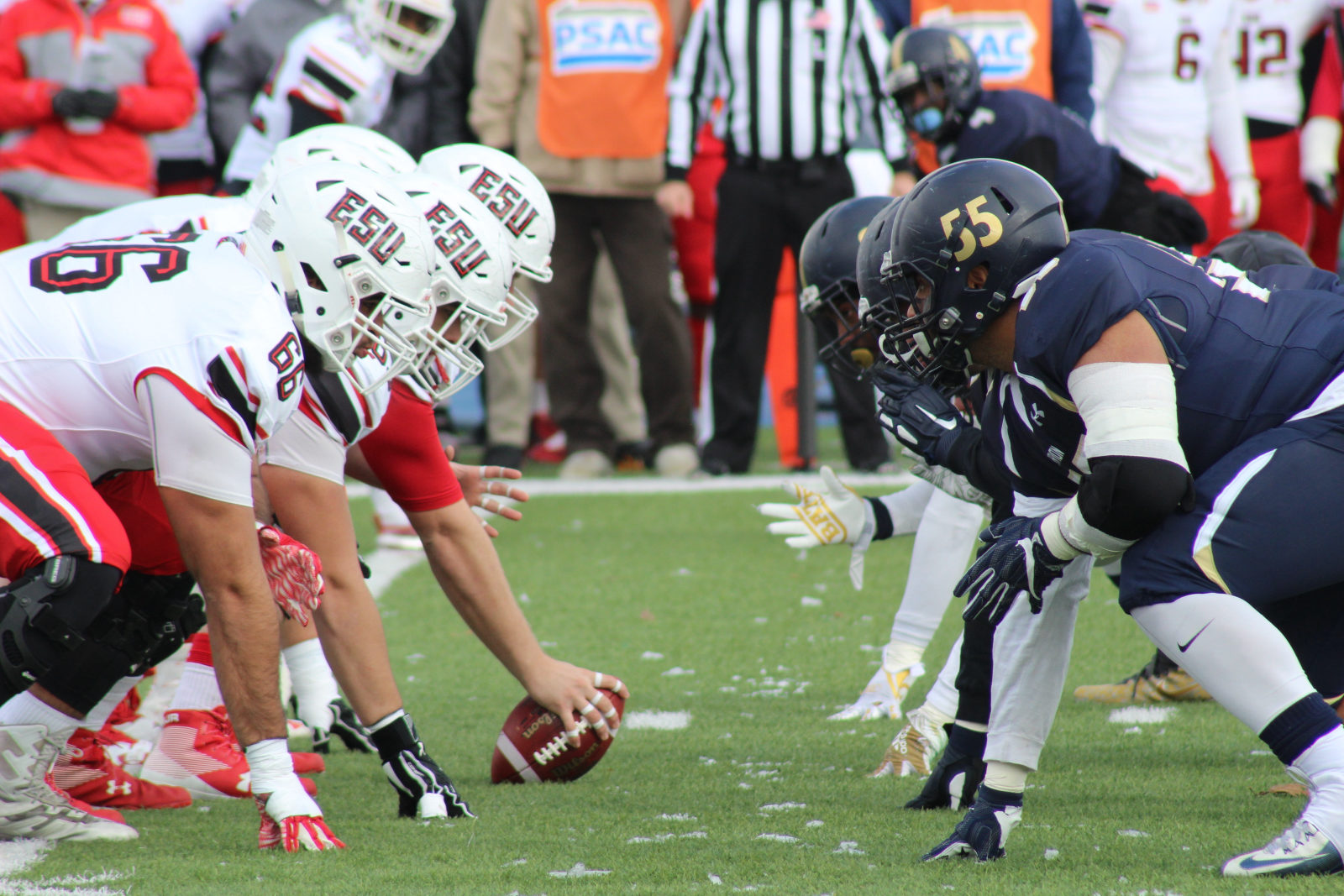
False starts and other pre-snap fouls occur before a play develops.
A false start is one of the most common offensive penalties. It occurs when an offensive player makes a prohibited movement before the snap that simulates the start of the play or otherwise violates the false-start rule.
Why it matters
The offense wants all 11 players to react to the snap count together. If one player moves too early, the defense may be unfairly influenced. Officials generally stop the play before it develops.
Typical effect
A false start commonly costs the offense five yards. It can be especially damaging on third-and-short because it turns a manageable conversion into a longer one.
Offside
Offside is commonly associated with a defensive player being illegally positioned beyond the line of scrimmage when the ball is snapped or otherwise violating the offside rule.
Fans sometimes hear broadcasters say a defender “jumped early.” The exact ruling depends on what the defender did before and at the snap.
Offside vs false start
A false start is primarily an offensive pre-snap violation. Offside is commonly a defensive positioning or timing violation. Both can involve five-yard enforcement, but they are different fouls.
Neutral Zone Infraction and Encroachment
Several pre-snap defensive fouls sound similar. A neutral zone infraction can involve a defender entering the neutral zone and causing a nearby offensive player to react or creating another condition covered by the rule. Encroachment generally involves prohibited contact before the snap.
For beginners, the key lesson is that the space around the ball before the snap is tightly regulated. Players cannot simply cross early without consequences.
Offensive Holding
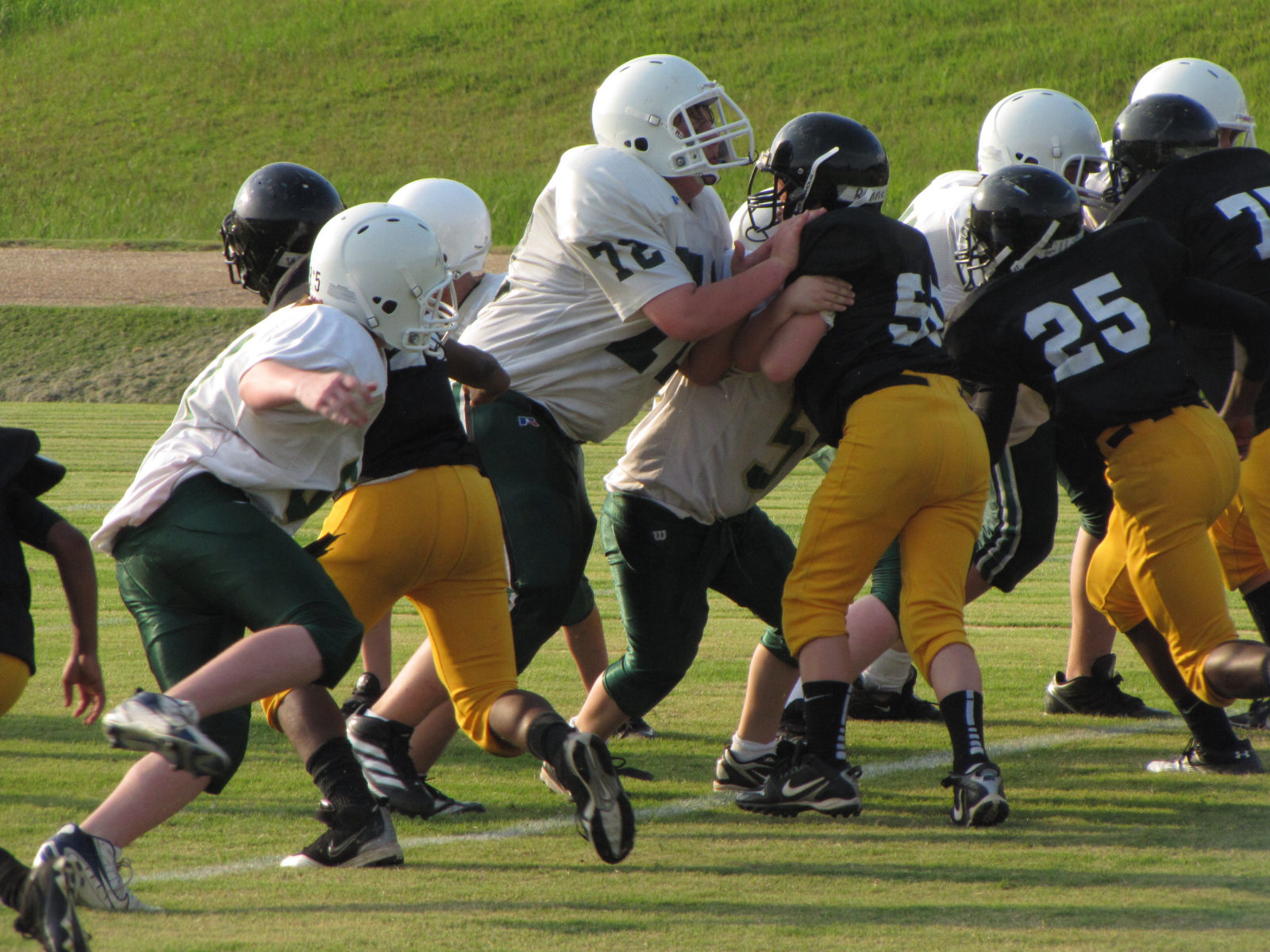
Holding occurs when a blocker illegally restricts an opponent. Legal blocking allows substantial physical contact, but players cannot grab, hook, tackle or restrict defenders in prohibited ways.
Offensive holding is frustrating because it can erase a successful run or pass. A play that appears to gain 20 yards may become a significant loss after enforcement.
Why holding is difficult to judge from television
Offensive linemen use their hands on nearly every play, and many forms of contact are legal. The question is not simply whether a blocker touched or grabbed a defender. Officials judge whether the restriction meets the rule's definition in context.
Defensive Holding
Defensive holding generally involves illegally restricting an eligible offensive player who is not in possession of the ball, subject to the detailed rule conditions.
Because illegal defensive contact can prevent a receiver from entering a route, certain defensive fouls may include an automatic first down in addition to yardage.
Pass Interference
Pass interference rules regulate illegal restriction during passing plays.
Pass interference is one of the most discussed penalties because it can dramatically change field position. It involves prohibited contact that significantly hinders an eligible player's opportunity to catch a forward pass, subject to the rule's timing and conditions.
Defensive pass interference
A defender cannot simply block a receiver from making a legitimate attempt on the ball. However, both players have rights to the ball, and not every collision is interference.
Offensive pass interference
Receivers also have restrictions. An offensive player cannot illegally push or block a defender to create separation for a pass.
Why pass interference creates debate
Receivers and defenders are moving at high speed while tracking the same ball. Officials must judge contact, timing, position and whether the contact materially restricted the opponent.
Illegal Contact
Defenders have limits on certain contact with eligible receivers beyond the area where contact is permitted. Illegal-contact rules help protect the passing game's timing and prevent defenders from simply obstructing routes downfield.
Illegal contact is distinct from pass interference, even though both can involve contact between defenders and receivers.
Delay of Game
The offense has a limited amount of time to snap the ball. If the play clock expires before the snap, the offense can be penalized for delay of game.
This foul often occurs because of communication problems, late substitutions, crowd noise or quarterback adjustments at the line.
Why quarterbacks watch the play clock
Quarterbacks may be changing protection, identifying coverage or communicating motion. All of that must be completed before the play clock reaches zero.
Illegal Formation
Offenses must follow alignment rules before the snap. If too few players are legally positioned on the line or eligible players are arranged incorrectly, officials may call an illegal formation.
This is one reason understanding formations matters. Our offensive football formations guide explains common legal structures in more detail.
Too Many Players on the Field
Teams may substitute between plays, but only the permitted number of players can participate. Confusion during substitutions can lead to too many players being on the field or involved at the snap.
These mistakes often happen when a team changes personnel late and one player fails to exit in time.
Roughing the Passer
Quarterbacks receive specific protection from prohibited contact.
Quarterbacks receive specific protections in passing situations. Roughing the passer can be called when a defender makes prohibited contact with a passer under the rule's conditions.
The rule is intended to protect passers from unnecessary or dangerous contact after the throw and from certain prohibited types of hits.
Why roughing calls matter
Roughing can include significant yardage and an automatic first down, so it can extend a drive that otherwise would have ended.
Roughing the Kicker and Running Into the Kicker
Kickers and punters can be vulnerable while their leg is extended and they are unable to protect themselves normally. Rules therefore restrict certain contact after a kick.
Different levels of illegal contact can produce different penalties. A major kicking foul may give the offense a first down, which can completely change a possession.
Unnecessary Roughness
Unnecessary roughness covers certain illegal acts involving excessive or prohibited contact. Examples can include specific late hits, contact with defenseless players or other conduct identified by the rules.
Player safety is a major reason these rules receive close attention. The NFL's compliance process also reviews certain on-field behavior after games.
Facemask Penalties
Players cannot illegally grab and control an opponent's facemask. Because the helmet is attached to the head and neck, forceful grabbing can create a serious safety risk.
Fans should distinguish incidental contact from an actual prohibited grasp or control covered by the rule.
Horse-Collar Tackle
The horse-collar rule restricts certain tackles in which a defender grabs prohibited areas of the runner's equipment and pulls the runner down in a dangerous manner.
Like several modern safety rules, the emphasis is reducing a type of contact associated with avoidable injury risk.
Unsportsmanlike Conduct
Not every foul is about blocking, tackling or alignment. Unsportsmanlike conduct addresses prohibited behavior that violates standards of sportsmanship.
Examples can include certain taunting, abusive conduct, removing the helmet in prohibited situations, or other behavior listed by rule. Serious or repeated violations can lead to disqualification.
What Does “Automatic First Down” Mean?
Some defensive penalties automatically award the offense a first down, even if the yardage alone would not have reached the line to gain.
For example, imagine it is third-and-15 and a five-yard defensive penalty includes an automatic first down. The offense does not face third-and-10; it receives a new first down because of the penalty provision.
What Does “Loss of Down” Mean?
A loss-of-down penalty means the offense loses not only yardage or field position but also the opportunity represented by the down. This can be extremely costly on third or fourth down.
Loss-of-down rules apply only to specific fouls, so viewers should wait for the referee's full announcement rather than assuming every offensive penalty repeats the down.
Declined Penalties
The team that benefits from a penalty may sometimes decline it. This usually happens when the result of the play is better than the enforcement.
Example: the defense commits a minor foul, but the offense scores a long touchdown on the play and the rules allow the offense to keep the better result. The team may decline the penalty.
Offsetting Penalties
If both teams commit certain fouls during the same play, the penalties may offset under applicable rules. The down can be replayed or another enforcement may apply depending on the specific combination of fouls.
This is one of many areas where penalty enforcement becomes technical.
Penalty Enforcement Spots
Penalties are not always measured from the line of scrimmage. Depending on the foul, enforcement may occur from the previous spot, the spot of the foul, the end of the run or another defined location.
The NFL rulebook's penalty-enforcement section exists because the correct spot can significantly affect the final result.
Common Penalties at a Glance
Penalty
Usually committed by
Basic issue
False start
Offense
Illegal movement before snap
Offside
Defense
Illegal position/timing at snap
Holding
Either team
Illegal restriction of opponent
Pass interference
Either team
Illegal restriction during pass play
Delay of game
Usually offense
Play clock expires
Roughing passer
Defense
Prohibited contact with passer
Facemask
Either team
Illegal grasp/control of facemask
Unsportsmanlike conduct
Either team
Prohibited behavior
How to Follow a Penalty Announcement
1. Listen for the foul name.
2. Identify which team committed it.
3. Listen for the yardage.
4. Note whether it includes an automatic first down or loss of down.
5. Watch where officials spot the ball.
#6Check the new down and distance.
If you understand down and distance first, penalties become much easier to interpret. Our American football rules guide explains that foundation.
Frequently Asked Questions
Why do officials throw yellow flags?
A yellow flag marks the location or occurrence of many fouls. Officials then communicate the ruling and enforcement after the play or immediately when required.
Is every penalty the same number of yards?
No. Different fouls have different enforcement, and some are based on the spot of the foul rather than a fixed distance.
Can a penalty give an automatic first down?
Yes. Certain defensive penalties include an automatic first down.
Can both teams be penalized on the same play?
Yes. Depending on the fouls, penalties may offset or be enforced under specific multiple-foul rules.
Can a team refuse a penalty?
In many situations, the offended team can decline a penalty if the play result is more favorable.
Conclusion
Football penalties make far more sense when you group them by purpose. Pre-snap penalties protect orderly starts. Holding and interference rules protect fair competition for space. Timing rules keep the game moving. Roughness and equipment-related rules protect players from prohibited contact.
Do not try to memorize every enforcement immediately. Start with false start, offside, holding, pass interference and delay of game. Then learn automatic first downs, loss of down and enforcement spots. With those basics, the referee's announcements will start to sound like useful explanations rather than interruptions.