RPOs and Glance Routes in Modern Football: How Offenses Put Defenders in Conflict
One of the most important ideas in modern football is not a formation or a single play. It is a question: can the offense force one defender to be wrong no matter what he chooses?
Run-pass options, commonly called RPOs, are built around that idea. The offensive line blocks a run concept while the quarterback reads a specific defender. If that defender commits to the run, the quarterback can throw into the space he vacated. If the defender stays in coverage, the quarterback can hand the ball to the running back.
The glance route is one of the most useful RPO answers because it attacks the area behind linebackers and inside defensive backs with a fast, angled route. The concept gives the quarterback a simple read while forcing the defense to balance run support and pass coverage.
The 2026 NFL Draft offered a current example of the transition between RPO-heavy college systems and more under-center professional offense. NFL.com noted that top rookie Fernando Mendoza came from a heavy RPO background before entering Klint Kubiak’s under-center play-action system. See NFL.com’s 2026 quarterback analysis. The contrast shows why RPO processing is now a major part of quarterback development even when an NFL system uses many other concepts.
What Is an RPO?
An RPO combines a designed run and a designed pass within the same play structure. The quarterback makes a post-snap decision based on a defender’s movement.
The offensive line generally blocks as if the play is a run. Eligible receivers execute routes that provide the pass option. The quarterback decides quickly enough that the blocking and route timing remain legal.
What Is a Conflict Defender?
The conflict defender is the player the quarterback reads. He is usually responsible for both a run fit and a coverage area in some form.
The offense wants to create a choice:
• If the defender attacks the run, throw behind him.
• If the defender stays in coverage, hand the ball off.
The defender cannot fully perform both jobs at the same time. That is the mathematical advantage the offense is trying to create.
The Glance Route
A glance route is a quick in-breaking route, often run by an outside receiver behind the second level of the defense. It resembles a skinny post or deeper slant depending on the system.
The route is especially useful when the defense has a safety or linebacker fitting aggressively into the run. The quarterback can pull the ball and throw into the window created by that movement.
Why the Glance Route Pairs With Inside Runs
Inside zone, duo and other downhill runs force linebackers and safeties to fit interior gaps. If the offense can remove one of those defenders with a pass threat, the running back may receive a lighter box.
This creates a two-way benefit. The offense does not need to throw the glance route repeatedly. The possibility of the throw can keep a safety from attacking the run as aggressively.
Pre-Snap Box Count
Before the snap, the quarterback counts defenders near the box and identifies the likely conflict player. If the offense has enough blockers for the immediate run defenders, the handoff may already look favorable.
If the defense adds an extra safety, the quarterback may expect the pass option to become available.
Post-Snap Read
The quarterback cannot rely only on the pre-snap picture because defenses disguise intentions. A safety may show deep and rotate down. A linebacker may threaten the line and then drop.
The quarterback reads the movement after the snap and makes the decision within a very small time window.
RPO vs. Play Action
RPO and play action are often confused because both combine run looks with passing. The difference is decision structure.
On a traditional play-action pass, the play is a pass before the snap. The quarterback fakes a handoff to influence defenders and then throws.
On an RPO, the quarterback can actually hand the ball off or throw based on the read.
Concept | Decision | Line action | Main purpose |
|---|---|---|---|
RPO | Run or pass after snap | Usually run blocking | Conflict one defender |
Play action | Pass is predetermined | Run-like protection/action | Influence defenders with fake |
Read option | Give or QB keep | Run blocking | Read edge defender |
Why Offensive-Line Rules Matter
Because linemen are blocking a run, they may move downfield. The quarterback must release the pass quickly enough to avoid an ineligible-player-downfield penalty under the applicable rules.
This is why many RPO throws are fast. The ball is often out before the offensive linemen have time to climb far beyond the line of scrimmage.
Inside Zone RPO
Inside zone is a common RPO foundation because the blocking is simple and the running back has multiple cut options. The quarterback can read an overhang defender or linebacker and pair the run with a slant, glance, bubble or quick out.
If the defense keeps the box light, the offense runs. If it adds a defender, the offense throws into the space created by that extra body.
Duo RPO
Duo gives the offense a more physical interior run. The line creates vertical double teams while the back reads second-level movement. Pairing duo with a glance route can punish a safety who becomes too aggressive against the run.
Our modern running-game guide explains duo and other current NFL run concepts.
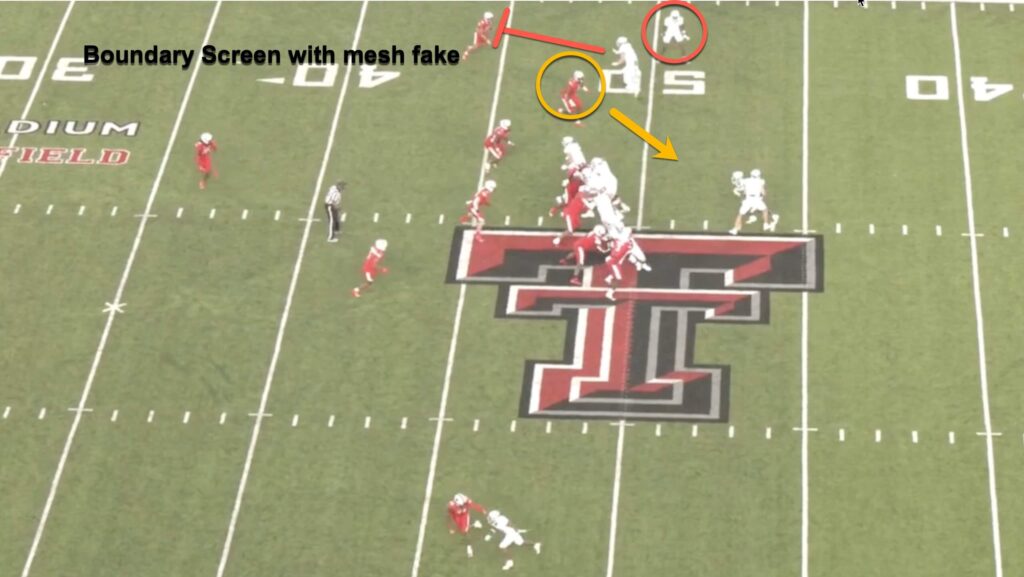
Bubble Screen RPO
The bubble screen attacks the perimeter. If the defense places too many players inside the box, the quarterback can throw immediately to a receiver outside.
The offense is essentially asking whether the defense has enough bodies to defend both width and the interior run at the same time.
Why Motion Makes RPOs Harder to Defend
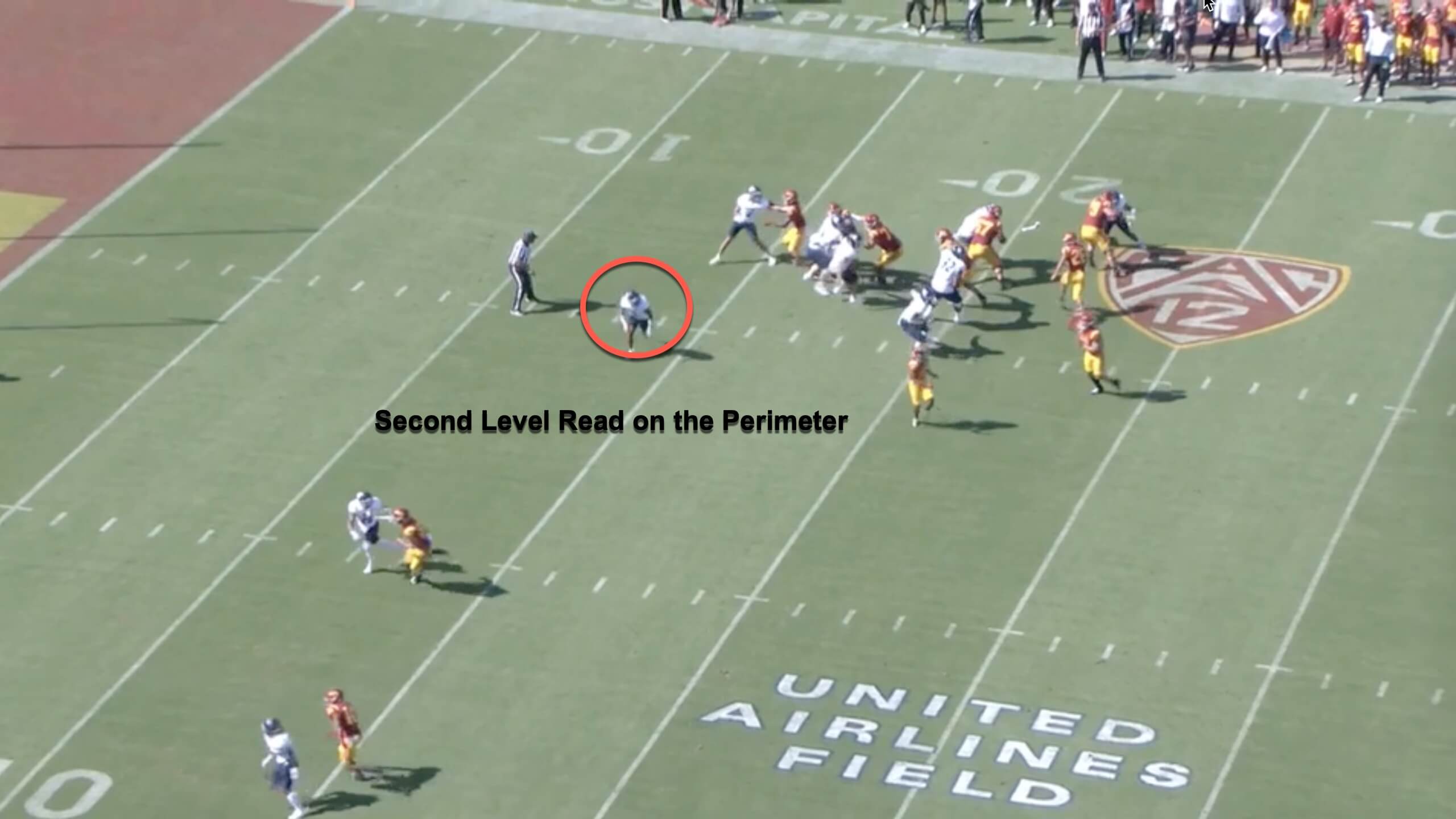
Motion changes the defender count. A receiver moving across the formation can pull a corner away, widen a linebacker or force a safety rotation.
The quarterback can use the reaction to refine the read before the snap. This is one reason our pre-snap motion guide is closely connected to RPO strategy.
How Two-High Defenses Affect RPOs
Two-high safety structures can reduce the number of defenders immediately in the box, which may encourage the offense to run. The defense can counter by triggering a safety after the snap.
That safety can become the conflict defender. If he flies downhill, the glance route opens behind him. If he remains deep, the run has a favorable count.
Our two-high coverage guide explains why split-safety structures create this run-pass balance.
Why Pattern-Match Coverage Helps Defenses
Defenses can use pattern-match rules to avoid leaving one defender with an impossible assignment. Instead of a linebacker carrying every responsibility alone, defenders exchange routes based on releases.
This can close the glance window while still fitting the run, but it demands excellent communication.
Man Coverage Against RPOs
Man coverage can simplify some conflicts because a defender assigned to a receiver follows him rather than reading the run. That reduces the number of zone defenders the quarterback can manipulate.
However, man coverage can create running lanes if defenders turn their backs to the quarterback or if motion creates traffic.
Five-Man Fronts Against RPOs
A five-man front can place enough defenders at the line to control the run without immediately adding a safety to the box. That may allow second-level defenders to remain more patient in coverage.
Our five-man defensive fronts guide explains how the structure changes blocking math.
Why the Quarterback Must Be Decisive
RPOs look simple on a whiteboard, but the quarterback’s timing is demanding. He must:
1. Confirm the box count.
2. Identify the conflict defender.
3. Handle the snap and mesh with the running back.
4. Read the defender’s first movement.
5. Decide give or throw.
#6Deliver the ball accurately before the route window closes.
Hesitation can ruin both options. A late handoff disrupts the back’s timing, while a late pass increases pressure and penalty risk.
The Running Back’s Job
The back must maintain the run track even though the quarterback may pull the ball. He cannot slow down waiting for the decision. The mesh needs to look like a real handoff every time.
That consistency helps disguise the play and protects the quarterback’s decision window.
The Receiver’s Job
The receiver must run the route as if the ball is coming, even when the offense hands off. His route can remove a defender from the box or occupy a safety.
On a glance route, the receiver needs precise depth. Too shallow and the linebacker may recover. Too deep and the quarterback may not have time before the linemen move downfield.
How Defenses “Muddy” the Read
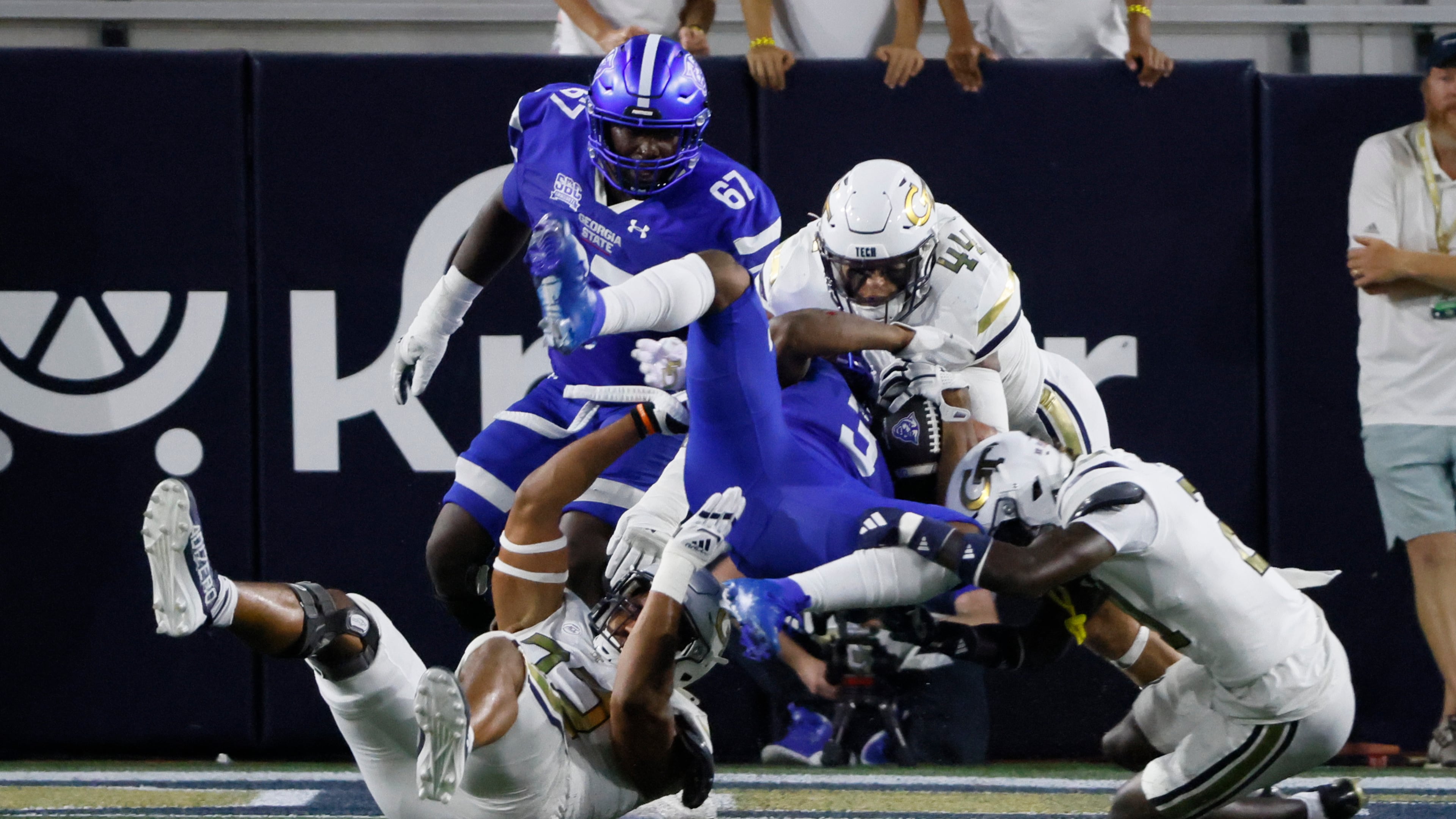
Smart defenders avoid making the quarterback’s decision obvious. A linebacker can step toward the run, then settle under the glance window. A safety can rotate late. An edge defender can slow-play the mesh before attacking.
The goal is to make the quarterback hold the ball long enough that the offensive line and route timing become less comfortable.
RPOs and Simulated Pressure
Simulated pressure can create a false conflict. The quarterback may identify one linebacker as the read player, but that defender drops while a different defender rushes.
This is another reason simulated pressure has become such an important defensive tool.
What Makes an RPO Successful?
Success is not always a completed pass. If the RPO forces the safety to stay wide and the running back gains six yards, the pass option helped create the run. If the defense crowds the box and the quarterback throws a five-yard glance route, the run threat created the pass.
The concept should be evaluated as a system rather than by one part of the box score.
RPO Viewing Checklist
1. Count the defenders in the box.
2. Find the safety or linebacker near the receiver side.
3. Watch the offensive line—are they run blocking?
4. Watch the quarterback’s eyes during the mesh.
5. See whether the read defender steps toward the run.
6. Track the receiver behind that defender.
Common RPO Misconceptions
“Every play action is an RPO.”
No. Play action is a predetermined pass with a run fake. RPOs include a real post-snap run-or-pass choice.
“The quarterback always reads an edge defender.”
No. Traditional read option often reads the edge. RPOs can read linebackers, safeties or overhang defenders.
“RPOs only work in college.”
No. NFL offenses use RPO concepts, though professional defenses and rule differences influence how they are designed.
“The pass must be deep to be valuable.”
No. Many RPO throws are short, fast completions designed to punish an unfavorable box count.
Frequently Asked Questions
What does RPO stand for?
Run-pass option.
What is a glance route?
A quick in-breaking route, often paired with a run concept to attack the space behind a run-fitting defender.
Who does the quarterback read?
The offense identifies a conflict defender whose run and coverage responsibilities can be manipulated.
Why are RPO passes thrown quickly?
The offensive line is usually run blocking, so the quarterback needs to throw before linemen travel too far downfield and before the route window closes.
Conclusion
RPO football is powerful because it turns defensive discipline into a problem. The defender is doing exactly what he is coached to do—fit the run or protect a passing lane—but the offense structures the play so that his choice creates an answer somewhere else.
The glance route is one of the clearest examples. A safety attacks the run, and the quarterback throws behind him. The safety stays deep, and the offense hands the ball to the back. In modern football, the best RPO systems do not rely on trickery. They rely on numbers, leverage and fast quarterback decisions. Once you learn to identify the conflict defender, the entire concept becomes much easier to see.