Wearables and Performance Technology in College Football: Benefits, Privacy and Player Safety
RedZoneHQ Staff · Sep 18, 2026
Wearables and Performance Technology in College Football: Benefits, Privacy and Player Safety College football performance staffs can measure more about athletes than ever before. GPS-style tracking devices can estimate …
College football performance staffs can measure more about athletes than ever before. GPS-style tracking devices can estimate movement loads. Heart-rate sensors can add physiological context. Cameras can support technique review. Force plates, timing systems and software platforms can help coaches organize training information. Used responsibly, these tools can support recovery, workload planning and player development. Used poorly, they can create privacy concerns, misleading conclusions and unnecessary pressure on athletes.
That balance is increasingly important in 2026. The NCAA has published responsible-use guidance for performance technologies in collegiate athletics, emphasizing that innovation should be weighed against student-athlete well-being, privacy, informed consent, mental health and data security. In other words, the question is no longer simply “What can we measure?” It is “What should we measure, who should see it, and how should it influence decisions?”
This guide explains the major types of performance technology used around football, what the data can and cannot tell coaches, how workload information may support safer training and why governance matters. It is not medical advice; health and return-to-play decisions should remain with qualified medical professionals operating under appropriate policies.
Performance technology is a broad category rather than one device. The NCAA describes it as devices and tools used to collect biometric and performance-related data, including wearables, cameras, sensors, mobile applications, software platforms and related systems.
In football, examples can include:
• Player movement trackers.
• Heart-rate monitoring devices.
• Accelerometers and inertial sensors.
• Timing gates for sprint testing.
• Force plates for jump and force assessments.
• Video-analysis systems.
• Sleep or recovery questionnaires and apps.
• Strength-training monitoring tools.
• Software that combines training and wellness information.
Each tool answers a different question. Problems arise when one measurement is treated as if it explains the entire athlete.
Why Football Programs Want Better Data
Football combines short explosive actions, collisions, high-speed running, strength training, position-specific workloads and a long competitive season. Two players listed at the same position can experience very different demands based on snap count and role.
A starting cornerback who plays 70 defensive snaps and covers kicks may accumulate a very different movement profile from a rotational defensive tackle. A quarterback's practice load is different from a running back's. Technology can help coaches describe those differences more precisely.
The goal should be better questions
Data is most useful when it helps staff ask a focused question, such as:
• Did today's practice expose this player to unusually high running volume?
• Is a position group accumulating more high-speed work than planned?
• Did an athlete's output change meaningfully across several sessions?
• Are training demands preparing players for game conditions?
A number without a question can become noise.
Movement Tracking and Workload
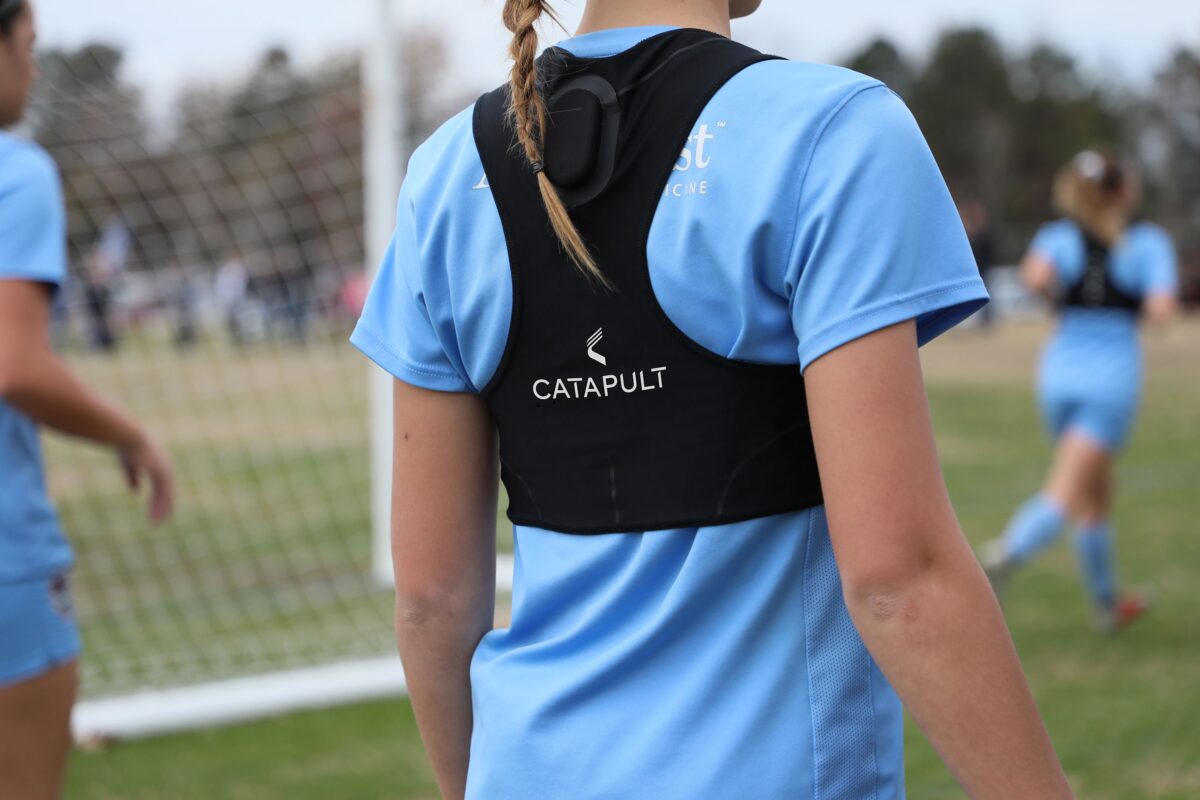
Movement tracking can help performance staffs compare workload across football sessions.
Wearable movement trackers can estimate distance, speed, acceleration, deceleration and other external-load variables. Coaches may use that information to compare training days or understand the demands of different positions.
The term “load” should not be treated as one universal score. Ten high-speed sprints, repeated short accelerations and a long low-intensity conditioning session can produce similar total distance while stressing the athlete differently.
Useful interpretation considers:
• Position.
• Practice type.
• Recent training history.
• Game snap count.
• Strength-training work.
• Recovery time.
• Medical context when appropriate.
High-Speed Running: Valuable but Easy to Misread
Skill-position players need exposure to high-speed movement to prepare for games. Eliminating fast running in the name of “load management” can leave an athlete underprepared. On the other hand, adding large unplanned speed volumes after a heavy game can be unnecessary.
Performance staffs can use tracking data to ensure speed exposure is deliberate rather than accidental. The goal is not always to reduce workload; sometimes the data shows that a player needs more appropriate preparation.
Acceleration and Deceleration Matter
Football is not a distance-running sport. Many positions repeatedly start, stop and change direction. Those accelerations and decelerations can create substantial physical demand even when total yardage is modest.
A nickel defender reacting to motion, a running back making cuts and a linebacker fitting the run may accumulate many intense changes of velocity. This is another reason one simple mileage number cannot describe football workload.
The tactical demands of a versatile nickel role are discussed in our hybrid defender guide, which helps explain why positional context matters when interpreting performance data.
Heart Rate and Internal Load
Movement tracking describes what the athlete did externally. Heart-rate information can add one view of internal physiological response. The same running drill can produce different responses in two players depending on conditioning, temperature, fatigue and individual physiology.
Heart rate should still be interpreted carefully. Equipment accuracy, contact sports, emotional stress and position demands can affect measurements. It is one input rather than a medical diagnosis.
Force Plates and Jump Testing
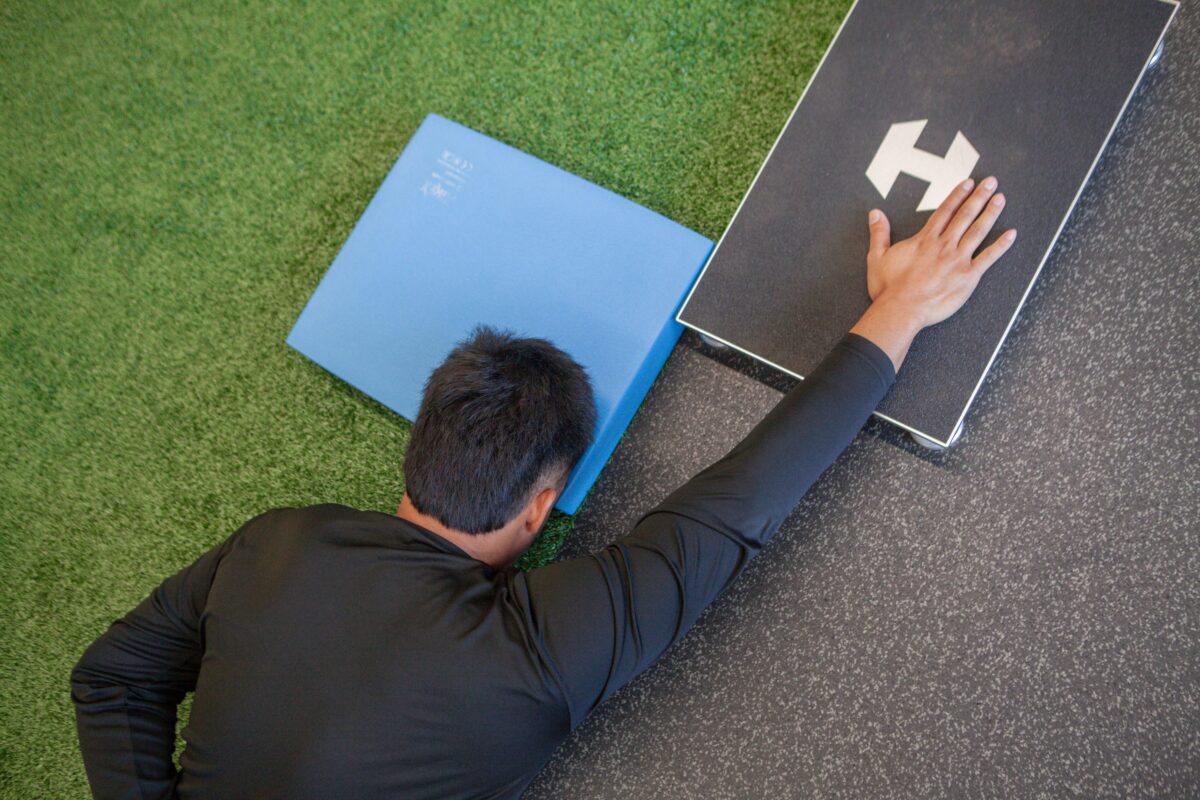
Force plates can measure how an athlete applies force during controlled testing.
Force plates measure how an athlete applies force into the ground during tasks such as jumps. Performance staffs may track variables related to force, impulse, jump strategy and asymmetry.
Repeated assessments can help identify trends, but small day-to-day differences do not automatically mean an athlete is fatigued or injured. Testing quality, warm-up, motivation and natural variation all matter.
Trend beats one reading
A responsible program looks for meaningful patterns across time rather than reacting dramatically to one unusual number.
Video Is Also Performance Technology
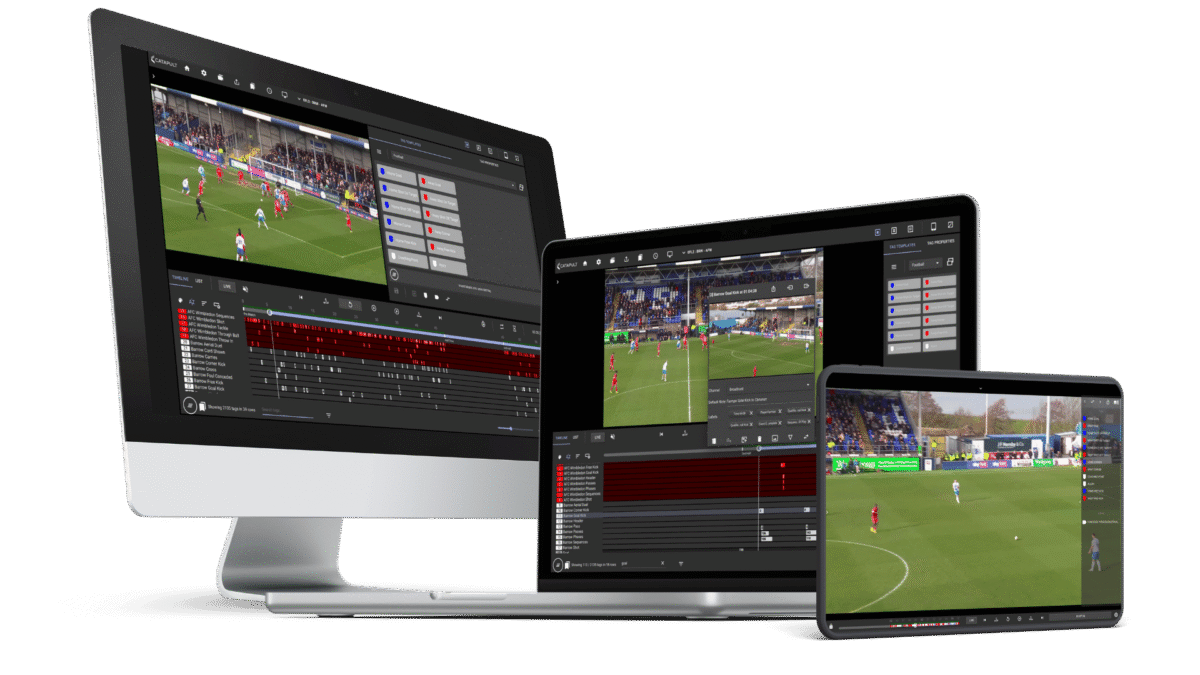
Video analysis adds technical context that wearable metrics cannot provide alone.
Not every useful technology sits on the athlete's body. Video can reveal route detail, blocking technique, tackling posture and movement efficiency.
Performance video used in training serves a different purpose. It can connect a physical metric to what actually happened. If a player recorded an unusually large number of decelerations, video may show whether those movements came from a specific drill or technique issue.
Sleep and Recovery Tracking
Recovery tools can provide context, but they should not replace professional judgment.
Sleep influences recovery, learning and well-being, so many teams educate athletes about sleep habits. Some systems use wearables or questionnaires to estimate sleep duration and quality.
This is an area where privacy and psychological impact deserve special attention. Athletes should not feel that every hour of their personal life is under surveillance. Estimates from consumer-style wearables also have limitations and should not be treated as perfect clinical measurements.
Education, consistent routines and access to qualified support can be more valuable than obsessing over a nightly score.
Wellness Questionnaires
Simple self-reported information—sleep quality, soreness, stress or perceived fatigue—can provide context that a sensor cannot. The challenge is creating an environment in which athletes believe they can answer honestly without punishment.
If a player thinks reporting soreness will automatically cost a starting job, the data becomes unreliable. Responsible implementation therefore depends on trust and clear boundaries around how information is used.
Privacy Is a Football Issue
Performance data requires clear access, privacy and security policies.
Performance data can reveal sensitive information about an athlete's body, habits and readiness. That creates questions far beyond strength and conditioning.
Programs should establish clear answers to:
• What data is collected?
• Why is it being collected?
• Who can access it?
• How long is it stored?
• Can it be shared outside the team?
• What happens when an athlete transfers or graduates?
• How is the information protected from unauthorized access?
The NCAA's responsible-use guidance specifically identifies privacy and data security as areas programs need to consider.
Informed Consent Should Be Meaningful
Consent is not useful if an athlete signs a dense form without understanding the practical consequences. Programs should explain data collection in plain language, including the purpose, access rules and foreseeable uses.
Students should be able to distinguish between information collected for medical care, performance coaching, research, team operations or optional wellness support. Those categories may carry different ethical and legal considerations.
Mental Health and the Problem With Constant Scores
Technology can create anxiety when every part of training is converted into a rating. An athlete who receives a “red” recovery score may begin to feel poorly before practice even if he otherwise felt ready. Another may become obsessed with hitting a target number.
Data should inform professional judgment rather than replace the athlete's lived experience. Coaches can reduce unnecessary stress by avoiding public leaderboards for sensitive metrics and explaining that normal variation is expected.
Data Security: Why a Password Is Not Enough
A program may use several vendors for tracking, strength data, video and wellness information. Each platform creates another storage and access point.
Responsible security can include:
• Role-based access.
• Strong authentication.
• Vendor security review.
• Clear data-retention policies.
• Procedures for lost devices.
• Limits on downloads and exports.
• Incident-response planning.
A coaching staff does not need to become a cybersecurity department, but institutions need professionals responsible for protecting sensitive information.
Performance Data Should Not Diagnose Injury
A wearable can show that a player's movement output changed. It cannot independently determine why. Reduced speed might reflect fatigue, a tactical practice assignment, equipment variation, illness, soreness or many other factors.
Medical diagnosis and return-to-play decisions belong with qualified health-care professionals. Performance data can provide context, but coaches should not use a dashboard to overrule medical judgment.
Return-to-Play Monitoring
When a medical team clears the appropriate stages of rehabilitation, performance technology may help compare controlled training demands with the athlete's prior baseline or positional demands.
A gradual progression might include:
1. Controlled movement.
2. Position-specific acceleration and deceleration.
3. Non-contact practice volume.
4. Increasing football-specific intensity.
#5Full practice within the medical plan.
The exact process depends on the injury and medical assessment. Technology supports the plan; it does not create the clearance.
Why Position-Specific Baselines Matter
Comparing a defensive tackle's movement profile directly with a wide receiver's is usually meaningless. Their jobs are different.
High-speed coverage, backpedal-to-sprint transitions, change of direction
Even within one position, role matters. A slot receiver may run very different routes from a boundary deep threat.
Performance Technology and the 105-Player Roster
Tighter roster planning makes player availability and development important, but that should not become an excuse to over-monitor athletes. Technology can help staffs understand practice demands across a roster, particularly when thin position groups need careful workload planning.
Our 105-player roster guide explains why depth management has become a central 2026 roster issue.
Transfer Portal Data Questions
When players transfer, performance data creates complicated questions. Does the athlete receive a copy? Can the prior institution keep it? Can it be shared with a new school? What did the original consent allow?
Policies need to anticipate mobility rather than treating every athlete as permanently attached to one institution. The transfer environment described in our 2026 transfer portal guide makes data governance even more important.
How Coaches Can Avoid Data Overload
A modern staff can collect thousands of variables, but more data does not guarantee better decisions. One useful approach is to define a small set of metrics for each question.
Example: managing receiver practice load
A staff might focus on total practice participation, high-speed running, number of high-intensity accelerations, recent game snaps and the athlete's subjective feedback. Adding 40 unrelated dashboard metrics can make the decision worse rather than better.
A Responsible Technology Checklist for Programs
• Define the purpose before collecting data.
• Use validated or appropriately understood tools.
• Explain collection and access clearly to athletes.
• Limit access to people who need the information.
• Protect data with institutional security practices.
• Avoid using one metric as a diagnosis.
• Separate medical authority from coaching pressure.
• Review vendor contracts and retention practices.
• Consider mental-health effects of constant monitoring.
• Reevaluate whether each data stream is still useful.
What Players Should Ask
A student-athlete does not need to be a data scientist to ask sensible questions:
1. What is this device measuring?
2. Why does the team want the measurement?
3. Who can see my data?
4. Will it affect playing-time decisions?
5. Is it part of medical care or performance coaching?
6. How long will the information be stored?
#7What happens to the data if I transfer?
Clear answers help create trust, which ultimately makes the information more useful.
Common Performance-Technology Mistakes
Chasing one “readiness score”
Readiness is complex. One algorithm should not override context, communication and professional judgment.
Collecting data without a decision plan
If coaches do not know what action a metric might inform, there may be little reason to collect it.
Comparing incompatible athletes
Position, role, body type and training history matter.
Ignoring the athlete's voice
A sensor cannot fully describe pain, stress, confidence or personal circumstances.
Using technology as surveillance
Monitoring that extends unnecessarily into private life can harm trust and create ethical concerns.
Frequently Asked Questions
What are performance technologies in college sports?
They include wearables, cameras, sensors, apps, software and other tools used to collect or analyze biometric and performance-related information.
Can wearables prevent injuries?
No device can guarantee injury prevention. Technology can help describe workloads and trends that qualified staff may use as one part of broader training and health decisions.
Can coaches use wearable data to diagnose an injury?
Performance data should not replace qualified medical evaluation. Diagnosis and return-to-play authority belong within appropriate health-care processes.
Why is privacy important?
Performance information can be sensitive and may reveal aspects of an athlete's body, habits or health-related status. Responsible programs need clear access, consent, retention and security policies.
Does more data always improve performance?
No. Excessive or poorly understood data can distract decision-makers. Useful programs collect information tied to specific questions and interpret it in context.
Conclusion
Performance technology can make college football training more informed, but the device is never the strategy by itself. Tracking movement, force, recovery indicators and video can help staffs understand what athletes are experiencing, yet every measurement comes with limitations and responsibilities.
The NCAA's responsible-use approach is especially relevant in 2026 because the technology is advancing faster than simple traditions can govern it. Programs need clear purpose, informed athletes, qualified interpretation, strong privacy protections and medical independence. The best use of technology is not to turn a player into a collection of numbers. It is to give coaches, performance professionals and health-care staff better context while keeping the student-athlete's well-being at the center of every decision.