2026 NFL Rookie Impact Guide: How to Evaluate First-Year Players Beyond Draft Position
RedZoneHQ Staff · Sep 2, 2026
2026 NFL Rookie Impact Guide: How to Evaluate First-Year Players Beyond Draft Position The NFL Draft creates instant expectations. A first-round pick is labeled a future star, a mid-round selection is called a value, and…
2026 NFL Rookie Impact Guide: How to Evaluate First-Year Players Beyond Draft Position
The NFL Draft creates instant expectations. A first-round pick is labeled a future star, a mid-round selection is called a value, and an undrafted player is treated like a long shot. Once training camp begins, however, draft position becomes only one part of the story. Rookies must learn an NFL system, earn a role, adjust to professional speed and prove they can execute the details that keep veterans on the field.
That is why evaluating first-year players in 2026 requires more than asking where they were selected. Opportunity, positional learning curve, team context, snap path, scheme fit and special-teams value can matter just as much as raw talent during Year 1.
This guide gives fans a practical framework for judging rookie impact without turning preseason excitement into certainty. It applies to quarterbacks, running backs, receivers, tight ends, offensive linemen and defenders, while recognizing that each position develops differently.
Draft Position Matters - doesn't define Destiny
Early picks receive more investment, more patience and usually a clearer developmental plan. Teams are naturally motivated to put premium selections in positions to succeed. That creates a real relationship between draft capital and early opportunity.
But draft position cannot tell you:
• Whether a rookie is blocked by an established starter.
• How quickly he learns the playbook.
• Whether his college role matches the NFL scheme.
• How well he handles professional technique.
• Whether an injury changes the depth chart.
• Whether the coaching staff trusts him in critical situations.
Current NFL analysis of the 2026 rookie class reflects the same uncertainty. The league's 2026 All-Rookie Team projections focus on role and team fit as well as draft status.
Step 1: Identify the Path to Snaps
The first question is not “How talented is the rookie?” It is “How does he get on the field?”
Look at the depth chart. A rookie may be the future at his position but begin behind a productive veteran. Another may have been drafted later but enter a position group with an obvious opening.
Clear path
A rookie is projected as a starter or top rotational player, and there is little established competition.
Conditional path
The rookie needs to beat a veteran, earn a sub-package role or wait for an injury.
Developmental path
The team appears willing to bring the player along slowly while he improves technique, strength or playbook knowledge.
These paths can change quickly, but identifying the starting point prevents unrealistic expectations.
Step 2: Separate Position From Position
Not every rookie job has the same learning curve. A running back may contribute immediately because athletic traits and vision can translate quickly, while an offensive lineman may need substantial technical refinement. A quarterback must manage protections, progressions, cadence and defensive disguise at a completely different level than college.
Position
Common Year 1 challenge
Early impact clue
Quarterback
Processing speed and protections
Command of offense, decision quality
Running back
Pass protection
Third-down trust and ball security
Wide receiver
Beating press and route detail
Full route participation
Tight end
Learning both blocking and receiving roles
Snap versatility
Offensive line
Technique against elite power/speed
Starter reps and protection consistency
Defensive back
Communication and route recognition
Sub-package role and trusted assignments
Pass rusher
Developing counters
Pressure creation beyond sacks
Step 3: Evaluate Scheme Fit
A prospect can be good and still enter a poor immediate fit. A zone-running team may value a back's vision and one-cut acceleration differently than a gap-heavy offense. A corner comfortable in press man may need time in a zone system requiring different eyes and spacing. A college edge rusher who won primarily with speed may face NFL tackles who can neutralize his first move.
Scheme fit is not about labeling a player as capable or incapable. It is about identifying which existing skills the team can use immediately while the player develops the rest.
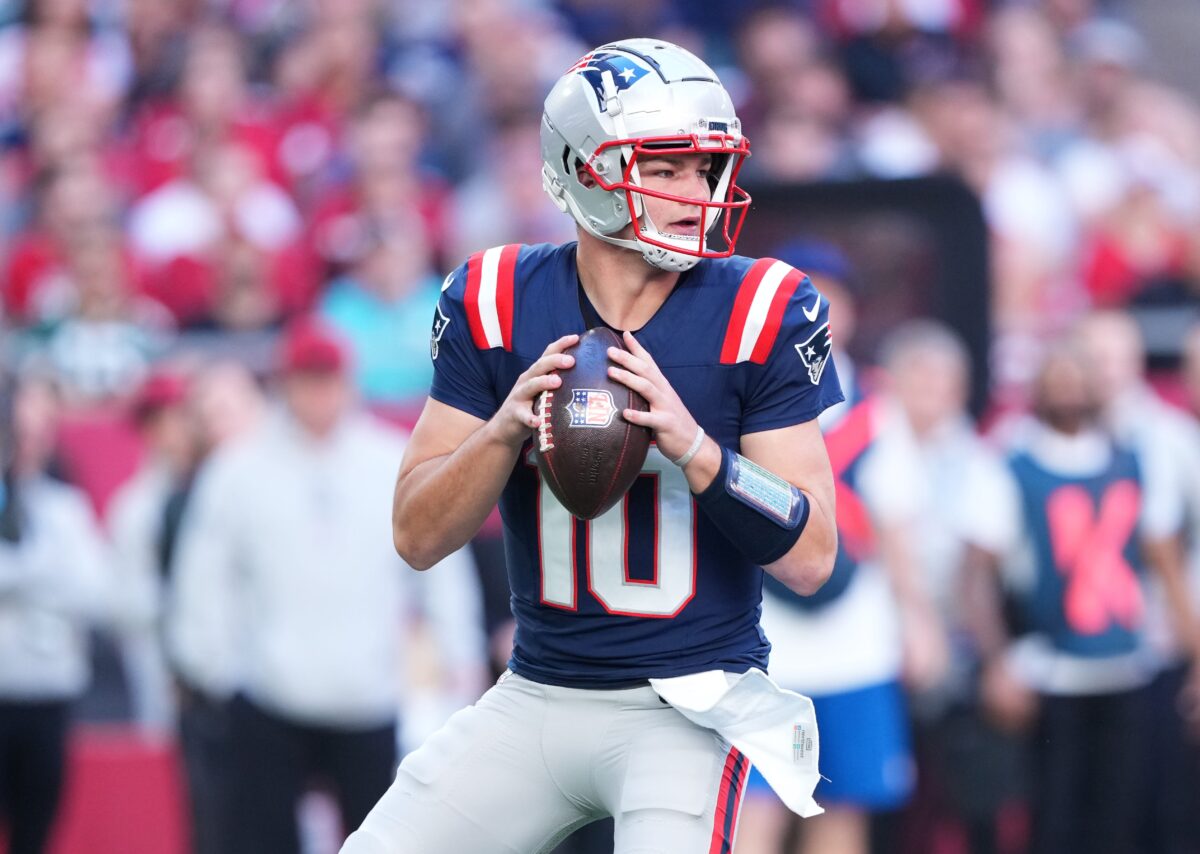
Quarterbacks: Watch the Decisions, Not Just the Throws
Quarterback development is measured by decisions, command and processing as well as arm talent.
Rookie quarterbacks generate the most attention because every completion and interception becomes a headline. The most useful evaluation is broader.
Watch whether the quarterback:
• Gets the offense aligned correctly.
• Identifies pressure before the snap.
• Moves through progressions without panicking.
• Protects the football when the play breaks down.
• Throws with anticipation instead of waiting for receivers to become obviously open.
• Uses checkdowns appropriately.
• Avoids turning one bad play into a disastrous one.
A spectacular deep pass can show arm talent, but routine decisions often determine whether a rookie can stay on the field.
Running Backs: Pass Protection Is the Hidden Test
Pass-protection trust can determine whether a rookie back earns third-down snaps.
College production can make a rookie running back look NFL-ready, but pass protection frequently determines whether coaches trust him on third down. The back must identify blitzers, understand the protection and physically execute the block.
If a rookie repeatedly leaves the field in obvious passing situations, his role may be smaller than rushing talent alone suggests. Conversely, a back who earns two-minute and third-down snaps is showing the coaching staff trusts his complete game.
Wide Receivers: Route Participation Tells More Than One Big Catch
Route participation is a stronger role signal than one preseason highlight.
A rookie receiver may produce the highlight of a preseason game on a 50-yard touchdown and still play only a limited package. The more important question is how often he is running routes with the first-team offense.
Signs of a growing role include:
• Playing in multiple formations.
• Staying on the field in two-minute situations.
• Handling motion and adjustment responsibilities.
• Running routes on early downs, not just obvious passing downs.
• Earning targets from the starting quarterback.
Modern offenses also use condensed formations and motion to help receivers gain clean releases. Our pre-snap motion guide explains why those tools can accelerate a young receiver's integration.
Tight Ends: The Dual-Job Learning Curve
Tight end is difficult because the player participates in two worlds. He may need to execute offensive-line-level blocking rules on one snap and receiver-level route detail on the next. Motion and alignment add even more responsibilities.
A rookie tight end can contribute early as a specialist—perhaps a receiving target or blocker—but becoming a true every-down player often requires mastering a broad assignment set.
The league's growing use of multiple-tight-end sets can create opportunities for young players. Our heavy-personnel guide covers why 12 and 13 personnel are increasingly important.
Offensive Linemen: Do Not Grade Only the Bad Reps
Rookie linemen should be judged across the full snap sample, not only visible mistakes.
One missed block by a rookie tackle can result in a sack shown repeatedly on television. Ten successful pass-protection snaps may receive no attention. Offensive-line evaluation should account for the full sample.
Useful questions include:
• Does the lineman maintain balance against power?
• Can he recover after losing initial hand position?
• Does he recognize stunts and blitzes?
• Is he improving from week to week?
• Can he execute both run and pass assignments?
Rookie linemen often improve as they learn the speed and technique of professional defenders.
Pass Rushers: Pressure Matters Before Sacks Arrive
Sacks are valuable but can be noisy in a small sample. A rookie edge defender may consistently force quarterbacks off their spot without finishing the play himself.
Look for:
• Quick wins off the snap.
• Ability to convert speed to power.
• Secondary moves when the first rush fails.
• Discipline against the run.
• Pressure rate and quarterback disruption.
Our NFL analytics guide explains why pressure data can add context beyond sacks.
Defensive Backs: Communication Can Decide Playing Time
A rookie corner or safety can be physically gifted and still struggle to earn snaps if the coaching staff does not trust his communication. Coverage busts produce explosive plays, and one missed adjustment can affect multiple defenders.
Modern two-high and pattern-match systems require safeties and nickel defenders to exchange routes, rotate late and fit the run. The mental workload is significant. Read our two-high coverage guide for the schematic background.
Special Teams Can Be the Fastest Route to the Active Roster
Special teams can provide rookies with an immediate game-day role while they develop.
Many mid- and late-round rookies make their first impact on special teams. Coverage, return, blocking and protection units provide game-day value while a player develops at his primary position.
This is especially relevant under the modern dynamic kickoff, where tackling, block destruction and short-area movement can determine roster value. Our 2026 dynamic kickoff guide explains the new tactical environment.
Training Camp: Which Reports Deserve Attention?
Camp information is useful when it describes role and repeated behavior. It is less useful when it describes one isolated highlight.
High-signal information
• Consistent first-team reps.
• Role in specific packages.
• Third-down or red-zone usage.
• Coach comments tied to assignment trust.
• Depth-chart movement across several practices.
Low-signal information
• One viral catch.
• One interception without context.
• Generic praise.
• A single unofficial depth-chart listing weeks before the season.
Preseason Games: Evaluate the Assignment
Preseason statistics can be misleading because opponents use vanilla schemes and backups face different levels of competition. Instead of focusing only on yardage, ask whether the rookie executed the assignment.
A receiver who created separation but was not targeted may have played well. A running back who gained only three yards may have correctly followed a poorly blocked play. A linebacker who did not make the tackle may have forced the runner into a teammate.
Award lists are not predictions to copy blindly. They are useful examples of how analysts combine talent with opportunity.
Five Rookie Evaluation Traps
1. Draft-capital bias: Assuming the earlier pick must be better immediately.
2. Highlight bias: Overvaluing memorable plays while ignoring snap-to-snap execution.
3. Stat-line bias: Treating preseason numbers as complete performance grades.
4. Position-blind comparison: Expecting the same development curve from every position.
5. Certainty bias: Treating camp projections as settled depth charts.
A Four-Week Rookie Tracking Checklist
When the regular season begins, track these signals over the first month:
Week
Question
1
What is the rookie's actual snap and package role?
2
Did the coaching staff expand or reduce responsibility?
3
How are opponents beginning to attack or account for him?
4
Is the rookie correcting early mistakes and earning higher-leverage snaps?
Development is a trend, not a single game.
Frequently Asked Questions
Do first-round rookies always start immediately?
No. Many do, but depth chart, position, development and team plan determine playing time.
Which NFL positions usually translate fastest?
There is no universal rule, but positions with narrower initial responsibilities can sometimes produce earlier statistical impact. Quarterback, tight end and offensive line often involve substantial mental or technical transitions.
Should preseason stats change expectations?
They can provide clues, but role, opponent level and assignment quality matter more than raw totals.
How important is special teams for rookies?
Very important for many non-premium picks. Special-teams value can secure an active roster spot and create a path to larger responsibilities.
Conclusion
The best way to evaluate the 2026 rookie class is to move beyond draft-night labels. Draft position matters because it reflects investment and often creates opportunity, but Year 1 impact depends on what happens after the selection: scheme fit, depth chart, trust, technique and the ability to execute a professional assignment repeatedly.
Watch snaps instead of highlights, responsibility instead of hype and development instead of one-game statistics. A rookie does not need to become a star immediately to have a successful first season. Sometimes the most meaningful sign is much quieter: the coaching staff keeps giving him harder jobs, and he keeps earning the next one.