Five-Man Defensive Fronts Explained: How NFL Defenses Fight Heavy Personnel and Modern Run Games
RedZoneHQ Staff · Sep 8, 2026
Five-Man Defensive Fronts Explained: How NFL Defenses Fight Heavy Personnel and Modern Run Games As NFL offenses get bigger again, defenses need answers that do not require abandoning modern coverage. Two- and three-tigh…
Five-Man Defensive Fronts Explained: How NFL Defenses Fight Heavy Personnel and Modern Run Games
As NFL offenses get bigger again, defenses need answers that do not require abandoning modern coverage. Two- and three-tight-end formations, extra offensive linemen and powerful run schemes can create more gaps than a light nickel front wants to defend. One increasingly important answer is the five-man defensive front.
A five-man front does not automatically mean five players will rush the quarterback. It describes how defenders align near the line of scrimmage before the snap. The structure can cover more gaps, reduce double-team opportunities and force the offense to make more one-on-one blocks. On passing downs, the defense can rush all five, drop one defender into coverage or create a simulated pressure.
The concept matters even more in the current environment because NFL Next Gen Stats has documented the rise of heavy offensive personnel, while league analysis has long shown how five-man surfaces can make zone and gap runs harder to execute. For the offensive side, see NFL Next Gen Stats on the heavy-personnel trend.
What Is a Five-Man Front?
A five-man front presents five immediate gap threats without guaranteeing a five-man rush.
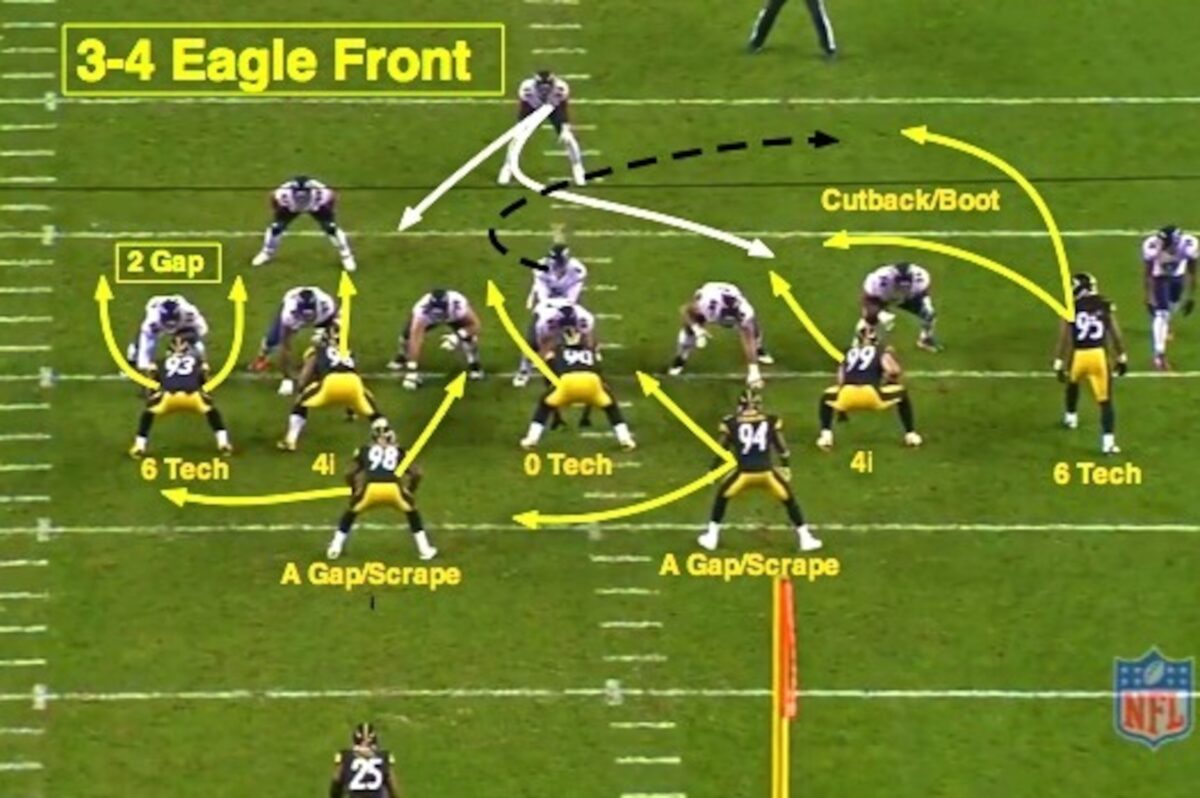
A five-man front places five defenders on or very near the line of scrimmage. The exact players can vary. A traditional 3-4 defense can become a five-man surface when both outside linebackers walk down. A nickel defense can create five on the line by adding a linebacker or safety to four defensive linemen.
The important idea is the number of immediate gap threats. When five defenders cover the offensive line, the offense has fewer obvious double teams and must account for every potential rusher.
Why Heavy Personnel Creates More Gaps
Every attached tight end can add another gap to the formation. If the offense uses two tight ends, the defense may need to fit more potential run lanes than it would against a three-receiver spread set.
Heavy formations also create stronger blocking surfaces. A tackle and tight end can double an edge defender, while the backside tight end can cut off pursuit or move across the formation as a split-flow blocker.
Covering more gaps can reduce the offense’s ability to create clean combination blocks.
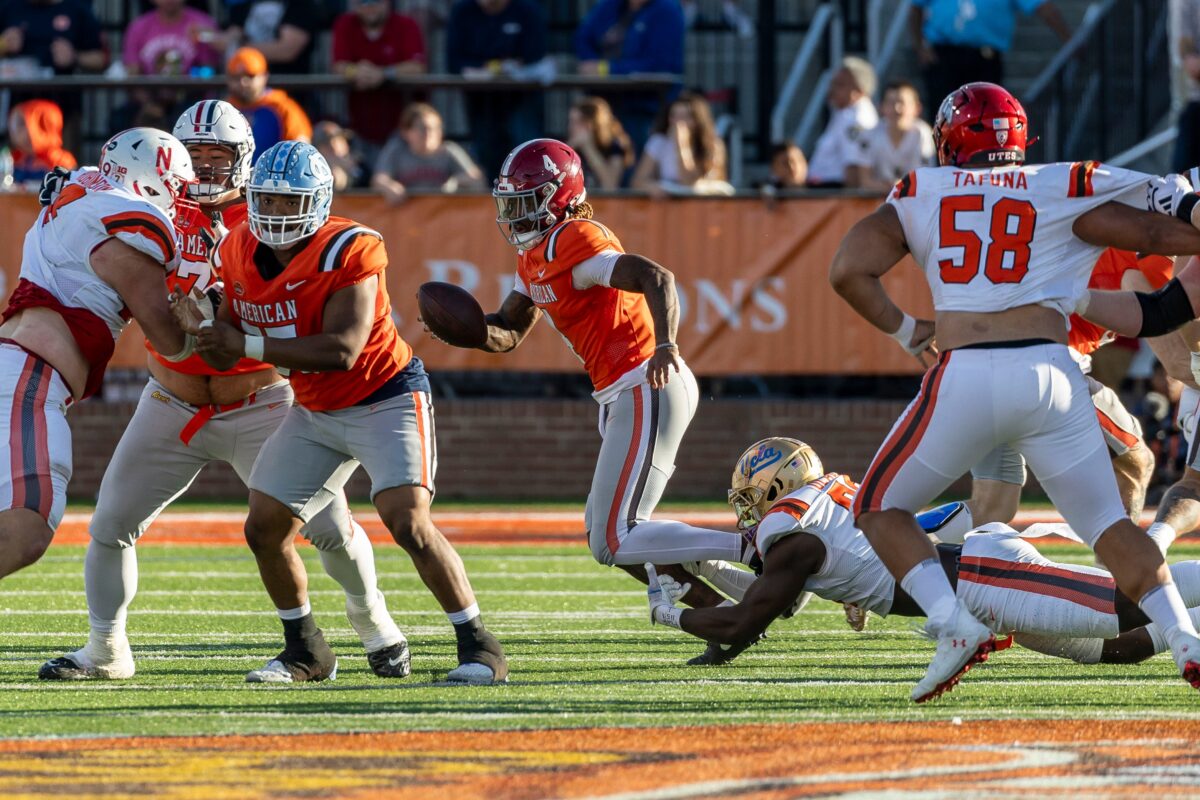
Offensive run schemes often rely on combination blocks. Two linemen initially work together on one defender, then one climbs to a linebacker. If the defense places a player in every important gap, the offense has fewer opportunities to create clean double teams.
This can force blockers into one-on-one situations. If the defense has strong interior players, those matchups become difficult.
Why this matters against duo
Duo depends heavily on vertical double teams. A five-man front can cover the center and both guards more directly, reducing the offense’s ability to create movement before climbing to the second level.
Why this matters against outside zone
Outside zone depends on lateral leverage and coordinated combinations. More defenders on the line can make reach blocks harder and close cutback lanes.
Odd Fronts and Even Fronts
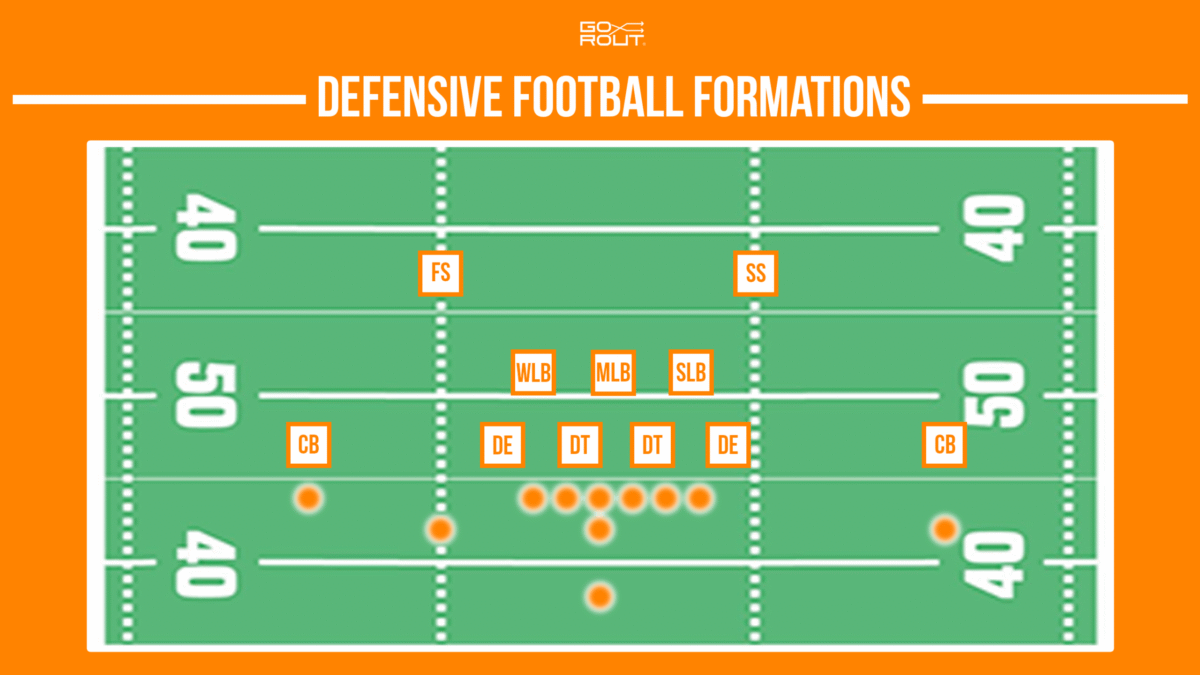
Defensive fronts are often described as odd or even based on the alignment of interior linemen. An odd front typically includes a defender near the center, while an even front more often places defenders in the guard-tackle gaps.
A five-man surface can be built from either family. The defense may use a true nose tackle over the center with two defensive ends inside the offensive tackles and two edge players outside. Or it can create a more asymmetrical front based on formation strength.
The Tite Front
Tite fronts close interior gaps and can force the running game toward the edge.
The tite front is a popular family of alignments that places interior defenders inside the offensive tackles, often with a nose tackle over the center. The structure is designed to close interior gaps and force the ball toward the edge, where linebackers and defensive backs can pursue.
It can be especially useful against spread run games because it protects linebackers from direct blocks and makes inside zone more difficult.
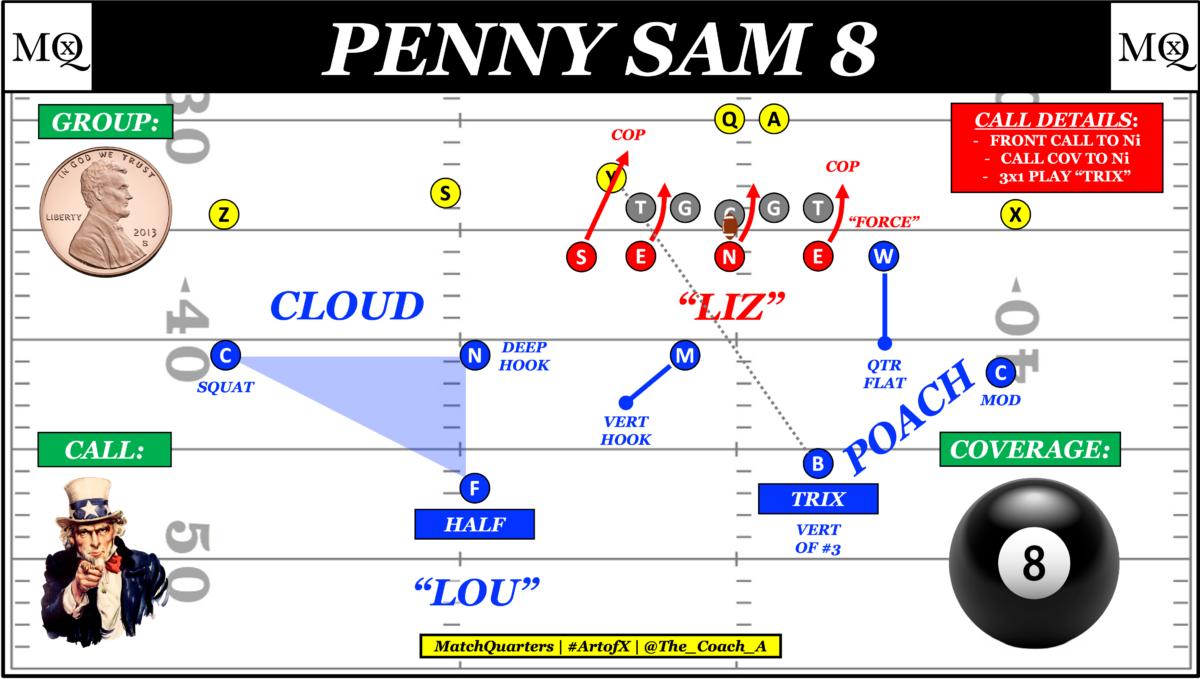
The Penny Front
“Penny” terminology varies by coaching system, but the idea generally involves a five-man defensive surface from sub personnel, often using multiple defensive backs behind it. The defense tries to get the run-stopping benefits of a heavy front without substituting into a slow traditional base package.
This is an important modern compromise: stay athletic in coverage while still presenting enough bodies at the line.
Why Hybrid Defenders Make Five-Man Fronts Better
A hybrid defender can become the fifth front player, blitz or drop into coverage.
A safety or nickel defender who can play near the box gives the coordinator flexibility. He can walk to the line as the fifth defender, blitz, set the edge or drop into coverage after the snap.
The offense cannot assume that five on the line equals five rushers. That uncertainty is the key to disguise.
• Five-man front: Five defenders align as immediate line-of-scrimmage threats.
• Five-man rush: Five defenders actually attack the quarterback after the snap.
A defense can show a five-man front and rush four by dropping one edge player. It can also show four and bring a fifth rusher from the second level.
How Five-Man Fronts Help Pass Rush
Five immediate rush threats can force protection into one-on-one matchups.
If the offense has five offensive linemen and the defense presents five immediate rush threats, the protection may need to account for each defender individually. That can create one-on-one matchups for elite rushers.
A running back or tight end can still help, but the offense must reveal how it plans to distribute protection. The defense can use that information to create stunts and pressure games.
The Interior Defensive Tackle Connection
A five-man front becomes more dangerous when the defense has an interior star. If the center and guard cannot double him because another defender occupies the adjacent gap, the tackle can attack a one-on-one.
Adding bodies near the line can reduce the number of defenders available in underneath coverage. Offenses can spread the formation and force the defense to reveal whether it can cover in space.
Use motion
Motion can shift the strength of the formation and force the front to communicate. A late tight-end trade can create an extra gap on the opposite side.
Use play action
If the defense is aggressive against the run, play action can create space behind linebackers and edge defenders.
Run screens
Five aggressive rushers can be punished by a screen that allows them to move upfield before the ball is thrown behind them.
Why Condensed Formations Complicate the Picture
Condensed receivers can become blockers in the run game, which changes the effective gap count. They can also release into crossing routes, creating coverage traffic if the defense commits too many players to the line.
This is why modern defenses need versatile secondary players rather than simply adding bigger linebackers.
Five-Man Fronts Against 12 Personnel
Twelve personnel gives the offense two tight ends. The defense can respond with five on the line to reduce the offense’s blocking advantage while keeping five defensive backs behind the front.
This “big nickel” approach can be more flexible than base defense because a third safety may cover better than a traditional linebacker while still fitting the run.
Five-Man Fronts Against 13 Personnel
Three-tight-end formations can create extremely heavy run surfaces. The defense may need an extra defensive lineman or a larger edge player to avoid being outnumbered.
The risk is play action. If the defense sells out to stop the run, three tight ends can release into routes against linebackers and safeties.
Run Fits Behind the Front
The five players on the line do not stop the run alone. Linebackers and safeties still need clear responsibilities. The front may “spill” the ball toward the edge, where a safety becomes the force defender, or it may try to box the run inside toward linebackers.
Run defense succeeds when the front and secondary understand the same leverage plan.
Simulated Pressure From a Five-Man Surface
A five-man front is ideal for simulated pressure because the offense sees five possible rushers. The defense can drop one and bring someone else, or rush only four while maintaining seven in coverage.
No structure is perfect. Potential weaknesses include:
• Fewer defenders immediately available in short-zone coverage.
• Potential matchup problems against empty formations.
• Stress on edge defenders who must cover or contain.
• Play-action windows behind aggressive linebackers.
• Quick passing that prevents the rush from arriving.
A good offense will force the defense to prove it can transition from run-stopping structure to pass coverage.
Five-Man Front vs. Four-Man Front
Feature
Five-man front
Four-man front
Line threats
Five
Four
Double-team opportunities
Often reduced
More common
Coverage bodies
Can be fewer if all rush
More natural seven-man coverage
Best use
Heavy personnel, gap control, pressure disguise
Balanced rush/coverage structure
What Fans Should Watch
1. Count the defenders aligned on the line.
2. Find whether a nose tackle is over the center.
3. Watch the offensive tight ends and formation strength.
4. See whether all five defenders rush.
5. Track the linebacker behind the front and his run fit.
6. Look for the offense to answer with motion, play action or quick passing.
Frequently Asked Questions
Does a five-man front mean the defense is blitzing?
No. Five defenders can show pressure while one drops into coverage, leaving a standard four-man rush.
Why use five-man fronts against heavy personnel?
The extra line defender can cover more gaps and reduce the offense’s ability to create double teams.
What is a tite front?
It is an odd-front family that places interior defenders inside the offensive tackles, often with a nose over the center, to close inside gaps and influence the run outside.
Can nickel personnel play a five-man front?
Yes. A linebacker, safety or nickel defender can walk to the line, allowing the defense to keep five defensive backs while presenting a five-man surface.
Conclusion
Five-man fronts are becoming more relevant because NFL offense is getting bigger without becoming simpler. Heavy personnel, diverse run schemes and play action force defenses to solve the run while remaining capable of covering modern passing concepts.
The five-man front is one answer because it changes the blocking math. It reduces double teams, covers more gaps and creates one-on-one pass-rush opportunities. But its real power comes from uncertainty. When the defense can show five, rush four and still rotate coverage behind the front, the offense must solve both the run structure and the protection picture after the snap. That flexibility is why five-man surfaces remain an important part of modern defensive football.