Flag Football Growth in 2026: New Rules, Girls’ Varsity Expansion and the Road to LA 2028
RedZoneHQ Staff · Sep 8, 2026
Flag Football Growth in 2026: New Rules, Girls’ Varsity Expansion and the Road to LA 2028 Flag football is moving from a recreational alternative to one of the fastest-growing branches of the football ecosystem. In 2026,…
Flag Football Growth in 2026: New Rules, Girls’ Varsity Expansion and the Road to LA 2028
Flag football is moving from a recreational alternative to one of the fastest-growing branches of the football ecosystem. In 2026, the sport is expanding at the high school level, receiving more formal rules, creating new opportunities for girls and building momentum toward its Olympic debut at the 2028 Los Angeles Games.
The growth matters to the broader football world because flag football develops many of the same skills that make tackle football exciting: route running, quarterback decision-making, coverage leverage, open-field movement and spatial awareness. At the same time, the non-tackle format lowers several participation barriers and allows schools and communities to create programs with different equipment and roster demands.
The sport is accessible. Players do not need full pads and helmets, teams can operate with smaller rosters and many communities already have fields suitable for the game. The rules also emphasize speed and skill in space, making the sport attractive to athletes from different backgrounds.
For girls, sanctioned high school competition creates a clearer pathway from youth participation to varsity sport and potentially college or national-team opportunities.
Flag Football Is Still Football
The absence of tackling changes the game, but many core concepts remain recognizable.
• Quarterbacks read leverage and coverage.
• Receivers use releases, stems and route timing.
• Defenders communicate zones and man assignments.
• Teams manage downs, field position and the clock.
• Coaches use motion and formations to create space.
This makes flag football useful for teaching offensive and defensive awareness even though blocking and tackling techniques are different.
The 2026-27 NFHS Rule Changes
The NFHS Flag Football Rules Committee approved several updates for 2026-27 to improve consistency and strategy. The headline change creates a comeback mechanism similar in spirit to an onside-kick opportunity in tackle football.
Under the new rule, a trailing team can choose a high-risk possession-retention attempt after scoring. Instead of automatically giving the ball to the opponent, the trailing team can face a fourth-down play from its own territory to try to keep possession.
This is a significant strategic addition because late-game clock management becomes more interesting. A team that is behind has a defined way to create another possession without relying on a turnover.
Why the Comeback Rule Matters
In many non-kicking formats, one challenge is creating a fair equivalent to the onside kick. The new possession-retention mechanism gives a trailing team a chance while keeping the game within normal offensive and defensive play.
The decision is risky. Failure gives the opponent excellent field position, so coaches must consider score, time and confidence in the offense.
Flag Football and the Olympic Pathway
The LA 2028 Olympic debut is accelerating global interest and player development.
Flag football is scheduled to debut at the 2028 Los Angeles Olympics. That changes how young players can imagine the sport. A child who starts in a local flag league can now see a pathway that includes high school competition, national teams and an Olympic stage.
Olympic inclusion also encourages countries outside the United States to invest in coaching, leagues and player development, which can help American football grow internationally without requiring the infrastructure of full tackle football.
Why Girls’ Flag Football Is a Major Story
School-sanctioned programs create clearer competitive and development pathways.
NFL Play Football reported in its NFL FLAG 50 initiative that girls’ flag football is expanding rapidly, with multiple states sanctioning varsity competition and others operating pilot programs. The exact number can continue changing, but the direction is clear: more schools are recognizing the sport formally.
Sanctioned varsity status matters because it creates:
• School-based coaching.
• Regular schedules.
• Championship pathways.
• More consistent officiating.
• Visibility for college recruiting.
• Institutional support for facilities and travel.
How the Skills Translate to Tackle Football
Some flag skills transfer directly. Quarterbacks learn timing and progressions. Receivers learn spacing and route detail. Defensive backs practice leverage and closing angles.
Other skills do not transfer automatically. Tackle football requires blocking, tackling, pad level and contact technique that flag football does not teach in the same way.
The sports can therefore complement each other without being identical.
Quarterback Development in Flag Football
Flag quarterbacks develop timing, leverage recognition and fast decision-making.
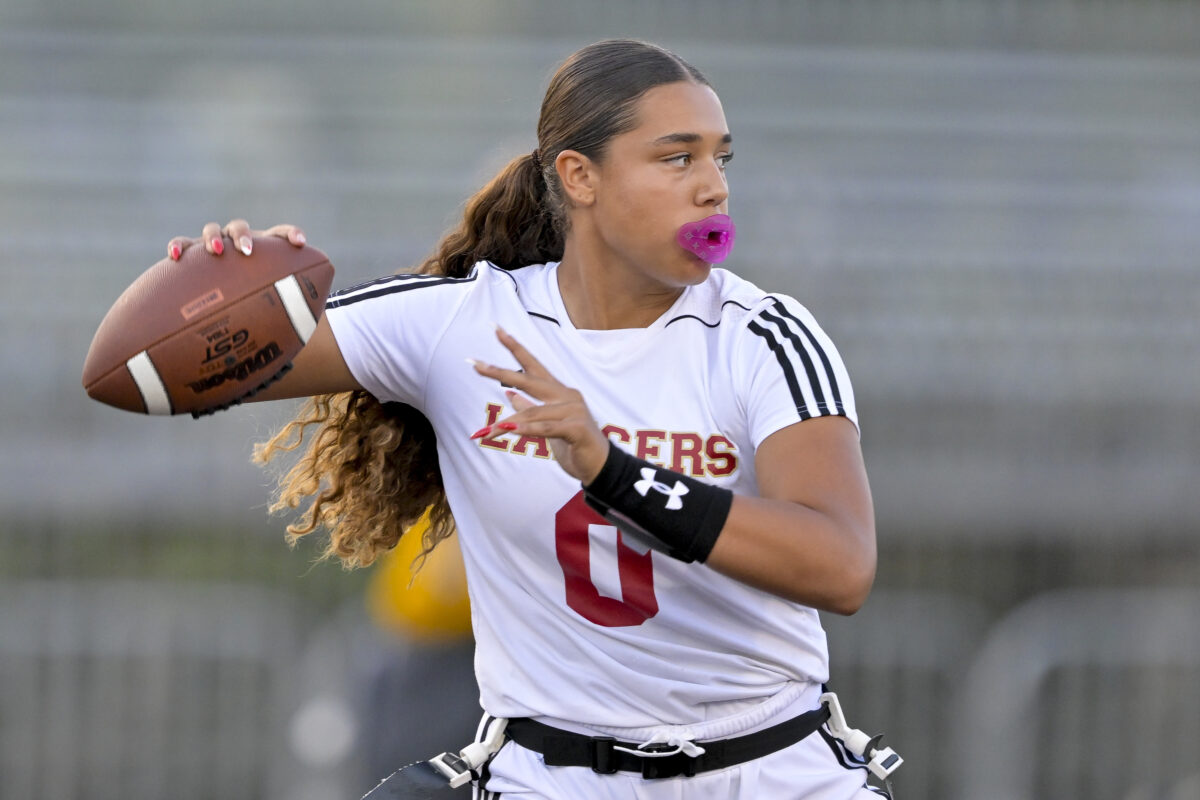
Flag quarterbacks often operate in space and must make rapid decisions. Because the pass rush and blocking rules differ by format, the pocket may not look exactly like tackle football, but the quarterback still benefits from learning:
• Pre-snap alignment recognition.
• Route progression.
• Ball placement.
• Timing.
• Eye discipline.
• Movement away from pressure.
Those mental skills can help a player transition to other forms of football later.
Receiver Skills
Separation, route detail and body control are central receiving skills in flag football.
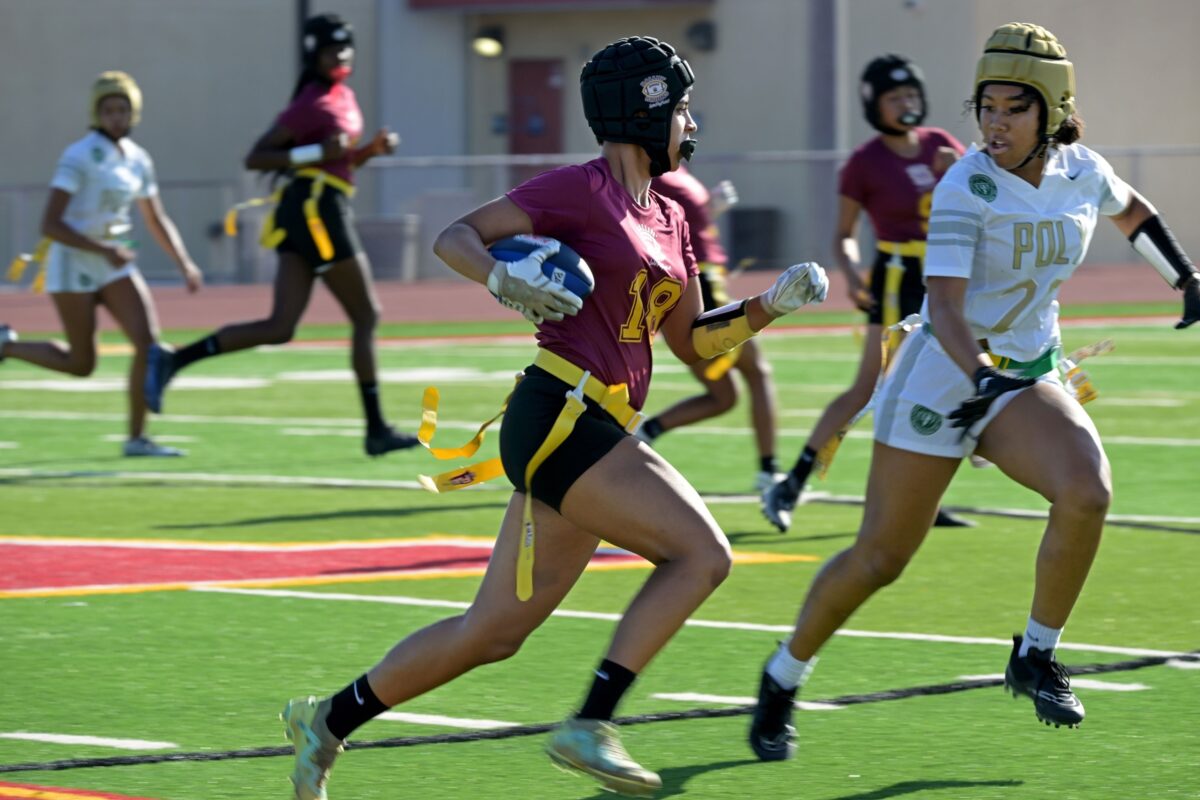
Flag football rewards separation. Without contested blocking at the line in many formats, receivers need precise footwork and body control to create space.
Important skills include:
• Changing speed during the route.
• Understanding defender leverage.
• Finding open space against zone coverage.
• Using legal motion to gain an advantage.
• Securing the catch before turning upfield.
Our pre-snap motion guide explains how movement creates information and leverage in the NFL; many of the spatial principles are useful for understanding flag offense too.
Defense in Flag Football
Defenders must close under control and maintain leverage without relying on tackling.
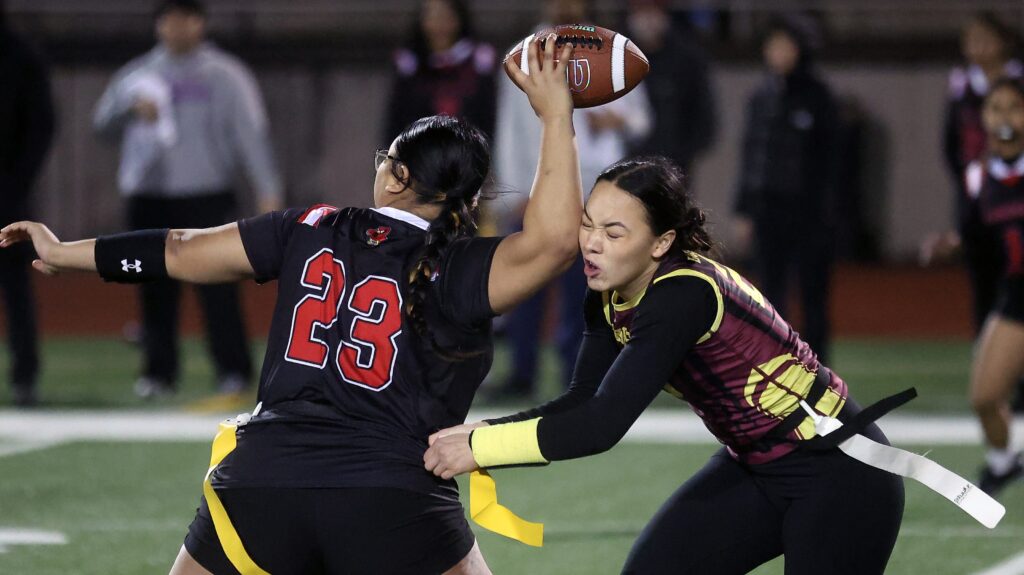
Defenders cannot rely on tackling power. They must get into position to pull the flag. That increases the importance of angles and body control.
A defender who overruns the ball carrier may have no chance to recover. Good defense focuses on maintaining leverage, forcing the runner toward help and closing under control.
Man vs. Zone Coverage
Flag defenses use many familiar coverage ideas. Man defense assigns specific receivers. Zone defense divides areas of the field. Match concepts can blend the two.
The smaller number of players in some formats can create large spaces, so communication is critical. One missed switch can produce an immediate touchdown.
Why Motion Is So Powerful
Motion forces defenders to identify responsibilities before the snap. It can reveal man coverage, create a running start for a receiver and change the spacing of the defense.
Because flag football often emphasizes speed in open space, motion can have an even more visible effect than in tackle football.
Roster Size and Accessibility
Flag programs can operate with smaller rosters than tackle teams because they do not need separate offensive and defensive lines in the same way. That can make the sport easier for schools that cannot support a large tackle program.
Lower equipment requirements can also reduce startup cost, although quality coaching, officiating, field access and insurance still matter.
Player Safety
Flag football removes intentional tackling, which changes the collision profile significantly. It is not injury-free. Players can still experience falls, non-contact injuries and accidental contact.
Programs should still use proper warm-ups, safe field conditions, appropriate footwear and qualified medical procedures.
Good coaching should not treat flag football as “tackle football without pads.” The rules create a different sport with its own strategy.
Offensive priorities
• Create width and spacing.
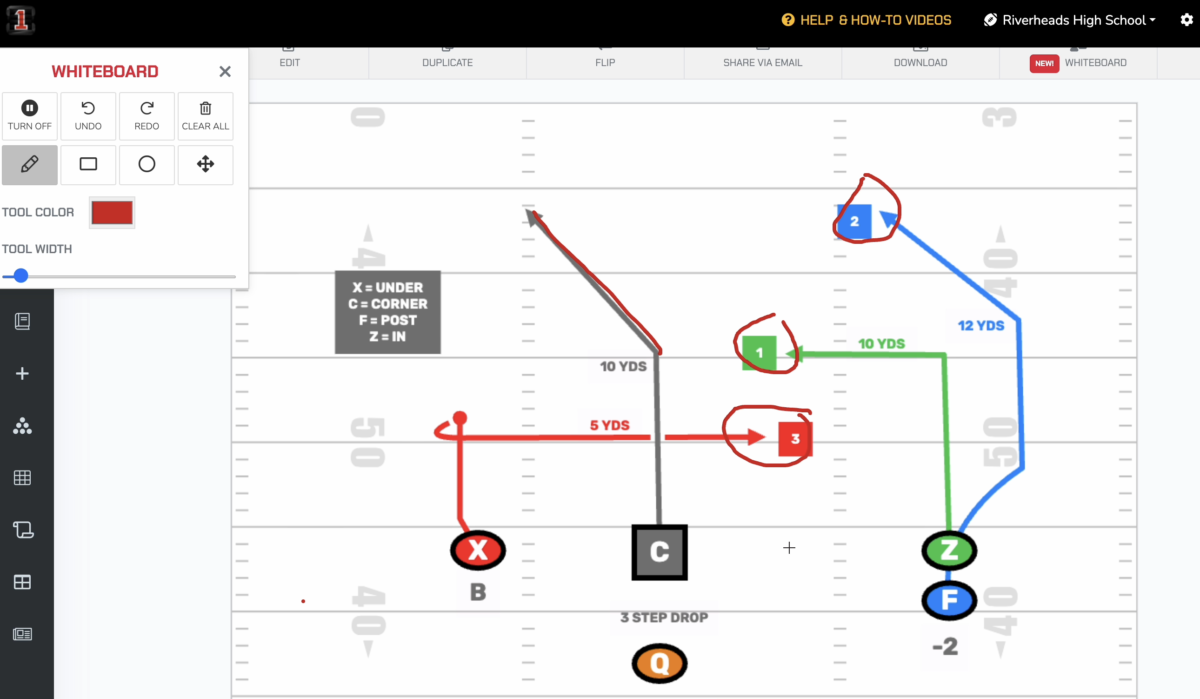
• Use simple route combinations.
• Teach quarterbacks to read one defender at a time.
• Use motion with purpose.
• Protect the ball.
Defensive priorities
• Maintain leverage.
• Communicate switches.
• Close under control.
• Avoid unnecessary contact.
• Understand down and distance.
How the Olympic Format Can Influence Youth Football
International competition creates role models. Young players can watch elite men’s and women’s flag athletes and learn techniques specific to the sport rather than viewing flag only as an introduction to tackle football.
This can help create specialized flag coaching and long-term participation for athletes who may never choose tackle football.
Why NFL Players Support the Growth
The NFL has invested heavily in flag football because it expands the sport’s reach and offers a different entry point for young athletes. Current and former NFL players frequently participate in camps, promotional events and international initiatives.
The connection is valuable, but flag should also develop its own stars. Olympic and national-team athletes can become recognizable figures in their own right.
Flag Football vs. Tackle Football
Area
Flag football
Tackle football
Stopping the runner
Pull flag
Tackle
Protective equipment
Limited
Helmet and pads
Roster needs
Usually smaller
Larger, position-specialized
Blocking/contact
Restricted by format
Central to game
Skill emphasis
Space, speed, routes, leverage
Space plus contact technique
What Families Should Look For in a Program
1. Clear rules and age grouping.
2. Qualified coaches.
3. Safe field conditions.
4. Transparent playing-time policies.
5. Sportsmanship standards.
6. Emergency medical plan.
7. Development-focused practice rather than only winning.
Common Flag Football Misconceptions
“Flag football is only for beginners.”
No. Competitive flag has advanced strategy, national teams and an Olympic pathway.
“There is no defense because there is no tackling.”
Defense requires coverage, leverage, reaction and disciplined flag pulling.
“Flag and tackle football are the same game.”
They share core football ideas but have different contact rules, roster structures and strategic priorities.
“The Olympic addition means tackle football is disappearing.”
No. Flag football expands the football ecosystem; it does not replace tackle football.
Frequently Asked Questions
Is flag football an Olympic sport?
Flag football is scheduled to debut at the Los Angeles 2028 Olympic Games.
Are high schools adding girls’ flag football?
Yes. Sanctioned varsity programs and pilot programs are expanding across the United States.
What is the new 2026-27 comeback rule?
The NFHS rules add a high-risk possession-retention option for a trailing team after scoring, creating a flag-football equivalent to an onside-kick opportunity.
Can flag football help tackle-football players?
It can develop route running, quarterback processing, coverage and open-field movement, although tackle-specific contact skills must be learned separately.
Conclusion
Flag football’s growth in 2026 is significant because it is creating more ways to participate in football rather than simply changing an existing game. New high school rules, expanding girls’ varsity programs and the LA 2028 Olympic pathway give the sport a clearer identity and a larger competitive future.
The best way to understand the trend is to treat flag football as a serious football discipline. It rewards spacing, timing, decision-making and athleticism in its own way. As more schools, countries and athletes invest in the format, flag football is likely to become one of the most important growth engines for the sport worldwide.