How NFL Replay Assist and Hawk-Eye Technology Work in 2026
RedZoneHQ Staff · Sep 8, 2026
How NFL Replay Assist and Hawk-Eye Technology Work in 2026 Instant replay is one of the most visible technologies in professional football, but the process behind a review is more complicated than a referee walking to a …
How NFL Replay Assist and Hawk-Eye Technology Work in 2026
Instant replay is one of the most visible technologies in professional football, but the process behind a review is more complicated than a referee walking to a monitor. In the modern NFL, on-field officials, replay officials, league staff in New York, synchronized camera systems and a growing replay-assist process work together to correct reviewable mistakes and manage certain objective parts of the game.
For fans, the confusing part is often knowing who can initiate a review, what can be changed, why some obvious-looking mistakes are not reviewable and how the league uses technology without turning every play into a long stoppage. The 2026 season continues an era in which replay assistance is designed to provide faster help on clear, objective information while preserving the structure of the rulebook.
This guide explains the NFL replay process, Art McNally GameDay Central, Sony Hawk-Eye technology, coach challenges, automatic reviews and the expanded concept of replay assist. For basic rules terminology, you can also use the official 2026 NFL Rulebook.
Why NFL Replay Exists
Football moves too quickly for any officiating crew to see every angle of every event. Players can be separated by inches, bodies can block sightlines and the ball can change position in a fraction of a second. Replay gives the league a second layer of information when the rules permit review.
The purpose is not to re-officiate the entire game from video. The system is designed to review specific categories of rulings and to require a sufficiently clear basis before an on-field decision is changed. That distinction matters because slow-motion video can make normal football actions look different from real-time movement.
Who Is Involved in an NFL Replay Review?
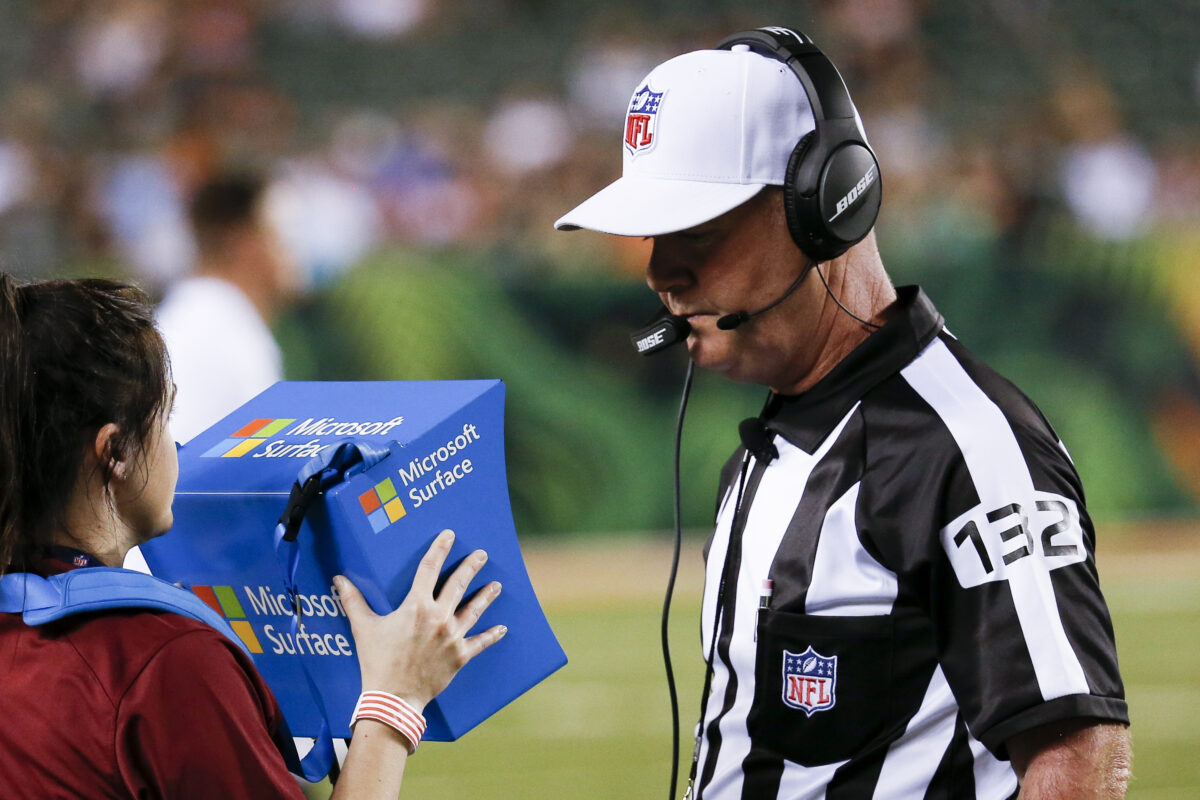
Replay decisions depend on synchronized views, rules knowledge and clear communication.
A review can involve several groups:
• On-field officials: Make the original ruling and communicate the final announcement.
• Replay official: Monitors the game and handles replay responsibilities.
• Art McNally GameDay Central: The NFL's centralized officiating operation in New York.
• Replay decision makers: League officiating personnel who evaluate available angles and rules.
• Technology staff: Maintain the video and communication systems connecting the stadium and league office.
The NFL's official overview of Art McNally GameDay Central explains that league personnel can monitor multiple games and access synchronized angles through Hawk-Eye technology.
What Is Hawk-Eye?
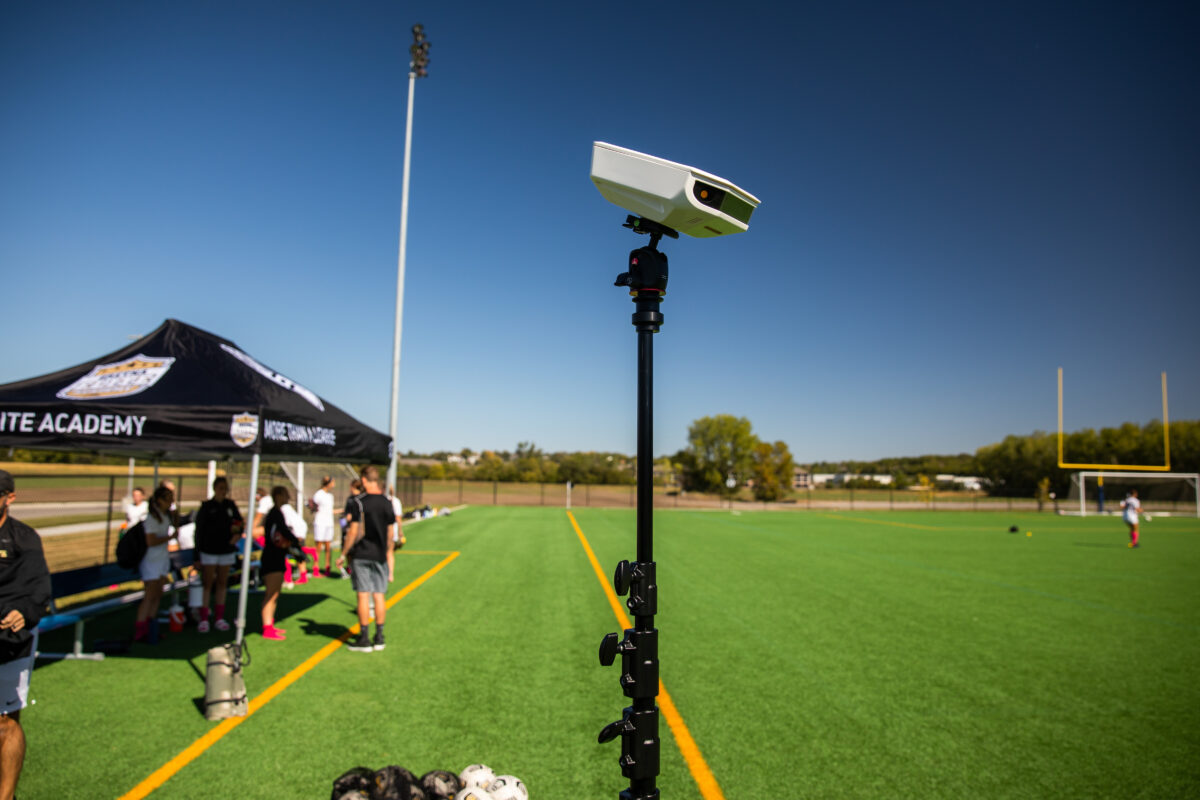
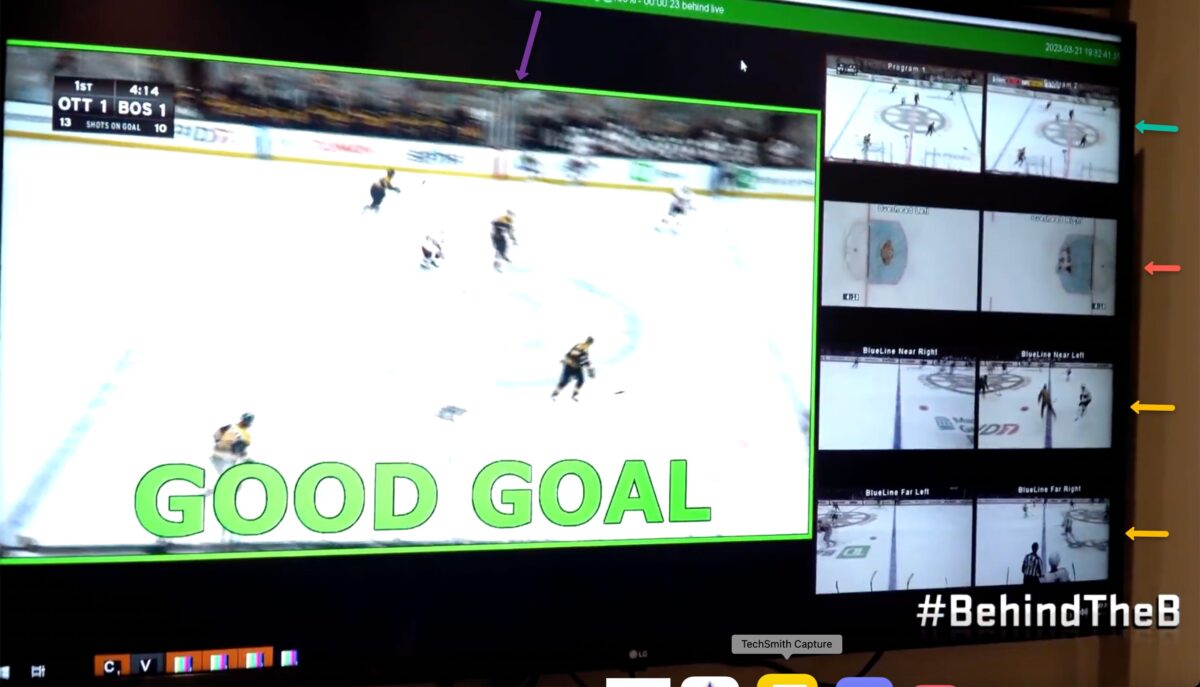
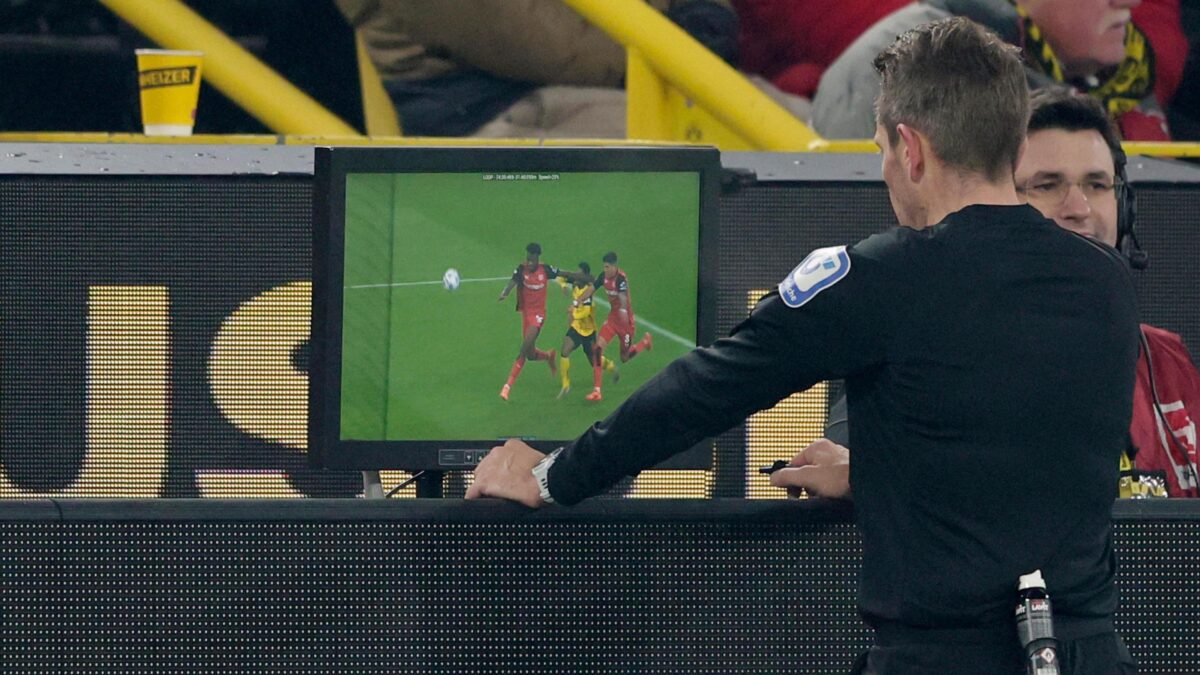
Synchronized camera views help officials compare the same moment from different perspectives.
Hawk-Eye is a video technology platform used in professional sports to organize and synchronize multiple camera views. In the NFL replay environment, the value is not a single magical camera. It is the ability to place different angles on the same timeline and move through them efficiently.
That matters when one angle shows the player's feet, another shows control of the ball and a third shows the goal line. A decision maker can compare the same instant from several perspectives instead of relying on one broadcast replay.
Why synchronized angles matter
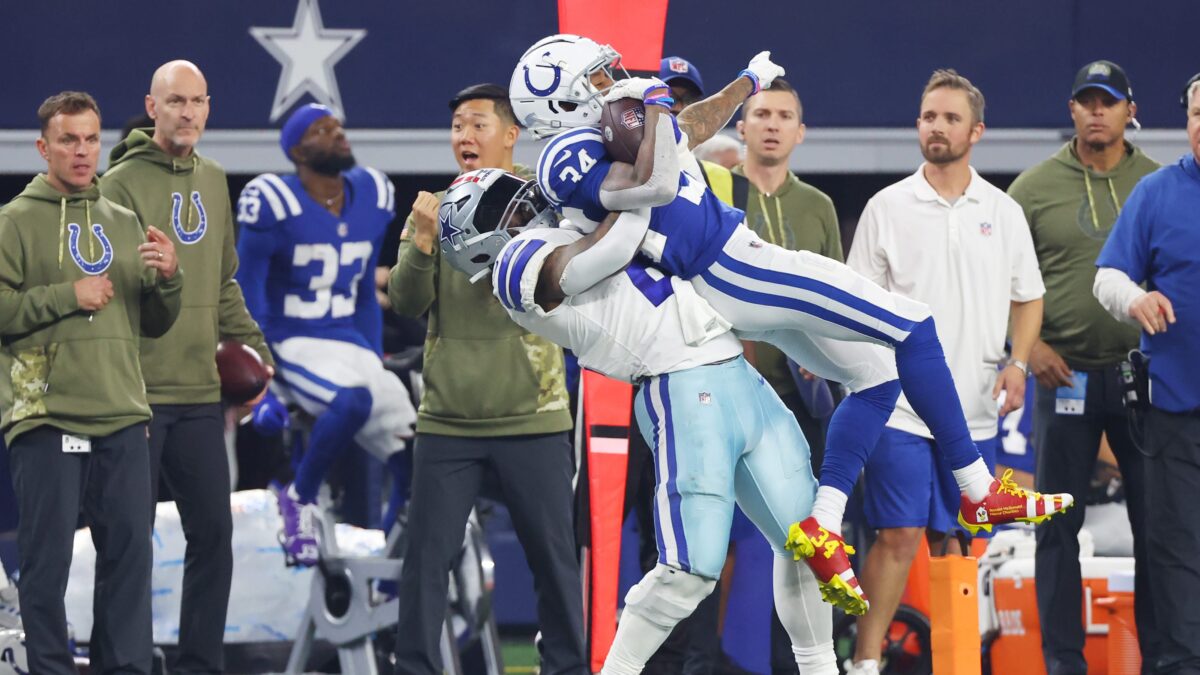
Consider a sideline catch. One camera may clearly show that the receiver controlled the football, but the feet are blocked. Another angle may show both feet in bounds but not the ball. If the angles are synchronized, officials can determine whether the control and foot placement occurred at the same moment.
Coach Challenges
Coach challenges are available only for rulings and situations covered by the current rules.
During eligible portions of a game, a head coach can challenge certain reviewable rulings by following the league's challenge procedure. The team must meet the requirements in the rulebook, including timeout and timing conditions.
A challenge does not mean the ruling will change. Video must provide the standard required to overturn the decision. When the evidence does not clearly establish a different ruling, the call on the field stands.
Why coaches sometimes keep the challenge flag
A coach may believe a call is wrong but decide the expected value of a challenge is low. Perhaps the available video is unlikely to be conclusive, the play gained only a small number of yards, or preserving timeouts is more important. Challenge strategy is therefore part rules knowledge and part game management.
Automatic Reviews
Certain situations are handled through automatic replay procedures rather than requiring a coach challenge. Scoring plays and turnover-related situations have historically received special replay treatment, while the precise procedures are governed by the current NFL rulebook.
The practical reason is simple: plays that directly change possession or the score can have enormous impact, so the league builds an additional review mechanism around them.
What Is Replay Assist?
Replay assist is designed to allow video information to help on-field officials with specific objective aspects of a play without always requiring a full traditional review. The NFL expanded replay-assist authority in the rules framework adopted before the 2025 season, and the concept remains part of the current officiating environment.
NFL Football Operations summarizes the approach on its featured rules page, explaining that replay can advise on specified objective aspects when clear and obvious video evidence is available.
Why “objective” is important
Some football decisions depend heavily on judgment. Others involve more concrete facts such as whether a player was down, whether the ball touched a boundary or where a player stepped out. Replay assist is most naturally suited to information that video can establish quickly and clearly.
Full Review vs. Replay Assist
Feature
Full replay review
Replay assist
Typical purpose
Review a formally reviewable ruling
Provide quick help on permitted objective information
Process
Structured review with multiple angles
Can be communicated more quickly when evidence is clear
Goal
Determine whether ruling should change
Correct or support limited factual elements efficiently
Time
May require longer stoppage
Designed to reduce unnecessary delay when possible
The exact authority always depends on the current rulebook. Fans should be cautious about assuming that any visible error can be fixed by replay.
The “Clear and Obvious” Standard
Replay systems need a threshold because video can be ambiguous. If an on-field official rules a runner down at a certain spot and the available angles do not clearly show a different location, the original ruling cannot simply be replaced by a guess.
The clear-and-obvious concept protects the system from becoming a search for theoretical perfection. Replay should correct mistakes that video can actually establish, not invent certainty where none exists.
Why Some Plays Still Cannot Be Changed
Fans often ask why replay cannot fix every incorrect call. The answer is that the rulebook defines what is reviewable and what authority replay has. Some judgment calls are intentionally left to on-field officiating because expanding review too broadly could produce constant stoppages, create new subjective debates in slow motion and fundamentally change how the game is administered.
Rules can evolve, but the league must balance accuracy, pace, competitive equity and the practical limits of video.
How Replay Handles Catch Decisions
Catch rulings can involve control, body position, boundary location and what happens when the player goes to the ground. Reviewers may need multiple angles to determine whether the requirements were satisfied in sequence.
This is a good example of why replay technology cannot be separated from rules knowledge. A camera shows what happened; the rulebook determines what that event means.
How Replay Handles the Goal Line
Goal-line reviews often require an angle that clearly shows the ball relative to the plane.
Goal-line plays are difficult because the football can be hidden by several players. The important issue is the position of the ball relative to the goal line while the runner still has possession and before he is down or out of bounds.
A dramatic pile of bodies may provide no useful video at all. Conversely, a high sideline angle may clearly show the ball breaking the plane. The quality and perspective of the available cameras determine how confidently replay can act.
Replay and Game Clock Administration
Replay can also interact with game administration. When a ruling changes, the correct clock status may need to be restored. Officials must determine not only the result of the play but the proper down, distance, time and other administrative details that follow.
This is one reason centralized support matters. The replay team is not merely watching whether a knee touched the ground. It is helping ensure that the next snap begins from the correct game state.
How Technology Supports Officiating Without Replacing Officials
Technology is most effective when it gives officials better information rather than pretending that football can be automated completely. Many calls depend on context, sequence and judgment. Cameras also have blind spots.
On-field officials provide real-time observation and control the game. Central replay provides additional views and rules support. The combination is stronger than either layer by itself.
Why Replay Can Still Take Time
Fans understandably want quick decisions, but several factors can slow a review:
• Different angles may appear to conflict.
• Officials may need to synchronize control of the ball with foot or knee position.
• The correct spot can affect first down, clock and penalty administration.
• A rules interpretation may be more complicated than the video itself.
• Technology or communication issues can occur.
Speed matters, but a fast incorrect review defeats the purpose.
Replay, Analytics and the Data-Driven NFL
The replay system is part of a broader technology environment that includes player tracking and advanced statistics. Those systems have different jobs—replay supports officiating while tracking supports analysis—but they reflect the same larger trend toward using better information in football.
Our NFL Next Gen Stats guide explains how tracking data becomes metrics such as speed, completion probability and expected rushing yards.
What Fans Should Watch During a Review
The final announcement can include changes to the ruling, spot, down and game clock.
1. Identify the exact ruling being reviewed.
2. Ask what fact must change for the ruling to be overturned.
3. Watch for an angle that shows that fact clearly.
4. Separate slow-motion appearance from the actual rule requirement.
#5Listen to the referee's final announcement for down, spot and clock changes.
This approach makes replay discussions much more useful than simply asking whether a play “looked like” a catch or fumble.
Common Replay Misconceptions
“The league office can change any call it wants.”
No. Replay authority is governed by the rulebook and approved procedures.
“Slow motion is always more accurate.”
Slow motion can reveal details, but it can also distort how continuous actions feel. Reviewers must apply the rule to the full sequence.
“Every scoring play means a long review.”
Automatic replay monitoring does not necessarily mean a lengthy stoppage. Many plays are confirmed without a prolonged interruption.
“More cameras guarantee the right answer.”
More angles help, but they do not guarantee that the decisive moment is visible. Players can still block the critical view.
Frequently Asked Questions
Where is NFL replay controlled?
The NFL uses Art McNally GameDay Central in New York as the centralized hub for replay and officiating support.
What does Hawk-Eye do for the NFL?
It helps officials access and synchronize multiple video angles so the same moment can be reviewed from different perspectives.
Can replay change penalties?
Replay authority over fouls is limited to the situations permitted by the current rules. Not every penalty or no-call can be reviewed.
Why does the call sometimes “stand” instead of being “confirmed”?
Terminology and announcement practices can vary, but the practical idea is that insufficient evidence to change a ruling leaves the on-field decision in place.
Conclusion
NFL replay in 2026 is best understood as a layered officiating system. On-field officials make the original ruling, replay officials and centralized league personnel provide additional review, and Hawk-Eye technology makes multiple synchronized views easier to analyze. Expanded replay assistance can help correct certain objective issues quickly, while full reviews remain available for defined situations.
The system will never eliminate every debate because football contains judgment, obstructed views and rules that cannot be reduced to a single frame. But when fans understand what is reviewable, what evidence is required and how the technology works, replay becomes less mysterious. It is not a separate game happening in New York—it is a support system designed to help the actual game continue with the most accurate ruling the available evidence allows.