Pre-Snap Motion and Condensed Formations: How Modern NFL Offenses Create Easy Throws
RedZoneHQ Staff · Sep 8, 2026
Pre-Snap Motion and Condensed Formations: How Modern NFL Offenses Create Easy Throws One of the easiest ways to recognize a modern NFL offense is to watch what happens before the ball is snapped. Receivers move across th…
Pre-Snap Motion and Condensed Formations: How Modern NFL Offenses Create Easy Throws
One of the easiest ways to recognize a modern NFL offense is to watch what happens before the ball is snapped. Receivers move across the formation, tight ends shift from one side to the other, backs change alignment, and groups of pass catchers line up unusually close to the offensive line. These movements are not decoration. They are tools for gathering information, creating leverage and making difficult throws easier for the quarterback.
Pre-snap motion and condensed formations have become central to many of the league's most sophisticated systems because they allow offenses to manipulate defensive spacing before the play begins. A coordinator can force a defender to travel across the field, widen a linebacker, change a run fit or reveal whether the defense is playing man or zone coverage. The quarterback then receives a cleaner picture and the receivers may get a better release.
This guide explains the difference between motion and shifts, why condensed formations are useful, how they support the run and pass games, and what fans should watch for during the 2026 season. For a broader foundation, see our offensive formations guide.
Motion, Shift and Formation: Three Different Ideas
These terms are often used together, but they describe different parts of the pre-snap process.
• Formation: The overall alignment of the offense before the snap.
• Shift: One or more players change positions and then become set before the snap.
• Motion: One eligible player is moving when the ball is snapped, subject to the rules governing legal motion.
A team might begin in a balanced formation, shift a tight end to the opposite side, then send a receiver in motion just before the snap. Each change can force the defense to communicate and adjust.
Why Pre-Snap Motion Gives the Quarterback Information
Motion forces defenders to communicate and can provide clues about coverage rules.
Quarterbacks spend the pre-snap period identifying the defensive front, safety structure, potential pressure and likely coverage. Motion can make those answers easier to find. If a cornerback follows a receiver across the formation, that may suggest man coverage or a man-match rule. If defenders bump responsibilities instead of traveling, the defense may be playing zone or a more complex matching concept.
Motion does not provide a perfect answer because defenses disguise coverage and can intentionally react in misleading ways. Still, it creates another data point. The quarterback is not guessing from a static picture; he is watching how the defense responds to a changing picture.
Man-zone indicators
A common teaching point is that a defender who travels with a motioning receiver can be a clue for man coverage. Modern defenses know this and may use “banjo,” switch or match calls that pass receivers between defenders. The important lesson is not that motion gives an automatic answer, but that it forces the defense to show part of its communication system.
Pressure indicators
Motion can also expose blitz intentions. If a slot defender follows motion but a linebacker replaces him near the line, the offense may identify a pressure threat. If the entire front shifts, the quarterback and center can adjust protection calls.
What Is a Condensed Formation?
Condensed formations change release angles and route spacing.
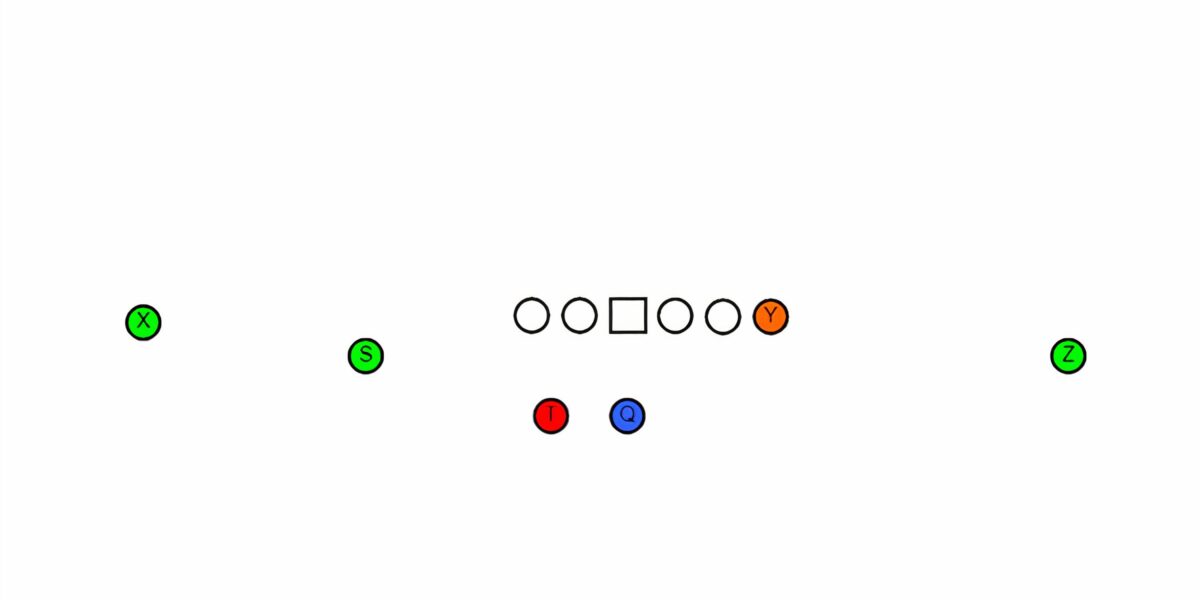
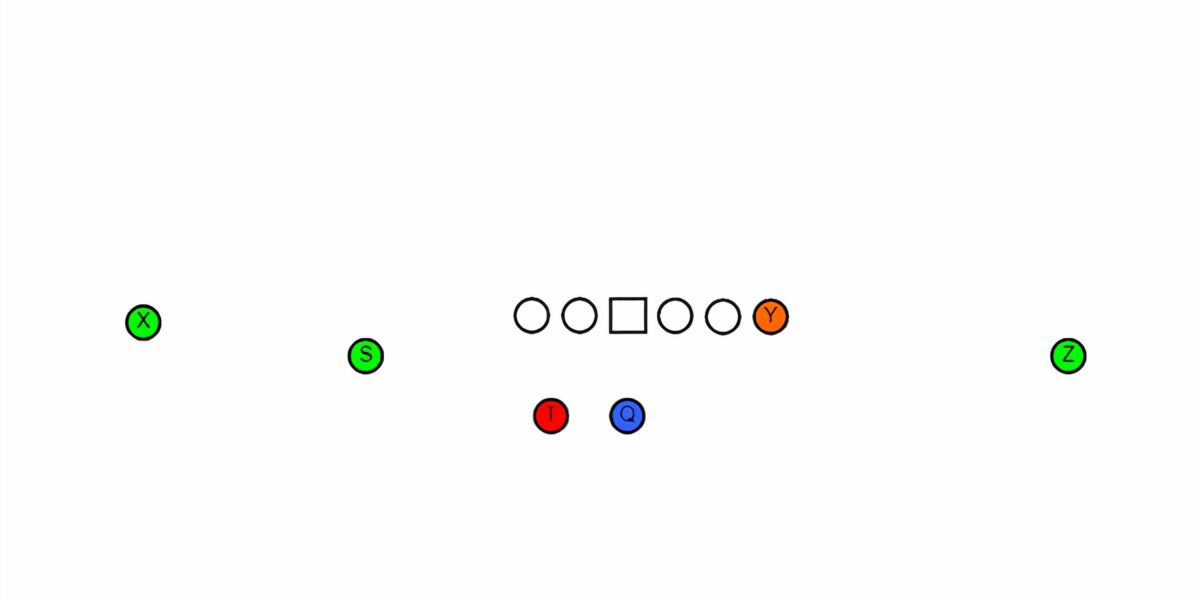
A condensed formation places receivers, tight ends or both closer to the offensive line than they would be in a traditional spread alignment. Instead of a wide receiver standing near the sideline, he may align several yards from the tackle. Multiple eligible receivers can be grouped tightly on one side.
The condensed look changes geometry. Defenders have less space to press a receiver without risking traffic, crossing routes can develop with natural picks and rubs, and receivers can threaten both inside and outside releases. The formation can also improve blocking angles on outside runs.
How Condensed Formations Help Receivers Release
Press coverage is easiest when a cornerback can align directly in front of a receiver with room to work. In a condensed formation, nearby receivers and tight ends can create traffic. The defender must respect crossing routes, stacks and switches. That can produce a free release without the receiver needing to win a physical battle at the line.
This matters especially for route timing. If the quarterback expects the receiver at a specific landmark, a clean release helps the entire concept remain on schedule.
Motion as a Leverage Tool
Motion can change the angle between a receiver and defender immediately before the snap. A receiver moving toward the formation may gain inside leverage. A fast “jet” motion can force a defender to widen and create more room for an inside run. A back moving from the backfield to the slot can remove a linebacker from the box.
Coaches are constantly trying to create a mathematical or spatial advantage. Motion is one of the most efficient ways to do it because the offense knows where the movement is going while the defense must react in real time.
The Role of Fast Motion
Some modern offenses use motion at speed so the receiver crosses the formation just before the snap. The movement can threaten a handoff, touch pass, screen or route. Even when the motioning player never touches the ball, defenders must honor the possibility.
Fast motion can also prevent a defender from getting set. A corner who is moving laterally at the snap may have a harder time matching a vertical route or fitting the run. The offense can build several plays from the same motion, making the initial movement difficult to diagnose.
How Motion Supports the Running Game
Fast motion can widen defenders and alter run-fit responsibilities.
Pre-snap movement is often discussed as a passing-game tool, but it can be just as important on the ground.
• Jet motion can widen an edge defender.
• A tight end can motion across the formation to become a lead blocker.
• A receiver can crack a safety from a favorable angle.
• Backfield motion can change the apparent strength of the formation.
• Orbit motion can hold backside defenders long enough to create a cutback lane.
These actions force defenders to update run responsibilities immediately before the snap. One late communication error can create a clean rushing lane.
How Motion Supports Play Action
Repeated motion can make run action and play-action concepts look similar.
Motion becomes even more dangerous when it is paired with believable run action. The offense can show the same jet motion used on an outside run, fake the handoff and throw behind linebackers who stepped toward the run. It can motion a tight end into a blocking position, then release him into a route after the fake.
The modern NFL is full of “same picture, different answer” football. The first second of two plays may look nearly identical, but one becomes a run and the other becomes a shot play.
Why Heavy Personnel and Motion Work Together
Multiple-tight-end packages are especially useful because tight ends can move between traditional blocking alignments and receiver-like positions. A team can line up in 12 personnel, shift one tight end into the slot and motion the other across the formation without substituting.
That flexibility is a major reason heavy personnel has returned as a trend. Our 2026 heavy-personnel guide explains how two- and three-tight-end groupings are being used to challenge lighter defenses.
Why Defenses Cannot Simply Follow Every Motion
Following every motioning receiver sounds simple, but it can create problems. A defender may have to run through traffic, cross the formation and reset leverage moments before the snap. It can also reveal man coverage too clearly.
Zone and match defenses often respond by “bumping” responsibilities. One defender releases the motioning player and another picks him up. That preserves alignment but requires clean communication. Offenses use repeated motion precisely because communication becomes harder when the cadence is fast.
Motion Against Two-High Safety Defenses
Two-high structures have become a major answer to explosive passing offenses. Motion helps the offense diagnose how the underneath defenders are distributing routes and whether the safeties are likely to rotate.
NFL analysis entering 2026 continues to emphasize the value of under-center alignments, condensed sets, pre-snap motion and play action as connected elements in modern offensive design. The league's own NFL Pro analysis has highlighted teams looking to increase those concepts when seeking offensive improvement. See NFL Pro's 2026 offensive analysis for a current example.
The important point is not that every offense must use the same percentage of motion. Teams have different quarterbacks, receivers and protection systems. The trend is that movement is increasingly used to create information and leverage rather than simply to make the formation look complicated.
Common Motion Types Fans Can Recognize
Motion type
What it looks like
Common purpose
Jet motion
Receiver moves quickly across the formation near the quarterback
Threaten sweep, widen defense, create leverage
Orbit motion
Player arcs behind the backfield
Hold backside defenders, create misdirection
Return motion
Player motions one direction then reverses
Force communication and reveal coverage
Tight-end trade
Tight end moves from one side to the other
Change formation strength and run fit
Backfield empty-out
Running back moves to slot or wide alignment
Identify coverage and lighten the box
How to Watch Motion Like a Coach
Watching the defense react to motion reveals more than watching the motioning player alone.
Instead of staring at the moving receiver, watch the defense. The reaction tells the story.
1. Find the safeties before the motion starts.
2. Watch whether a corner or linebacker travels with the motion.
3. Notice whether the defensive front shifts.
4. Check whether a safety rotates toward the line.
#5After the snap, see whether the motion affected the first read, run fit or protection.
Over a full game, you may notice the offense repeating one motion and changing the play behind it. That is often intentional setup rather than coincidence.
Common Misconceptions
“Motion means the ball is going to the motioning player.”
Usually not. The threat of touching the ball can be more valuable than the actual touch because it moves defenders and creates space elsewhere.
“Condensed formations make the field smaller.”
They make the pre-snap alignment tighter, but routes can expand quickly after the snap. Receivers can cross the formation or break outside with more space.
“Motion automatically tells the quarterback man or zone.”
It gives clues, not certainty. Pattern-match defenses can react in ways that resemble man coverage, and defenses can intentionally disguise their rules.
Frequently Asked Questions
Can more than one offensive player be moving at the snap?
Under NFL rules, only one eligible offensive player may be in motion at the snap, and the movement must satisfy the league's legal-motion requirements. Multiple players can shift before the snap as long as they become legally set before play begins.
Why do receivers motion toward the quarterback?
It can create a running start, improve leverage, reduce press contact and threaten jet-action concepts.
Do all NFL teams use condensed formations?
Usage varies by system, but condensed sets are common enough to be a major feature of contemporary offensive football.
Does motion make the offense harder to learn?
It can add communication and timing demands, but well-designed systems teach families of plays in which the same movement appears repeatedly. Repetition can make the complexity manageable for players while remaining difficult for defenses.
Conclusion
Pre-snap motion and condensed formations are powerful because they solve several offensive problems at once. They help identify coverage, create better releases, change run-fit angles, support play action and force the defense to communicate under time pressure.
The best modern offenses do not move players simply to look creative. Every shift and motion has a purpose. In 2026, watch how teams use the same pre-snap picture to produce different outcomes. When a defense begins overreacting to motion, the offense has created exactly what it wanted: a predictable response that can be attacked on the next snap.